The Zakspeed Capri Gr.5 proved silhouette racing madness worked, combining tiny turbo engines, fearless drivers, and victories against bigger-budget rivals.
If you want to understand how completely unhinged early-1980s motorsport was, you don’t start with rallying. You start with Group 5—the category that looked at a production car and said, “Yes, but what if it were a spaceship?”
And few machines embody that thinking better than the Zakspeed Ford Capri.
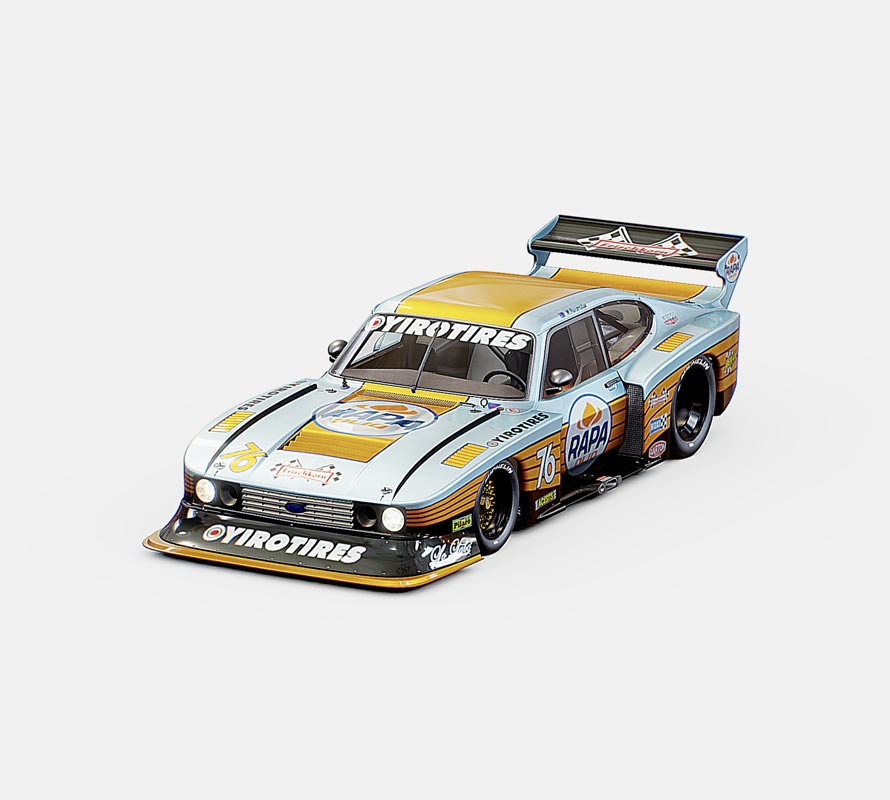
By 1981, this thing had evolved into something so far removed from the road-going Capri that calling it related was legally optimistic. It was, in essence, a purpose-built racing prototype wearing a Capri costume so thin you could practically see the lies underneath.
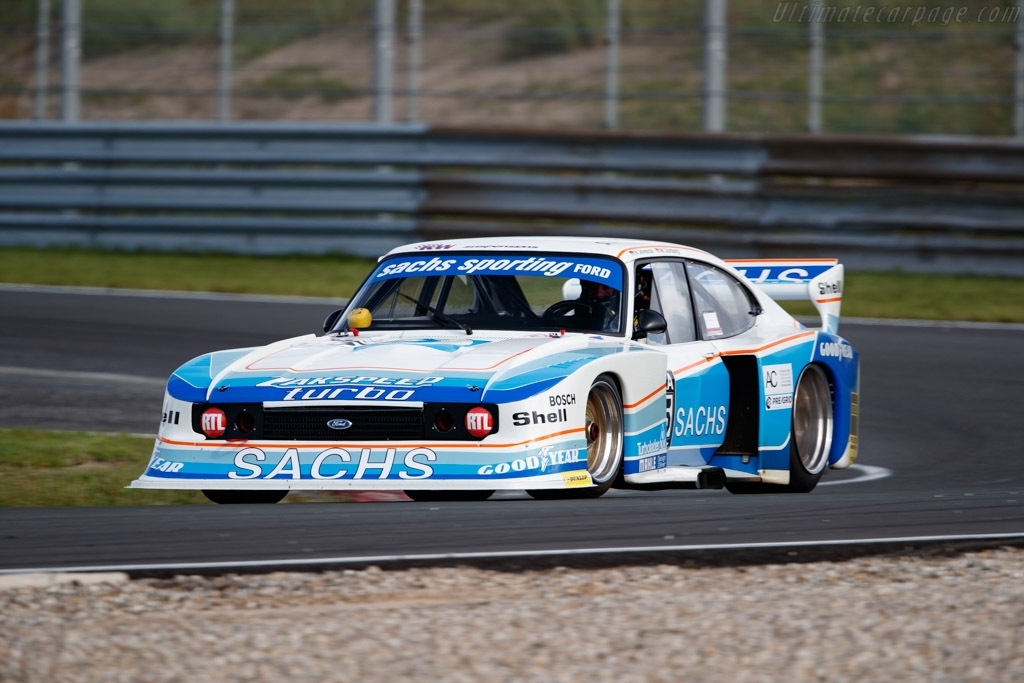
The rules of Group 5 required only that the car vaguely resemble a production model when viewed from a distance, at speed, through squinted eyes.
Everything else was fair game.
Zakspeed—already known for squeezing absurd power from small engines—took this loophole personally.
At the heart of the 1981 Zakspeed Capri sat one of the most aggressive racing engines of its era.
That gives you a power-to-weight ratio of over 660 hp per tonne.
In 1981.
Let that sit for a moment.
Measured performance figures from period testing and race telemetry put the Capri in rare territory:
This made the Capri one of the fastest-accelerating closed-wheel racing cars on the planet at the time—faster than many prototypes and absolutely humiliating anything with a naturally aspirated engine.

The wide arches, shovel-like front splitter, and skyscraper rear wing weren’t decoration. They were survival equipment.
At over 300 km/h, the Capri needed:
It looked angry because it was angry.
The Capri did not reward hesitation.
Its most iconic driver was Klaus Ludwig, a man whose nickname “König Ludwig” existed for a reason. Ludwig mastered the Capri’s explosive turbo delivery and used it as a weapon rather than a threat.
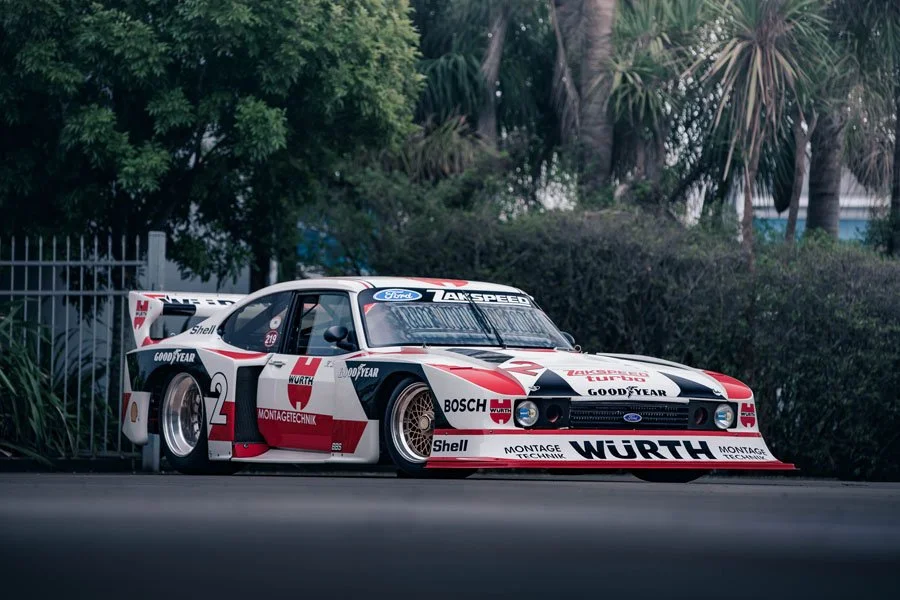
Other notable pilots included Manfred Winkelhock, whose ability to balance boost and grip at terrifying speeds bordered on reckless genius.
These men weren’t steering the car so much as negotiating terms with it.
The Zakspeed Capri was not a museum piece. It won.
.jpg)
In the brutally competitive Deutsche Rennsport Meisterschaft, the Capri fought Porsche 935s—cars with bigger engines, more money, and factory backing.
And it still delivered:
On fast circuits, the Capri could out-accelerate and out-brake cars that should, on paper, have destroyed it.
At events like:
…the Capri routinely qualified at the sharp end of the grid and finished races on pace rather than merely surviving—no small feat for a highly stressed turbo engine in an era before modern cooling and electronics.
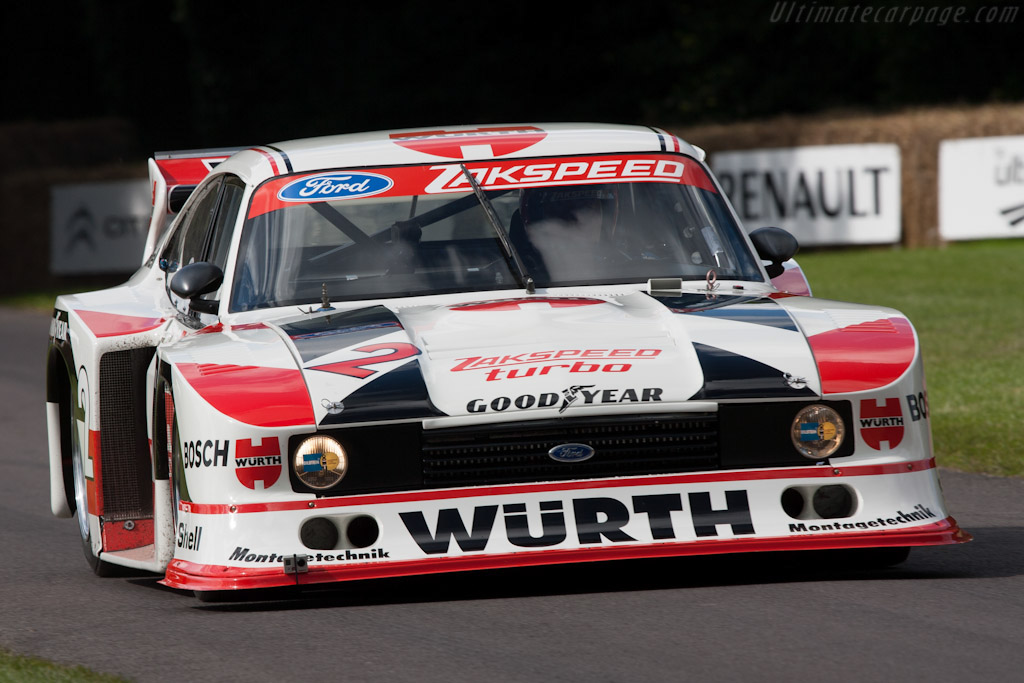
Zakspeed understood something others missed:
Small engines could survive big power if properly engineered.
Their turbo management, cooling solutions, and mechanical fuel injection allowed the Capri to deliver extreme output without constant detonation or failure, something many rivals struggled with.
This is why Zakspeed later went on to Formula One—with the same engine philosophy.

The 1981 Zakspeed Capri Gr.5 represents the absolute peak of silhouette racing insanity.
It was:
Modern GT cars are cleaner, safer, and slower in spirit.
The Capri was raw intent, translated into speed.
The Zakspeed Ford Capri Gr.5 was not pretending to be sensible.
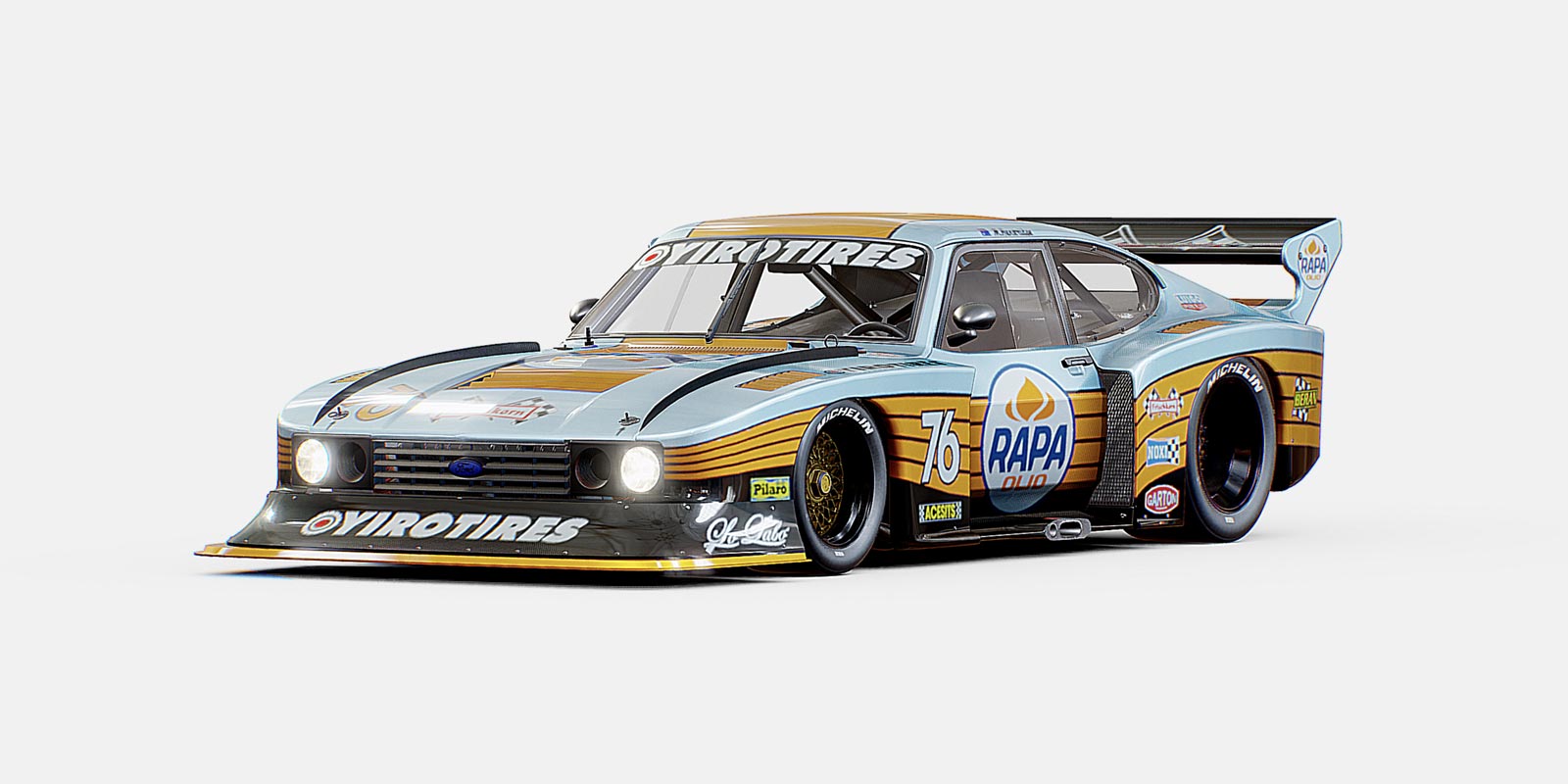
It was pretending to be a Capri.
Underneath, it was one of the most brutally efficient turbo racing machines of its era—proven by lap times, victories, and the calibre of drivers who trusted it with their lives.
It didn’t whisper its legend.
It shouted it, at 10,000 rpm, with boost fully wound in.
-
Ayrton Senna, Brazilian Formula One World Champion


