Small, clever, and unapologetically high-rev. It doesn’t overwhelm you. It invites you to participate—and then rewards you with a grin that lasts longer than the fuel in its tiny tank.
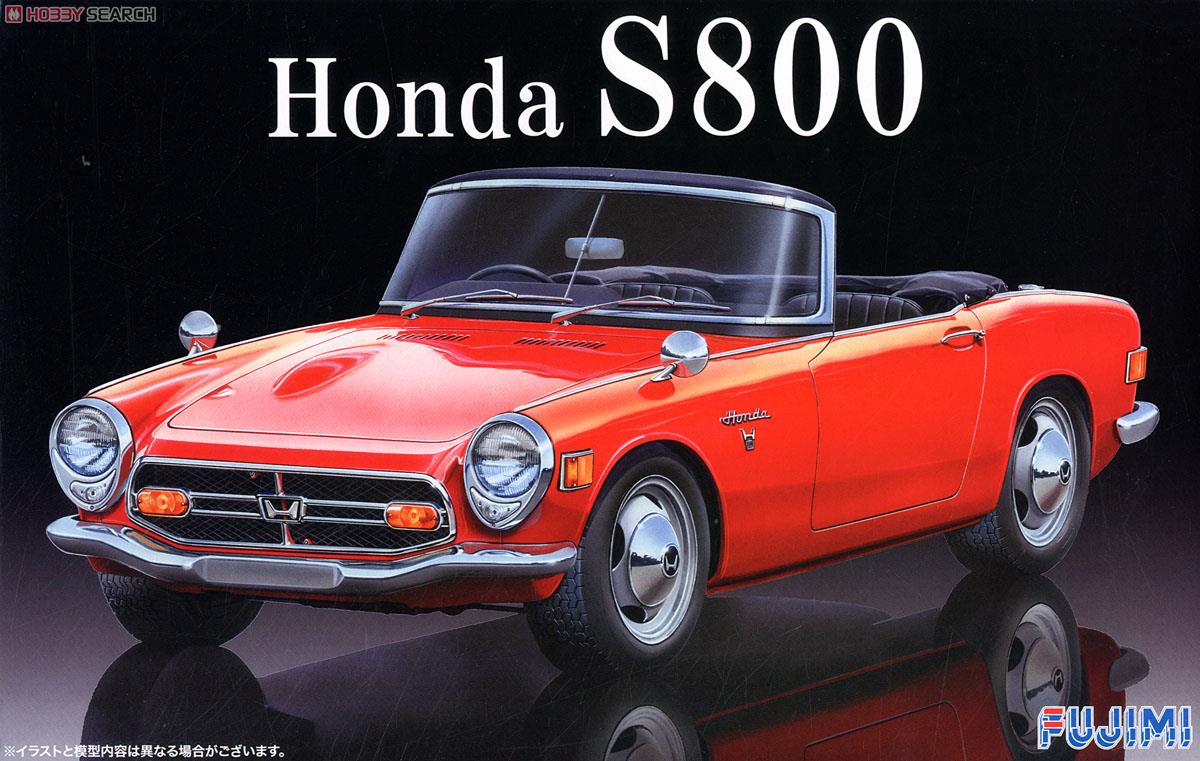
The Honda S800 is one of those cars that makes you wonder if Honda’s engineers in the 1960s were secretly paid in espresso and competitive spite. Because while everyone else was building small sports cars with sensible little engines that went “brmm,” Honda turned up with something that went “EEEEEE” like an angry sewing machine trying to qualify for Le Mans.
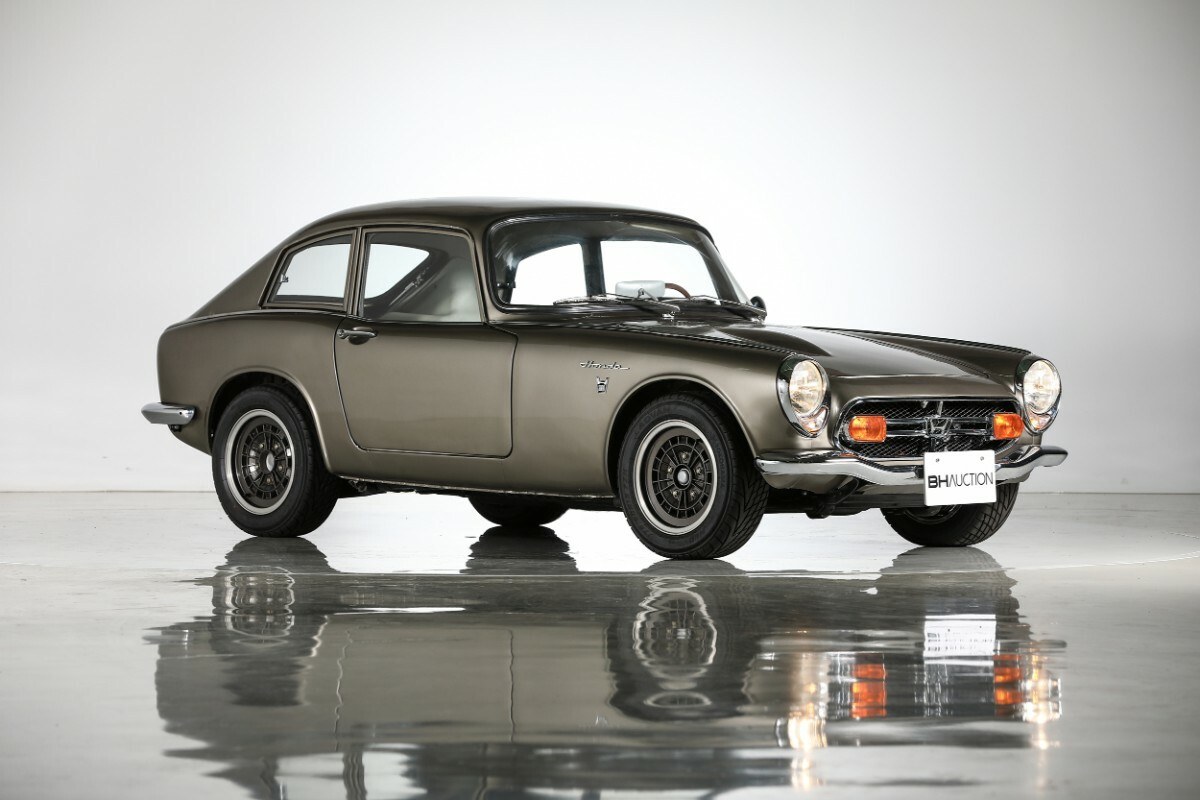
On paper, it looks innocent: a tiny two-door roadster or coupé, only 3335mm long and sitting on a 2000mm wheelbase. It’s narrow too—about 1400mm wide—and low at roughly 1215mm tall. In other words, it occupies about the same road space as a modern SUV’s blind spot. And that’s before you remember the kerb weight is around 755kg. That isn’t “light.” That’s “did we forget to fit half the car?” light.


Now here’s where it gets properly interesting. The S800’s engine is 791cc. Yes, seven hundred and ninety-one cubic centimetres. That’s not a car engine, that’s a moderately ambitious kettle. And yet it’s a DOHC inline-four, breathing through carbs, making about 70hp (≈70 PS / 52kW) at 8000rpm, with a redline famously up in the 8,500rpm region. In the 1960s. In a road car. This is the bit where you realise Honda didn’t come from the “gentleman’s touring” tradition; it came from motorcycles, where revs are not a number, they are a personality.
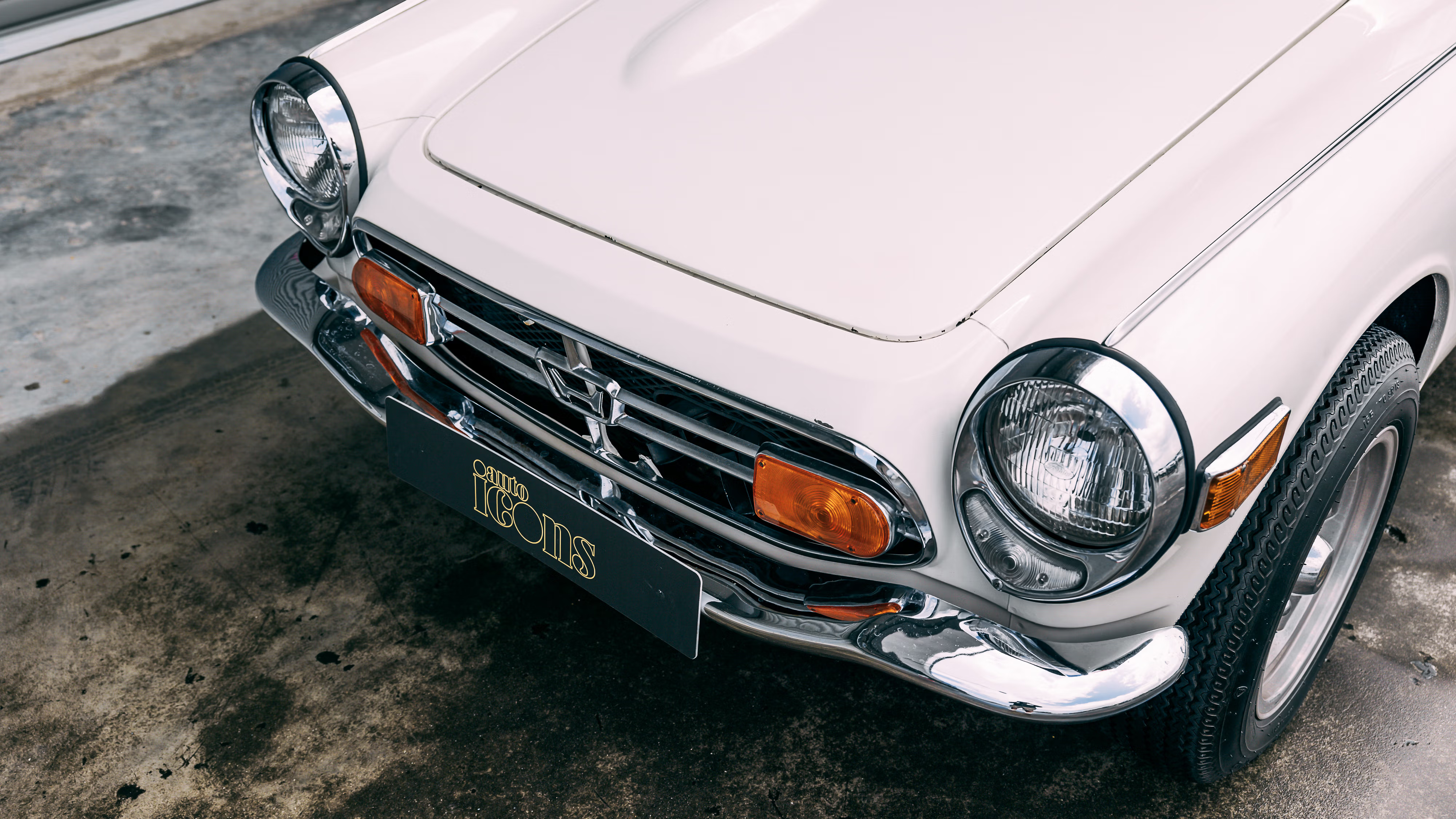
Put those numbers together and you get performance that’s less about brute force and more about commitment. 0–100 km/h in about 13.4 seconds sounds relaxed today, but the experience is anything but relaxed because you’re doing it with an engine that wants to live in the upper atmosphere. Top speed lands around 160 km/h—again, not headline-grabbing now, but in a featherweight classic with skinny tyres and the structural rigidity of an honest handshake, it feels like you’re negotiating with the wind using pure optimism.

And then there’s the drivetrain detail that explains why the S800 has such a cult following among people who like their engineering slightly eccentric: early cars used chain drive to the rear wheels before Honda later switched to a more conventional driveshaft setup. Only Honda would look at a sports car and think, “What it really needs is the sort of solution normally found on a motorbike, a watch, or a Victorian factory.” The result is a car that feels mechanical in a way modern machines don’t. You don’t merely drive it—you operate it, like a fine instrument that occasionally threatens to bite you if you get lazy.
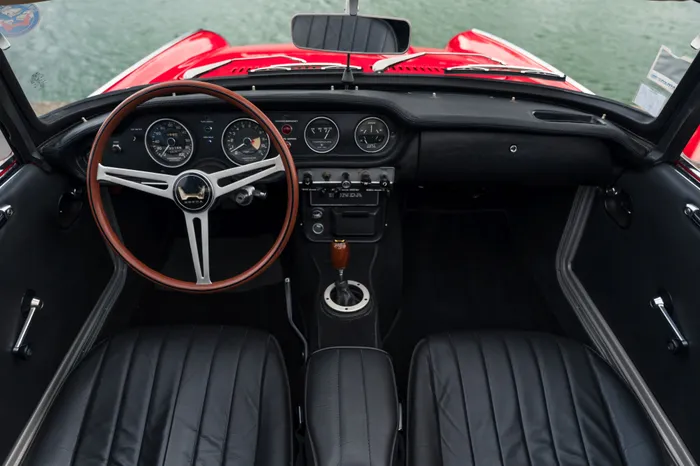
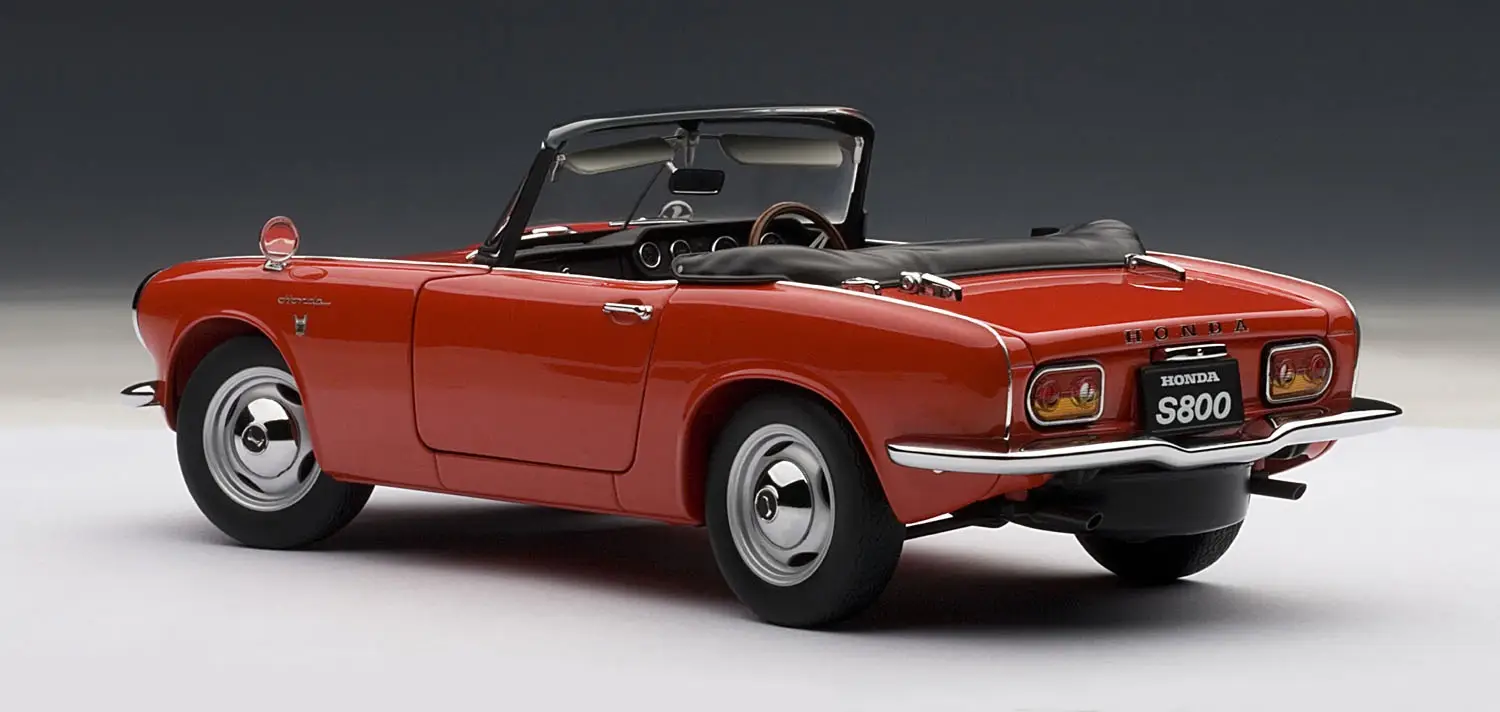
The transmission is typically a 4-speed manual, which sounds like a limitation until you realise the engine’s whole purpose is to rev, so you’re always busy, always selecting, always keeping it in the mood. It’s not about effortless torque.
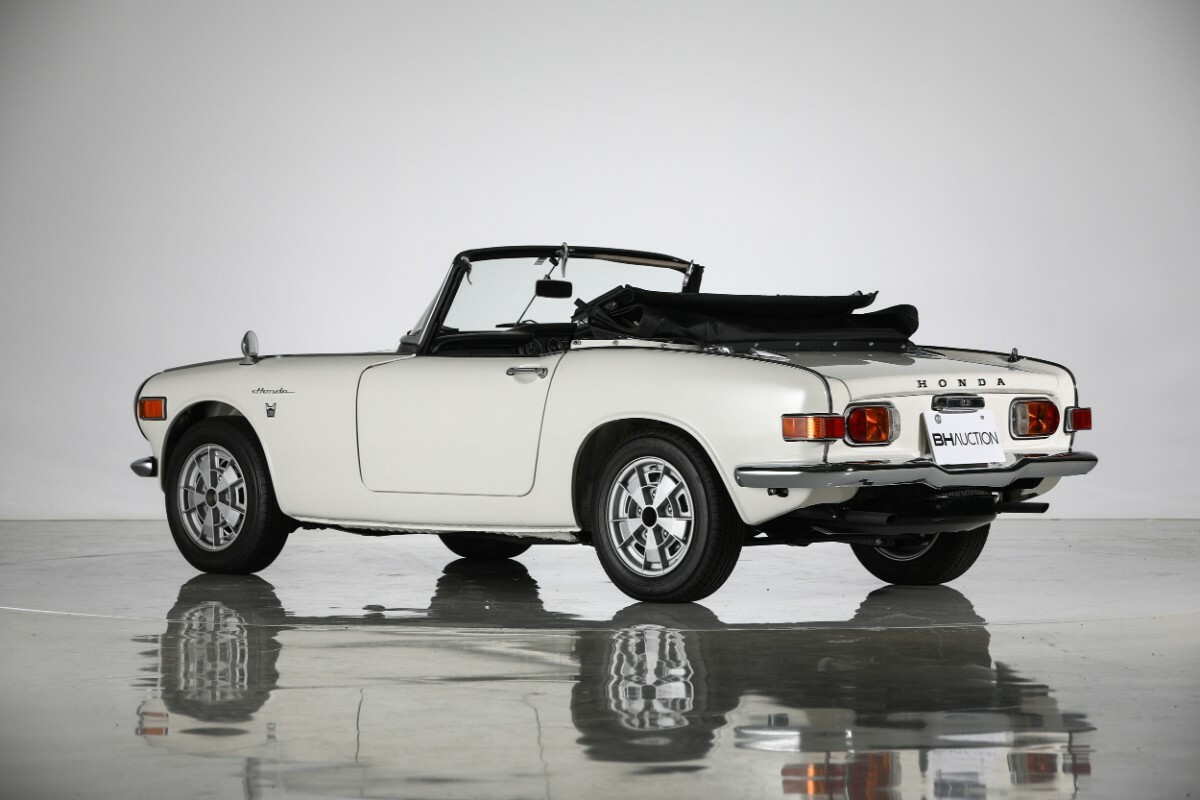
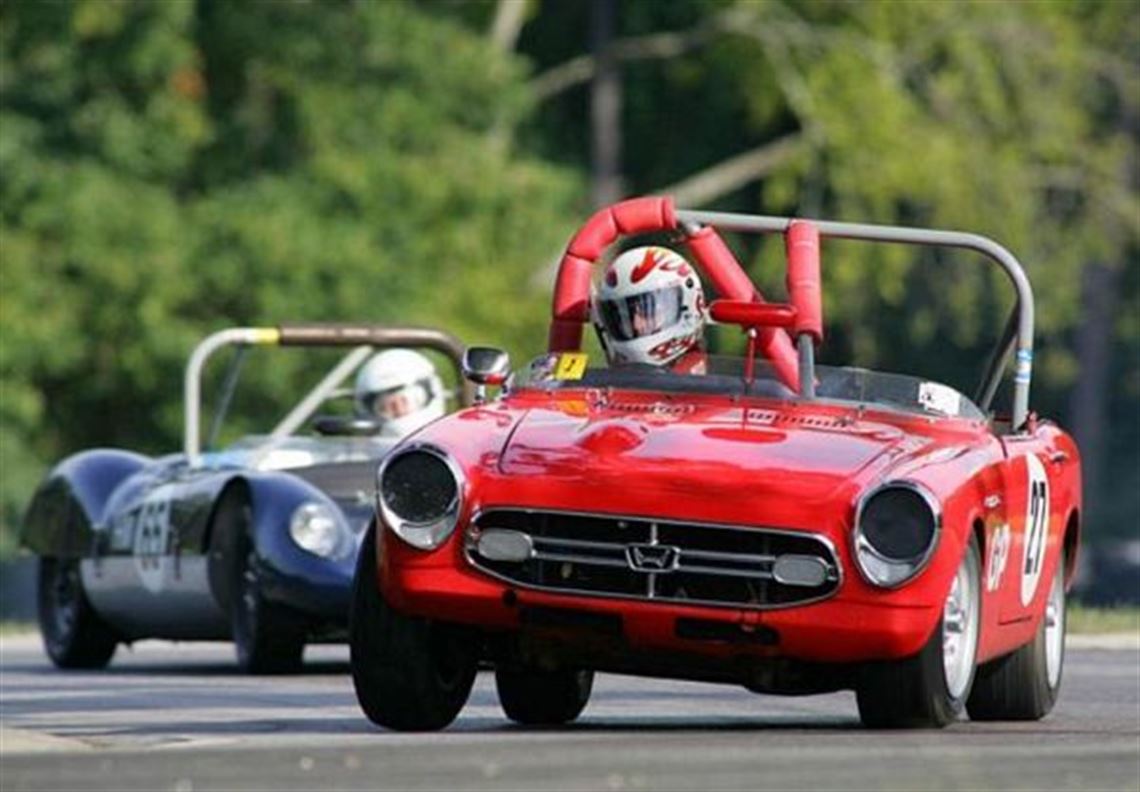
It’s about rhythm: blip, slot, rev, repeat. If you want calm, buy a sofa. If you want joy, you buy a tiny Japanese sports car that thinks it’s a race bike.

.jpg)
What makes the S800 truly charming is that it isn’t pretending to be a grand touring masterpiece. It’s small, direct, and slightly cheeky. The steering and controls feel like they were designed for people who enjoy being involved. It asks something from the driver: patience when it’s cold, sympathy when it’s old, and a willingness to use revs like punctuation.
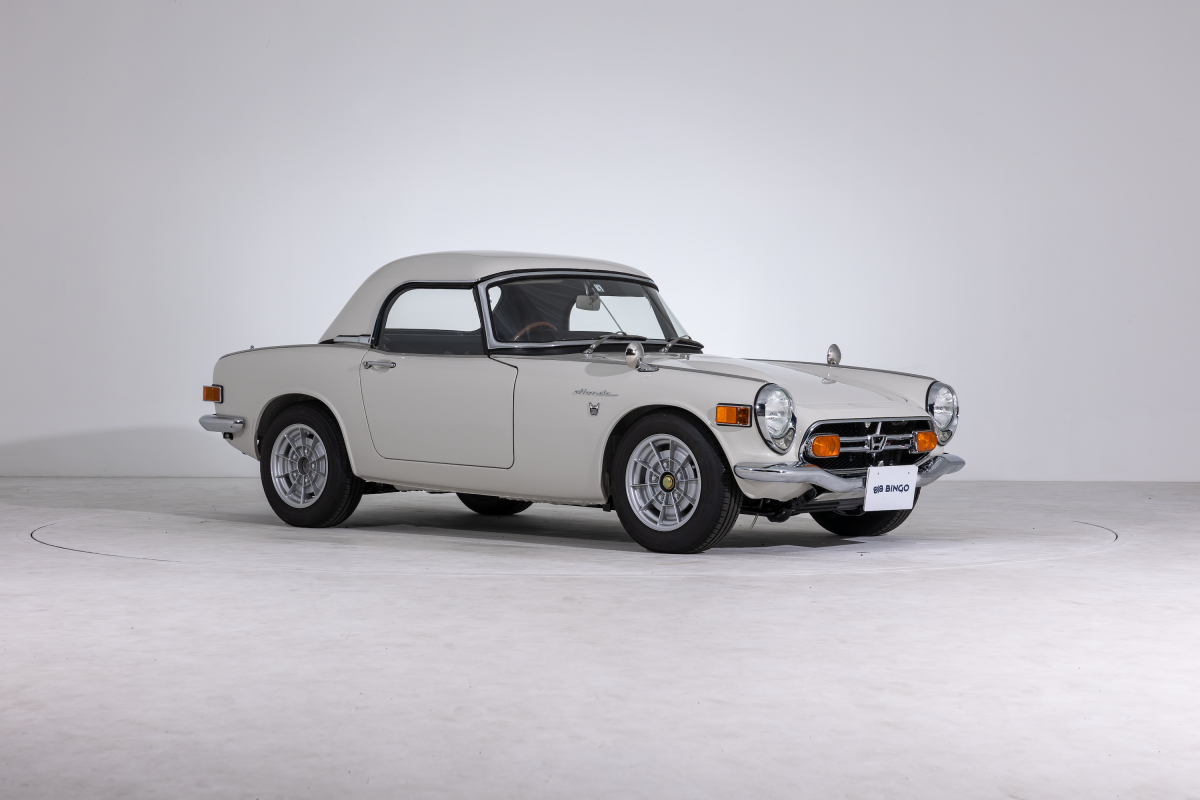
_-_Honda_S800_Racing_in_1968_Suzuka_12_Hours_Race.jpg)
And culturally, it mattered. This was Honda showing the world that it could build a proper sports car with its own philosophy—high-rev engineering, precision, lightness—without copying the Europeans. It wasn’t trying to be an MG or a Triumph. It was trying to be a Honda, and that meant doing things a little differently, a little smarter, and a little more “why not?”
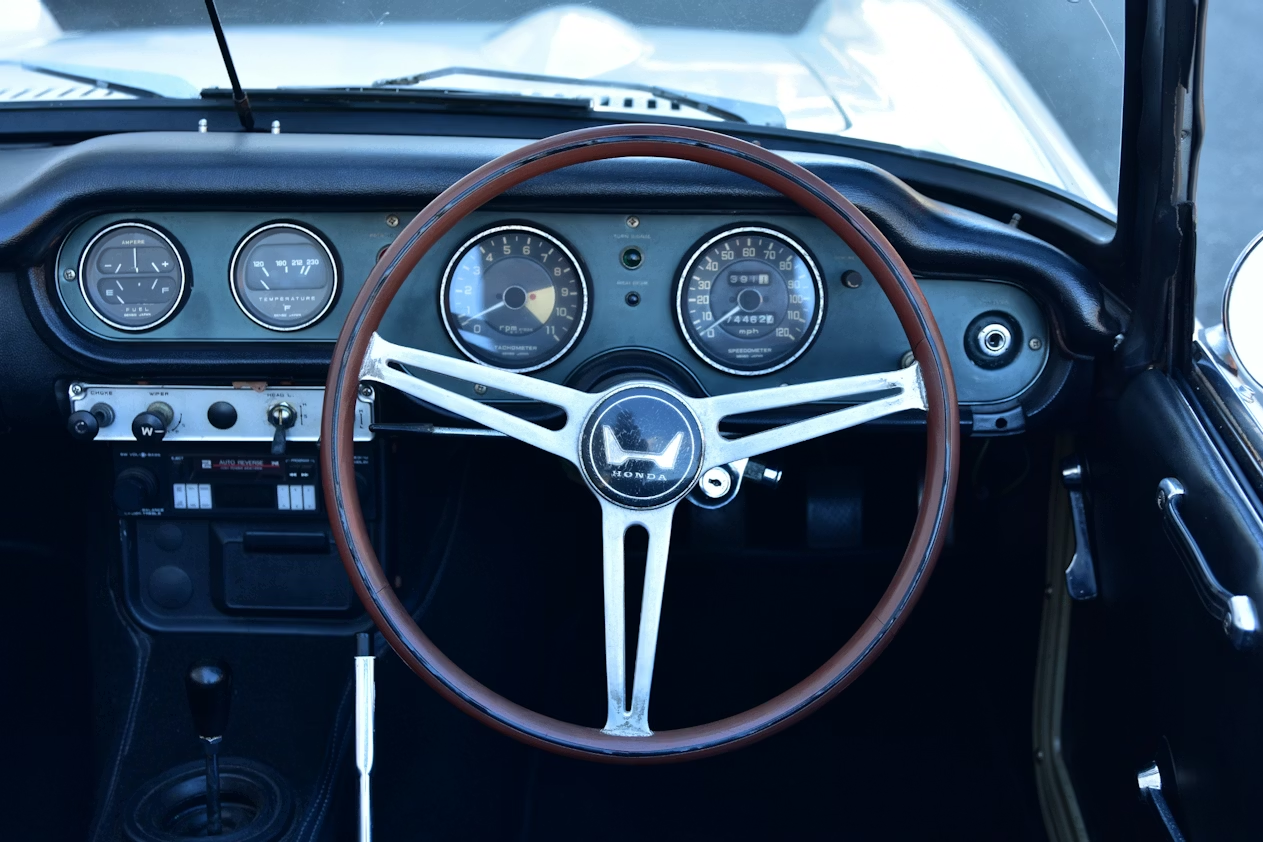
Today, the S800 doesn’t need to win any comparison test to be important. Its numbers tell one story—small engine, modest power, sensible top speed.

But the feeling tells the real story: a miniature machine that rewards effort, sings when pushed, and proves that excitement isn’t measured in litres. Sometimes it’s measured in revs, and the courage to build a sports car like you’re still thinking in motorcycle terms.

-
Soichiro Honda


