

DeLorean DMC-12 Time Machine 1985
Posted on
28/9/2026
by
A stainless-steel commercial failure became cinema’s definitive time machine, turning modest performance, gull-wing theatre and one cancelled automotive future into an immortal journey at 88 mph.
Blue electricity can return a grown motoring writer to childhood faster than any flux capacitor. The car reverses from Doc Brown’s truck into the Twin Pines Mall car park, stainless steel catching the lamps, and sensible judgement evaporates. Then the gull-wing door rises, and the future arrives wearing tyres.
Reality had written half the screenplay. John Z. DeLorean left General Motors to build a sports car bearing his name. Giugiaro drew the wedge, Lotus re-engineered the chassis, and Dunmurry workers assembled it amid Northern Ireland’s Troubles. Gull-wing doors looked interstellar; its rear-mounted 2.85-litre PRV V6 made roughly 130 hp, so acceleration suggested a respectable ferry timetable.
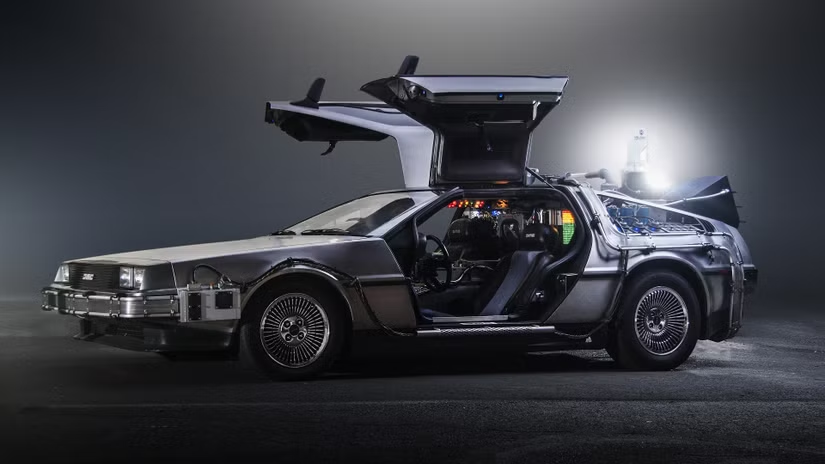
Production began in 1981, but quality troubles, recession and a price far above twelve thousand dollars wounded the dream. The company collapsed in 1982 after roughly nine thousand cars. DeLorean’s drugs prosecution—he was acquitted—added tabloid theatre. When the film arrived in 1985, its manufacturer had vanished, leaving an orphan in brushed metal.
The filmmakers first considered a refrigerator time chamber, with the minor drawback that children might lock themselves inside. Robert Zemeckis and Bob Gale wanted mobility. In a 1955 farmyard, the DeLorean’s raised doors could suggest a flying saucer. A Mercedes looked expensive; the DeLorean looked utterly unexplained, far more useful in science fiction.
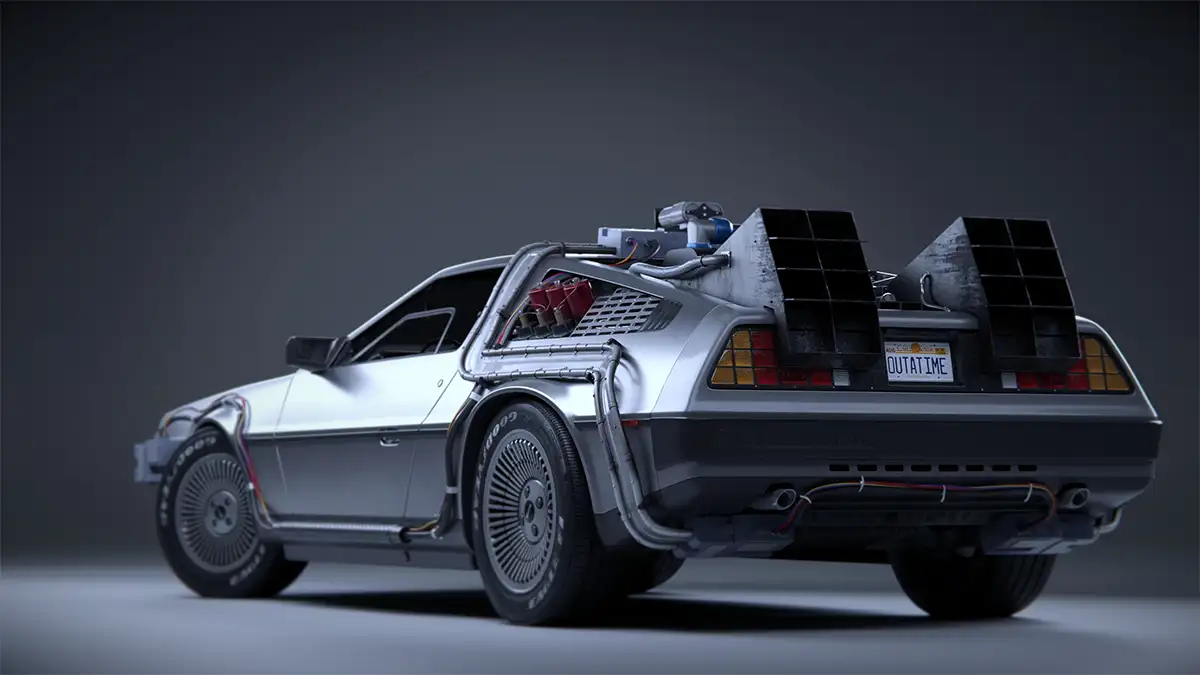
Ron Cobb, Andy Probert, Larry Paull, Michael Scheffe and Kevin Pike’s team turned three cars into garage-built nuclear machinery. Cables climbed the flanks, vents crowded the rear and time circuits filled the cabin. The flux capacitor looked assembled from military surplus and a kitchen drawer. Doc Brown was a genius, not a German trim department.
At 88 mph fiction seized command. A five-speed DMC-12 needed around ten seconds to reach 100 km/h and topped out near 175 km/h, but it could achieve that sacred velocity. Modest performance helped: Marty needed road, nerve and lightning, not launch control and an early arrival in 1955.
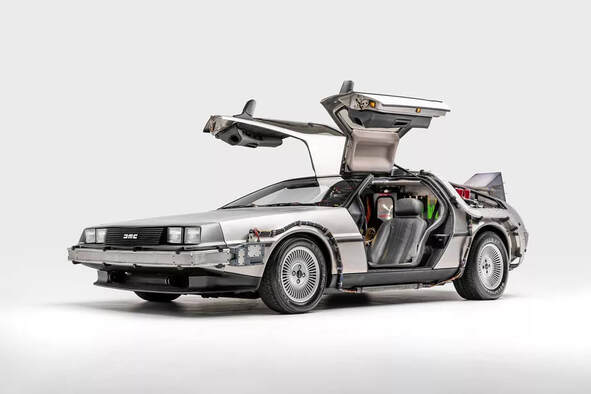
Here lies its magic: the donor resembled a future that failed to arrive. Stainless steel resisted fashion, the doors made entrances theatrical, and disaster detached it from showroom life. The DMC-12 failed as a product and succeeded as a memory. No Ferrari could play the role so honestly; the DeLorean occupied a cancelled tomorrow.
The screen-used “A” car endured years at Universal Studios, surrendering parts and dignity to weather and souvenir hunters. From 2011, a team assembled with Bob Gale’s involvement restored its reactor, wiring and time circuits. It now survives at the Petersen in Los Angeles, preserved for journeys it only pretended to make.
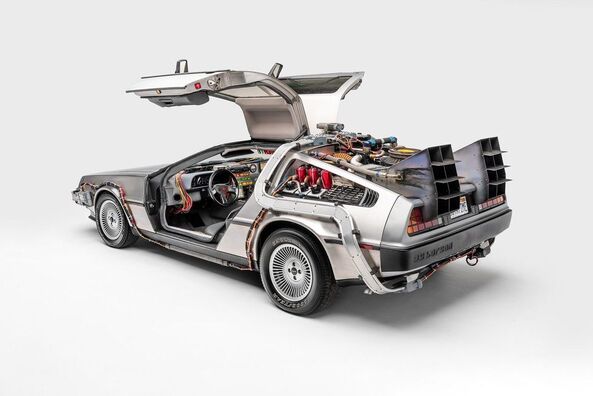
Return with grey hair and road tests in the memory, and the flaws are obvious: modest power, awkward ergonomics, uneven quality and ambition beyond the balance sheet. Yet the child watching that door lift understood. This car marks the instant industrial failure, cinema and youthful belief collided at 88 mph. We did not merely watch it travel through time. We carried it there ourselves.
-
-
-