A faithful Han-style RX-7 is not merely a modified Mazda. It is a poster, a soundtrack, a petrol-stained memory of orange streetlights and tyre smoke.
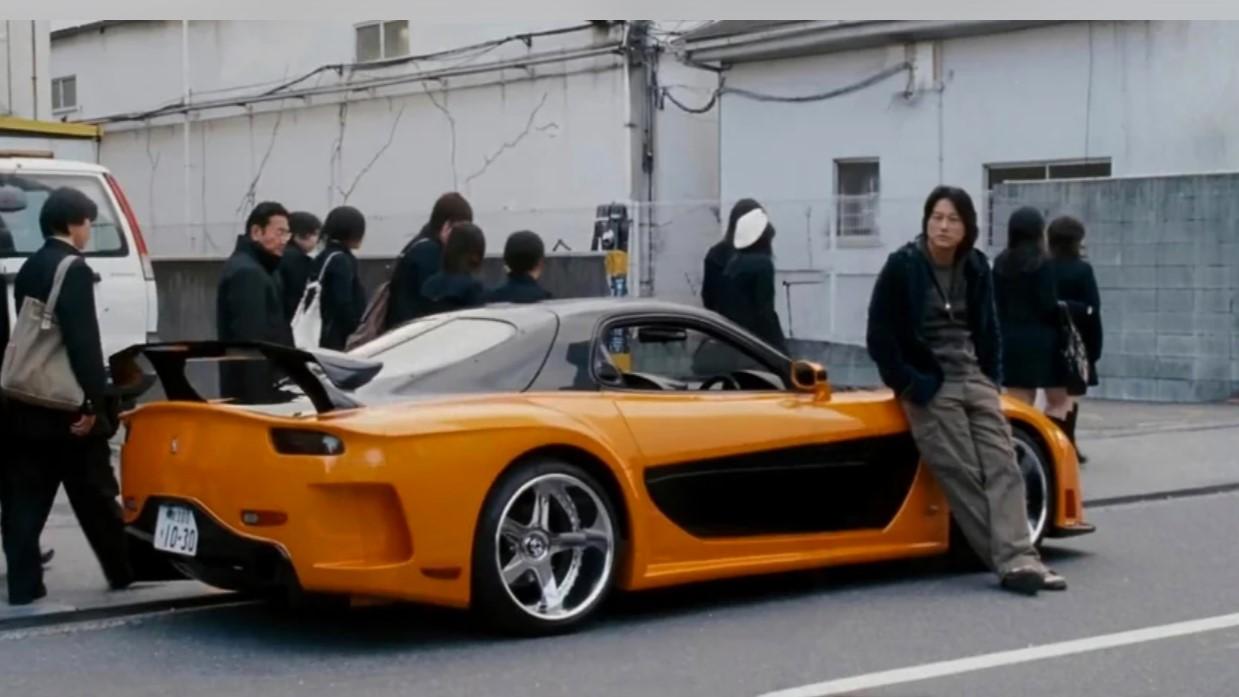
Han’s VeilSide RX-7 is what happens when a Mazda FD3S gets dressed for a night out in Tokyo and accidentally becomes immortal.

Underneath the orange-and-black theatre is still one of Japan’s great mechanical party tricks: the 13B-REW twin-rotor engine, a compact little spinning triangle factory that makes normal pistons look like farm equipment.
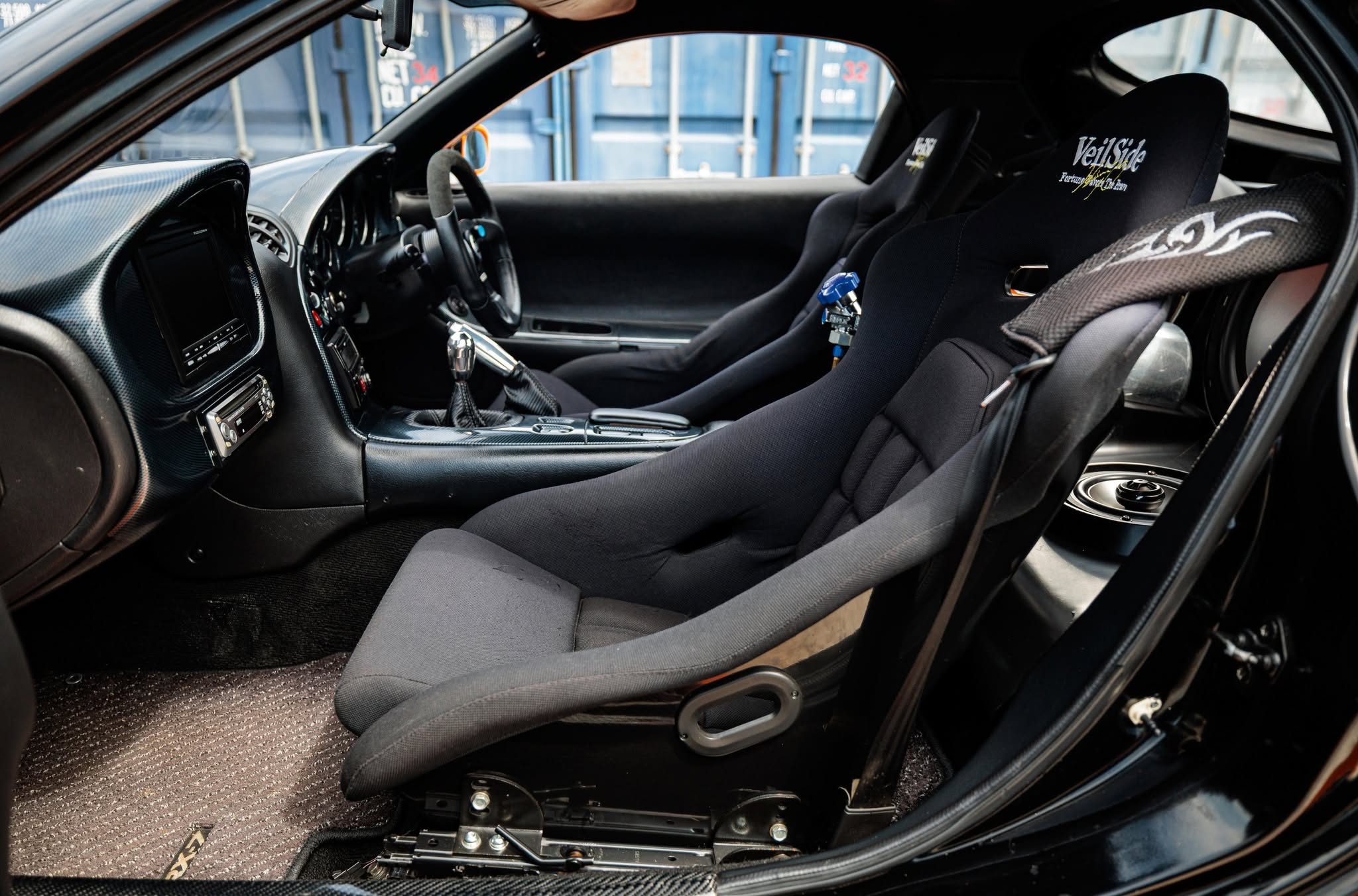
Mazda built the RX-7 around balance, lightness, and the idea that an engine should be small enough to hide behind the front axle, which is why the FD feels less like a car and more like a nervous system with headlights.

Then VeilSide arrived and gave it the sort of bodywork that makes traffic lights feel like movie premieres.
Hironao Yokomaku’s company had already become famous for turning Japanese sports cars into rolling cyberpunk sculptures, but the Fortune kit was outrageous even by those standards. The front end barely resembles an RX-7 anymore.

The headlights, arches, rear haunches, and stance all seem to have been redesigned by someone who looked at subtlety, laughed politely, and threw it into Tokyo Bay.

Its true legend, of course, came from The Fast and the Furious: Tokyo Drift. Driven by Han Seoul-Oh, the car became more than a prop. It was calm confidence on wheels. While everyone else looked like they were trying very hard to be cool, Han simply existed, ate snacks, drifted through neon, and somehow made a widebody rotary Mazda feel like a tailored suit. That is the magic of this machine: it is ridiculous, but never desperate.

Mechanically, the movie car was based on a 1997 Mazda RX-7 FD3S and used a VeilSide-built setup with rotary tuning hardware including HKS turbo equipment and upgraded engine management. Power figures vary depending on source and setup, but around 300 hp is the sensible territory. In a light FD chassis, that is enough to make the rear tyres question their life choices. The standard FD was already quick, with a low kerb weight, short wheelbase, and rear-drive layout that made it a scalpel. The VeilSide version simply gave that scalpel a samurai helmet and a nightclub membership.

Its collector value is strange and powerful. It is not rare in the old-money coachbuilt sense, nor sacred in the untouched-original sense. It is valuable because it carries cultural voltage. It represents the mid-2000s tuning boom, import-car cinema, rotary obsession, drift mythology, and the exact moment a generation decided widebody kits were not accessories but personality disorders worth celebrating.

Today, a faithful Han-style RX-7 is not merely a modified Mazda. It is a poster, a soundtrack, a petrol-stained memory of orange streetlights and tyre smoke.
Han Seoul-Oh


