In an era where everything is getting quieter and more responsible, Lamborghini made a digital supercar that says, calmly: “No. We’re still going to be outrageous.”
The Lamborghini Lambo V12 Vision Gran Turismo is the answer to a question nobody sensible asked: “What if we built a single-seat fighter jet, then pretended it was a car, and then put it in a video game so nobody’s chiropractor can sue us?”

It debuted as a full-scale model in late 2019, and it’s important to understand what that means. This isn’t a production car with cupholders and a warranty. It’s a design manifesto wearing tyres. Lamborghini’s Centro Stile basically took every brand cue—hexagons, Y-shaped lights, angular aggression—and turned the volume knob until it snapped off in their hand.
Now for the numbers, because this is Lamborghini: even the idea of the car needs horsepower.
The official Vision GT technical story is that its powertrain is derived from the Sián FKP 37 concept/limited-series thinking: a mid-mounted V12 plus hybrid “boost” using a supercapacitor system. Lamborghini and Gran Turismo material describes the output as 819 bhp. That’s not a typo. That is the kind of figure you normally associate with locomotives or small thunderstorms.
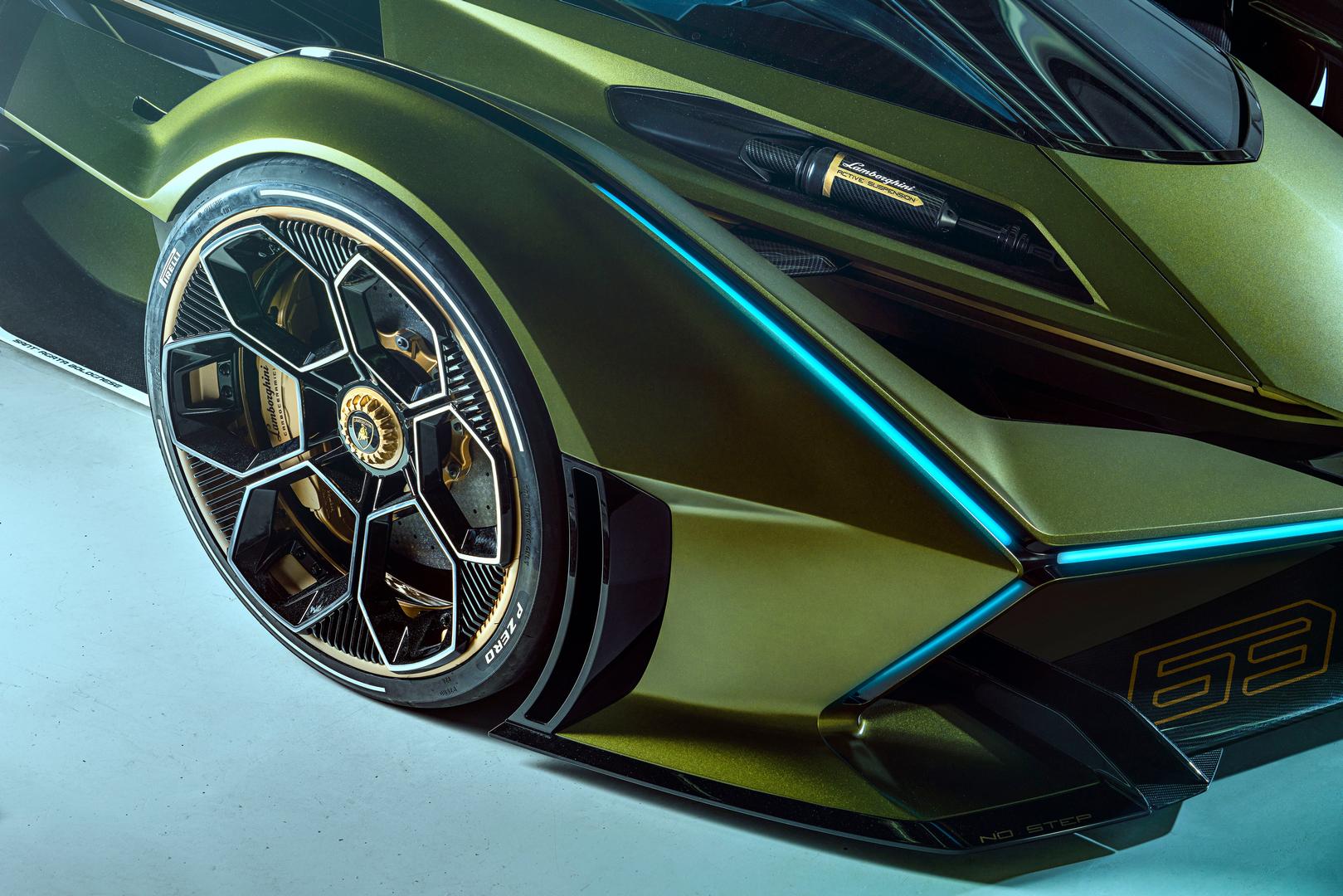
And yes—being Lamborghini—it’s a V12 in the most emotionally stubborn way possible. The engine family referenced is a 6.5-litre V12 (the Vision GT is listed with a V12 and the GT7 listing shows 6,498 cc displacement). It’s paired with a compact 48-volt e-motor integrated at the gearbox in the concept description, because modern rules demand electrons, and Lamborghini’s response is: “Fine. But we’ll do it like a fist.”

Because it’s a Vision Gran Turismo car, there are two worlds of “specs” you should keep separate:
So which is “real”? Both, in their own lane. The concept output is the brand’s statement of intent; the GT7 numbers are what you actually drive inside the game’s balancing and performance framework.

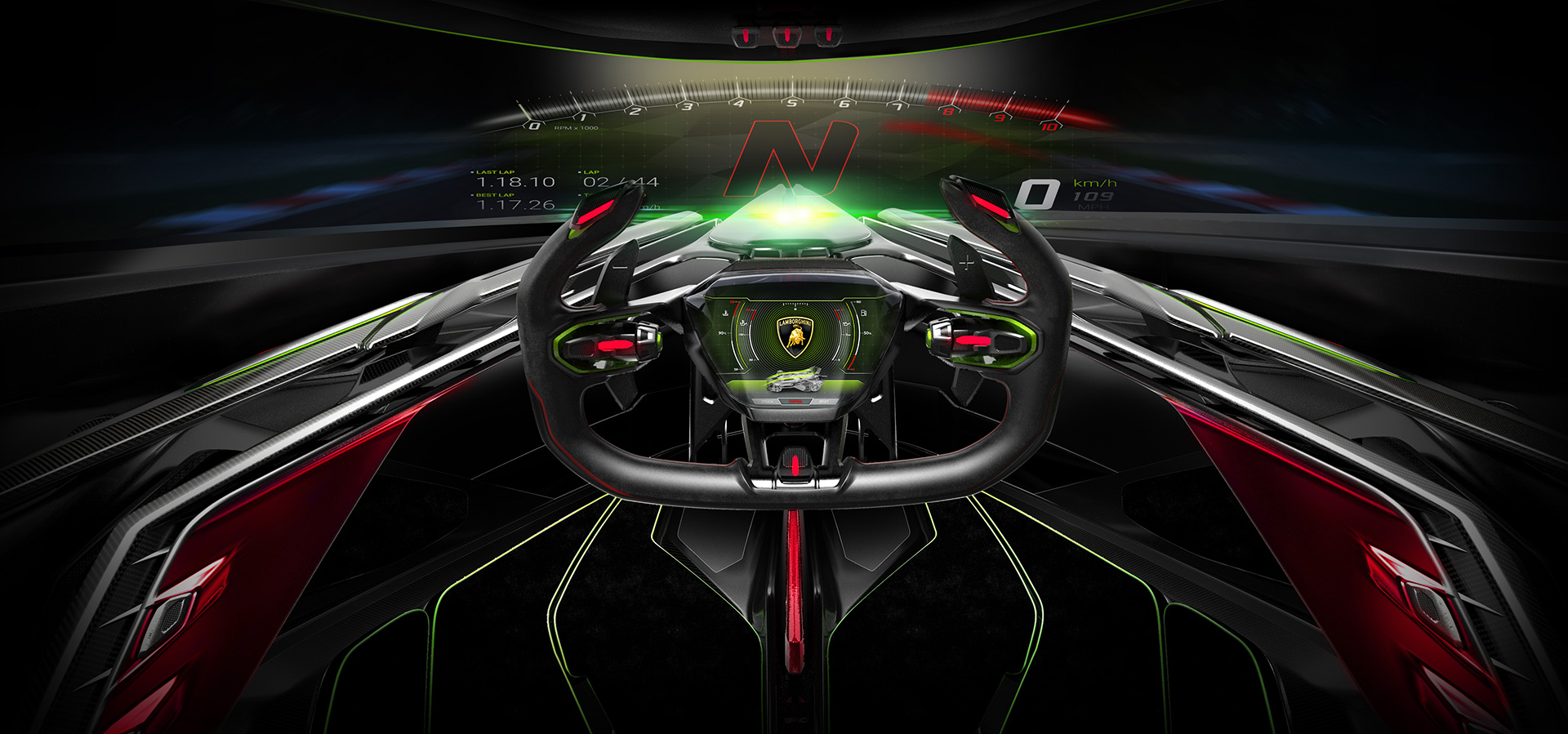
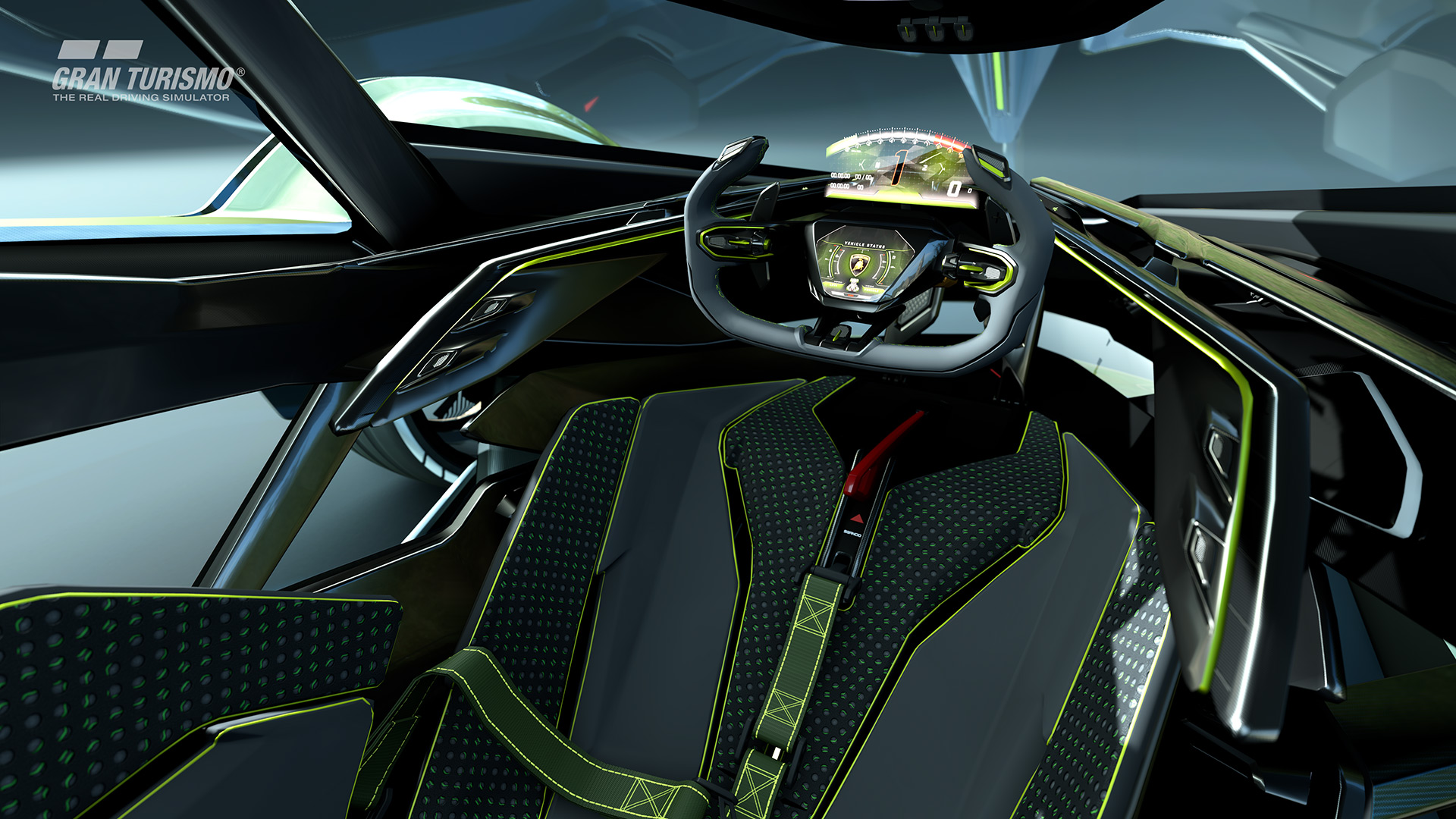
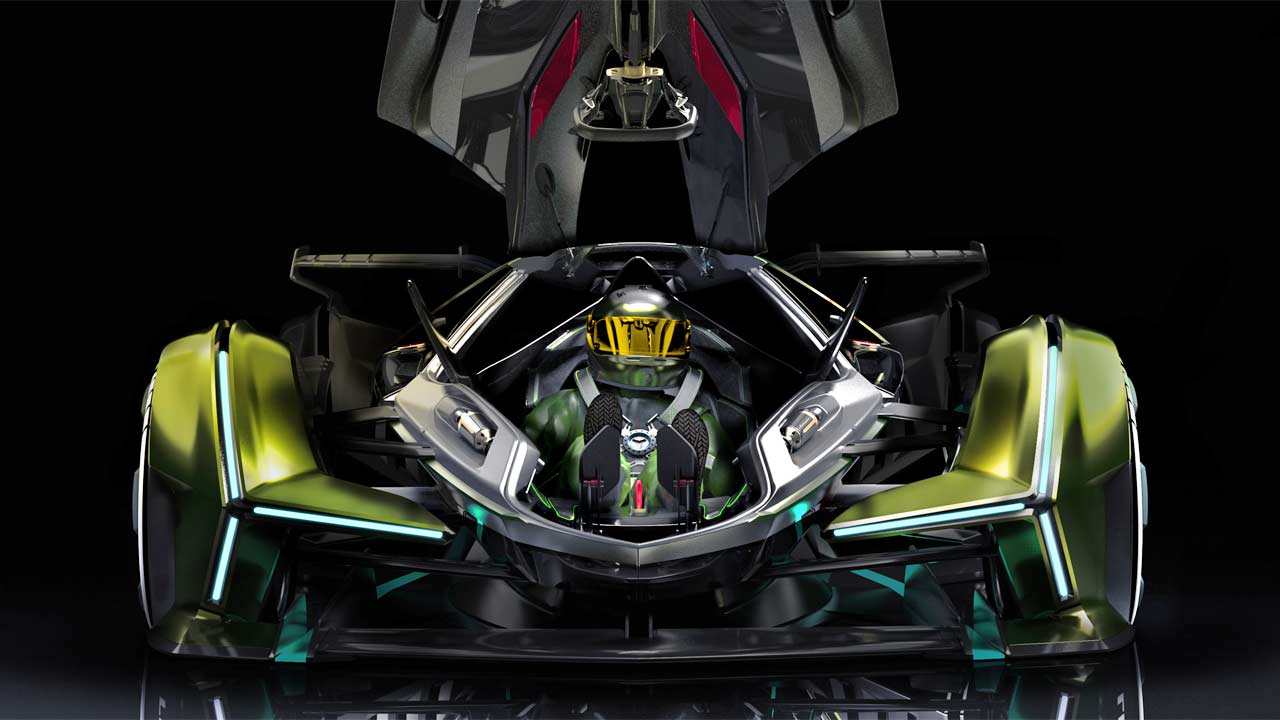
And the design is where the Clarkson part of your brain starts shouting happily. It’s single-seat, because why share the moment with a passenger who’ll only scream and smear their fear onto your dashboard? The cockpit is like a jet canopy. The bodywork is all sharp planes and channels, because Lamborghini doesn’t do “curves” so much as “threats”. The whole thing looks like it should come with a helmet, a radio call sign, and a mildly alarming fuel bill.

But here’s the genuinely interesting bit: the Vision GT isn’t just visual theatre. It’s Lamborghini testing what “identity” looks like when you remove real-world constraints. No pedestrian safety regs. No mirrors. No packaging compromises. Just brand DNA at maximum concentration. That’s why it borrows cues from historic concepts (like the hexagonal language and signature lighting) and why Mitja Borkert framed it as a “ultimate virtual car” for younger fans—because in a virtual space, Lamborghini can be pure Lamborghini without apologising for practicality.
Does it have a published 0–100 km/h time? Not in the official story material that matters most, because this car’s job isn’t to win drag races on paper. Its job is to look like the future—specifically, the future as imagined by someone who thinks “subtle” is a type of cheese.

And that, honestly, is why it works. It’s theatrical without being empty. It’s futuristic without forgetting the V12’s emotional point: the sound, the drama, the ridiculousness of doing something purely because it makes your heart feel bigger. In an era where everything is getting quieter and more responsible, Lamborghini made a digital supercar that says, calmly: “No. We’re still going to be outrageous.” 😄
.jpg)
-
Leonardo da Vinci, Italian polymath.


