A featherweight, turbocharged four-wheel-drive refugee from Group B, transformed with outrageous aero to attack a Colorado mountain and teach Peugeot how to conquer Pikes Peak.
When Group B died at the end of 1986, Peugeot was left with an awkward problem: one of the most sophisticated rally cars on Earth, a championship-winning team, and nowhere officially sensible to race it. Jean Todt’s solution was magnificently French. Instead of calming down, Peugeot took the 205 T16 to a mountain in Colorado where the road disappeared above the clouds and large sections of it were still gravel.
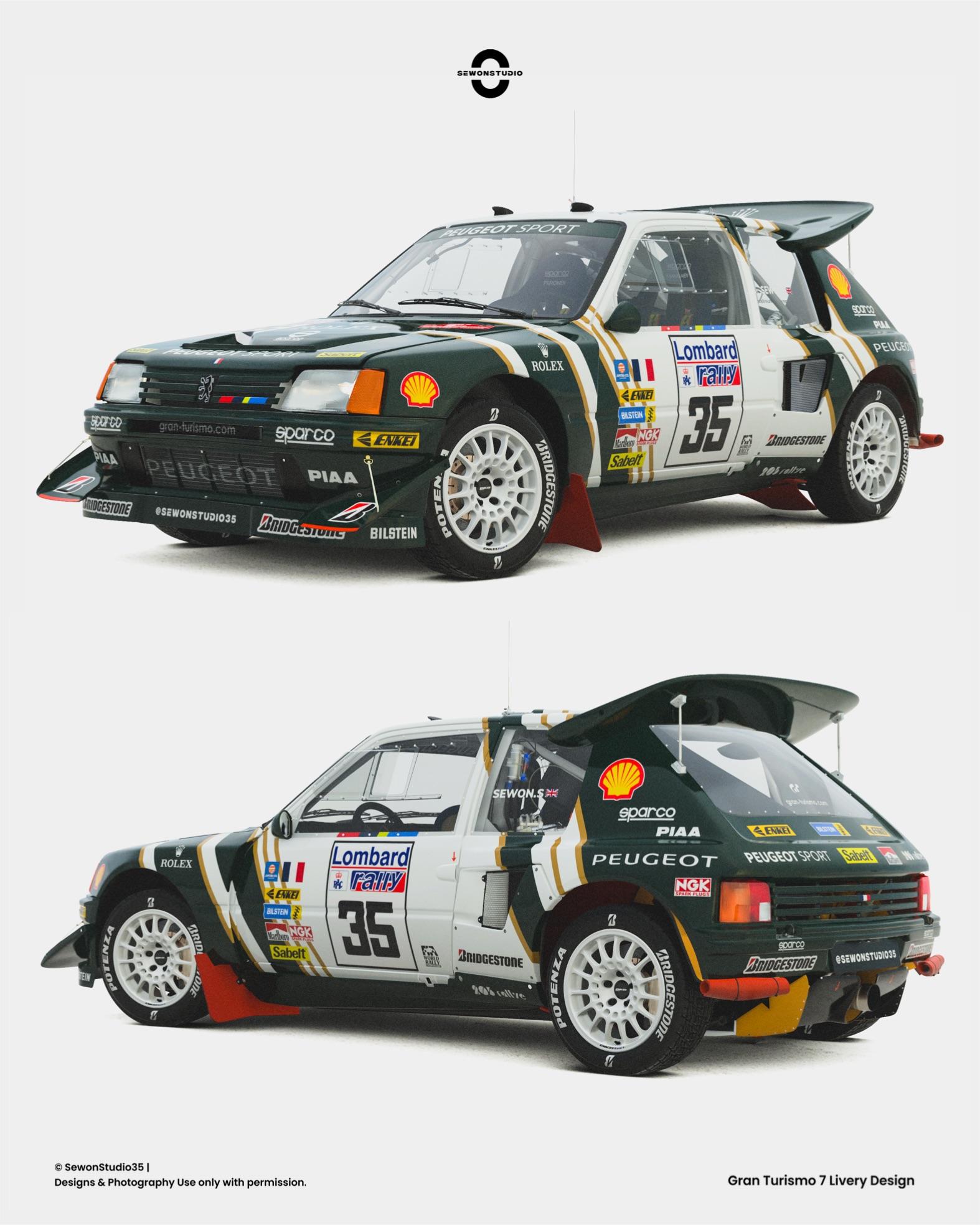
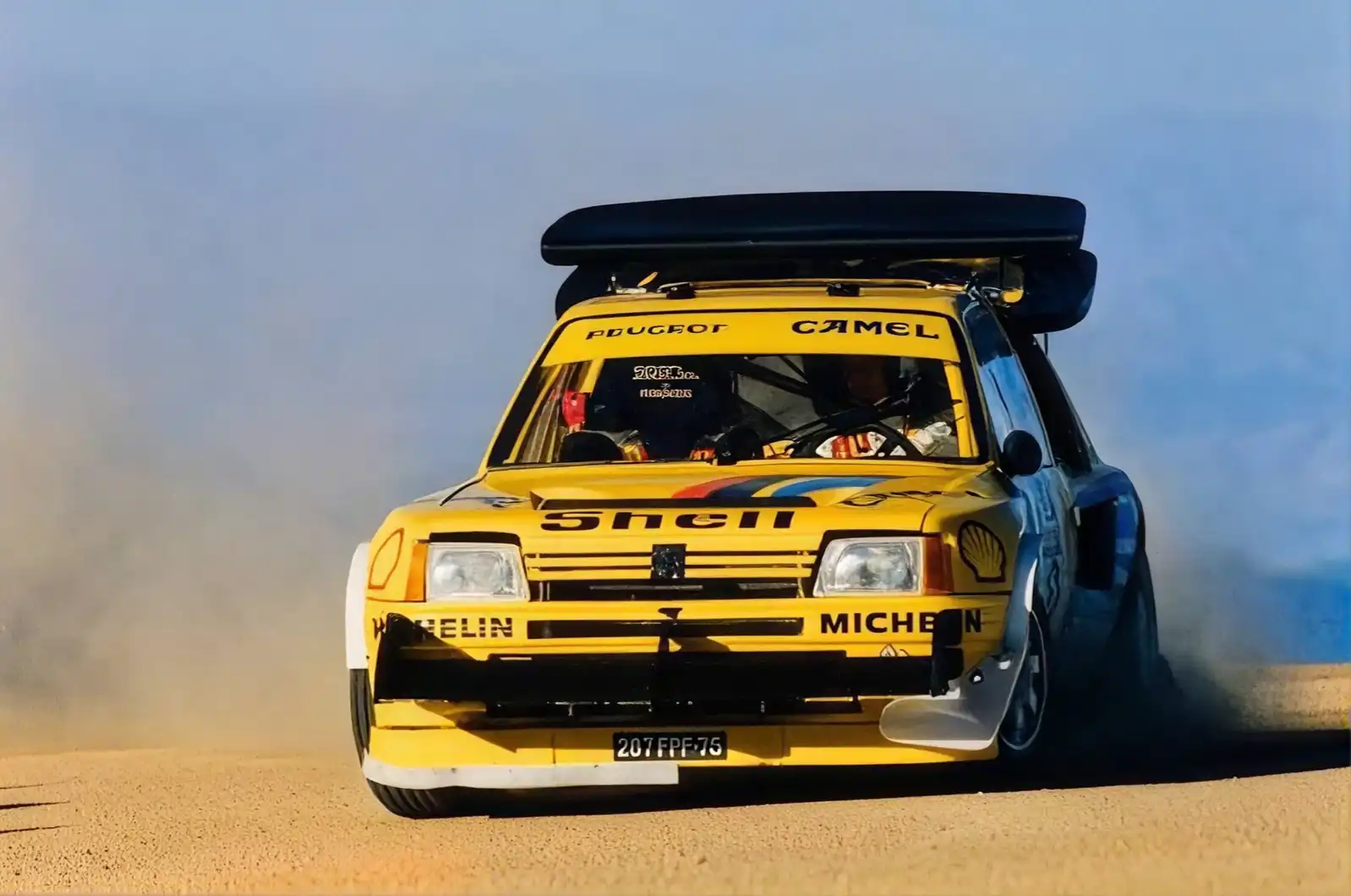
The 1987 Pikes Peak special grew from the 205 T16 Evolution 2, but ordinary rally aerodynamics were hopeless at altitude. Peugeot therefore attached an enormous front splitter, wings, ducts and a spectacular twin-element rear arrangement. It looked as though a perfectly good Group B car had driven through an aerodynamics laboratory and collected most of the furniture.
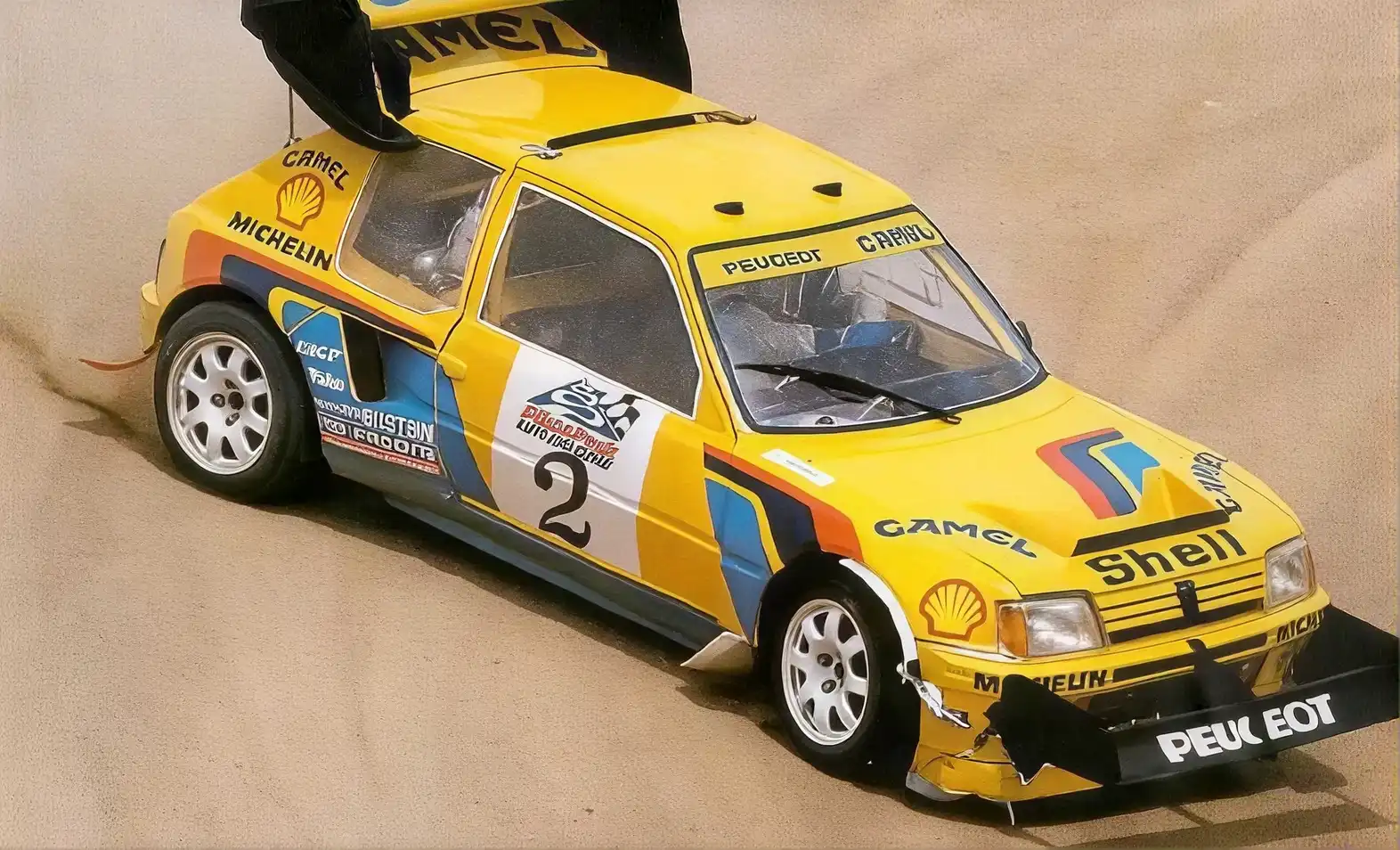
Behind the driver sat the familiar 1,775 cc turbocharged, 16-valve four-cylinder, mounted transversely and feeding all four wheels through a five-speed gearbox. With Group B regulations no longer governing proceedings, boost could become considerably more enthusiastic. Contemporary figures vary, but the Pikes Peak specification is generally quoted at roughly 550–650 hp. Weight was around 850 kg. Even at the lower estimate, that is a power-to-weight ratio capable of making conventional ideas about hatchbacks rather irrelevant.
Pikes Peak itself was the real opponent: roughly 20 km, 156 corners and a climb from about 2,860 metres to over 4,300 metres. In 1987 it was predominantly gravel. Engines lost power as the air thinned, tyres searched for grip and beyond several corners lay scenery rather than barriers. Motorsport safety had apparently looked at Group B and decided mountains were the obvious rehabilitation programme.
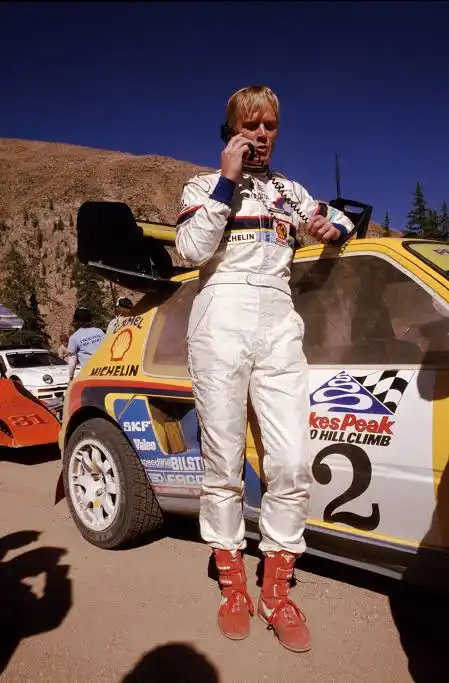
Peugeot brought three cars for Ari Vatanen, Andrea Zanussi and Shekhar Mehta. Waiting for them was Walter Röhrl in Audi’s final, gloriously excessive Sport quattro S1 E2. The contest became the last great argument between two philosophies that had dominated Group B: Peugeot’s compact mid-engined agility against Audi’s increasingly aerodynamic five-cylinder thunderstorm.
Vatanen came astonishingly close. A boost-related problem cost him time and Röhrl won in 10 minutes 47.77 seconds, becoming the first driver beneath eleven minutes. The Peugeots followed behind. It was technically a defeat, although finishing second to Röhrl driving that Audi is rather like losing a fistfight to a combine harvester.
More importantly, Peugeot learned. The 205 revealed that Pikes Peak rewarded wheelbase, stability and serious aerodynamic load differently from a rally stage. Todt’s team returned in 1988 with the longer 405 T16, Vatanen won, and the resulting Climb Dance film became one of motorsport’s defining pieces of cinema. The famous 405 therefore owes part of its legend to the small yellow machine that went up the mountain first.
That makes the 205 T16 Pikes Peak more interesting than an unsuccessful prototype. It was Group B refusing to accept that Group B was over. That is its Signature Line.
The road-going 205 was a modest French hatchback. The competition T16 had already moved its engine behind the seats and conquered the World Rally Championship. Pikes Peak pushed the joke one stage further until the only recognisable elements were the silhouette, lamps and Peugeot badge. Everything underneath existed to climb one mountain as rapidly as physics would tolerate.
It ultimately represents a wonderful transitional moment in motorsport: Group B engineering escaping its cancelled championship and mutating into something even less reasonable. It did not win Pikes Peak, but it taught Peugeot how to. Sometimes the most important racing car is not the one carrying the trophy down the mountain, but the one that showed everyone how to go back up.

