The GT1’s real trick isn’t just speed. It’s the audacity of turning regulation into art—proof that sometimes the fastest thing in motorsport is a clever legal department.
The Porsche 911 GT1 is what happens when a company looks at a rulebook and says, “Right. We’ll build a ‘road car’… but only in the same way a crocodile can be described as ‘mostly a lizard’.”

In the late-1990s GT1 era, you weren’t really racing tuned-up road cars. You were racing barely-disguised prototypes with number plates stapled on for manners. Porsche’s answer was a mid-engined machine that wore 911 headlights like a fake moustache. Despite the badge, it shared very little with the regular 911 of the day beyond a few light units and the general vibe of stubbornness.
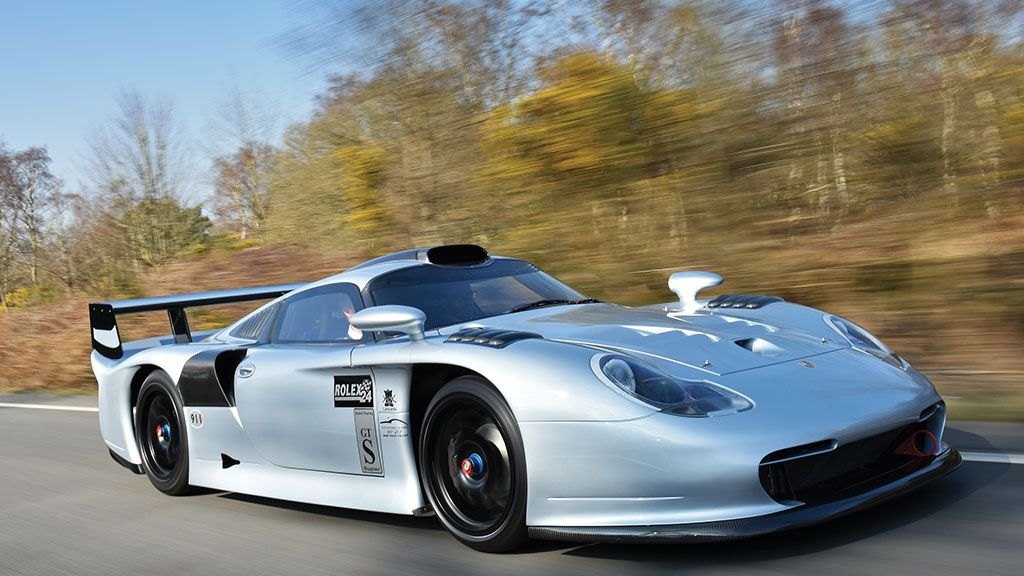
Now for the delicious numbers. The street-legal 911 GT1 Straßenversion used a 3,164 cc twin-turbo flat-six (water-cooled, which was practically sacrilege for Porsche traditionalists), making 544 PS and 600 Nm. Peak power arrived at 7,000 rpm, torque at 4,250 rpm, and the result was 0–100 km/h in 3.9 seconds and a top speed of about 308–309 km/h.
Even the “sensible” figures are hilariously unsensible: period testing quoted 36 m to stop from 100 km/h, and 11.6 seconds for the quarter mile. This is not so much a supercar as a loophole with a heartbeat.
Its road-car proportions are pure “race car accidentally allowed outside”: about 4,710 mm long, 1,950 mm wide, 1,173 mm tall, on a 2,500 mm wheelbase, and roughly 1,250 kg kerb weight. It even claims 150 L of cargo space, which is adorable—like saying a fighter jet has cupholders.
It ran huge tyres (295/35 ZR18 front, 335/30 ZR18 rear), because with this sort of power, traction isn’t a feature, it’s the basic requirement for not looking silly.

And comfort really is a concept here, not a feature. The point wasn’t to make a nicer 911. The point was homologation: the GT1 rules demanded a batch of road cars, so Porsche built roughly 25. Imagine walking into a dealership and being offered something that feels one form away from a Le Mans entry. You’d either faint, or sign immediately, or both.
The brains behind it weren’t some lifestyle committee. Norbert Singer—Porsche’s motorsport engineering legend—was one of the key names attached to the project, and stylist Tony Hatter gave it that wonderfully unapologetic look: wide, low, and slightly offended by the existence of speed limits.
It also carried a very Porsche kind of irony: calling it a “911” while putting the engine in the rear-mid position for balance, as if Stuttgart briefly flirted with common sense and then pretended it was always the plan.

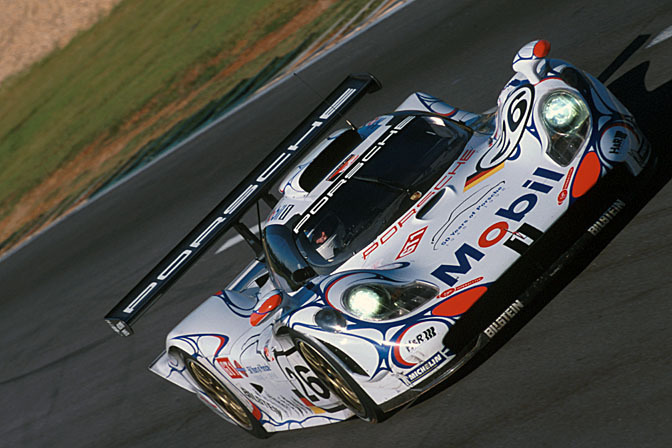
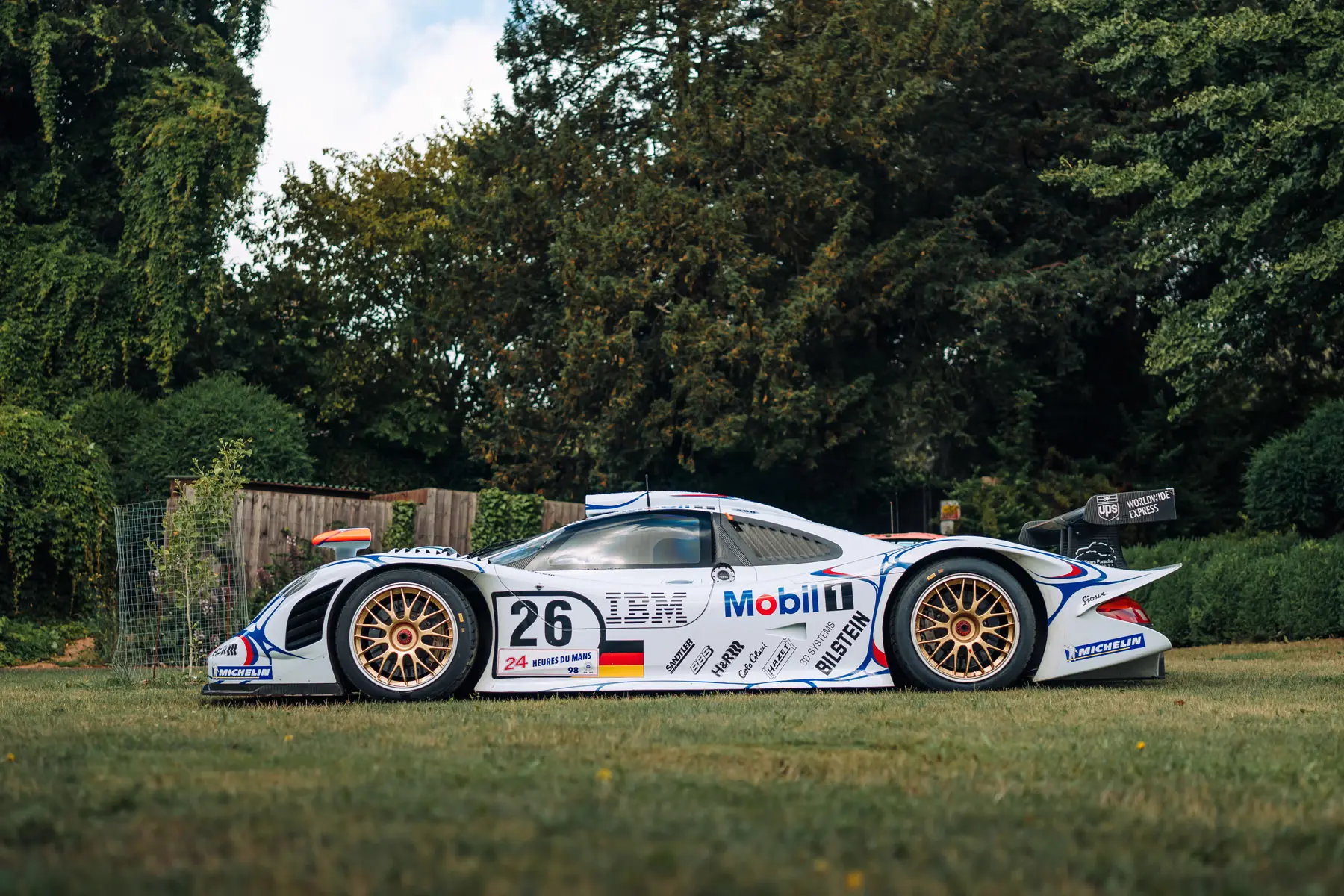
Then came 1998, when Porsche sharpened the knife. The 911 GT1-98 arrived with a major milestone: Porsche’s first carbon-fibre chassis for the model. In race trim, it was around the 950 kg mark, and Porsche’s own museum press material lists a 3,220 cc flat-six making about 404 kW (550 hp), with a claimed 310 km/h top speed.
This matters, because it explains the GT1’s personality: it wasn’t built to win pub arguments.
It was built to stay fast for hours while everyone else slowly discovers new ways to lose time.

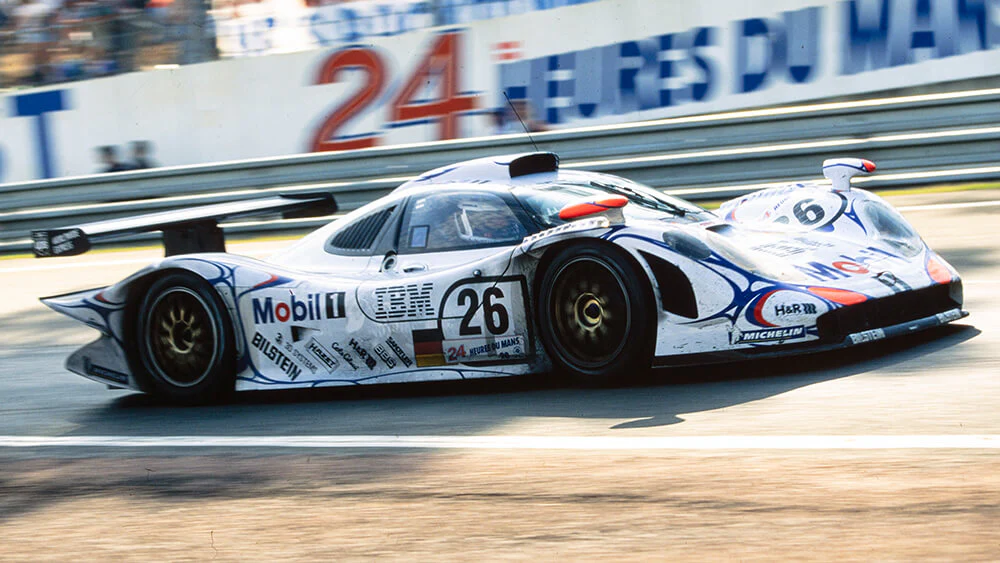
Le Mans in 1998 became the sort of story Porsche people tell with a glass in hand and a slightly haunted smile. The GT1-98 went up against serious opposition, and the race turned into what endurance always becomes: not a beauty contest, but a reliability referendum. Mercedes and BMW were out early; the late battle tightened; and with 90 minutes to go, Toyota’s challenge ended in a gearbox failure.
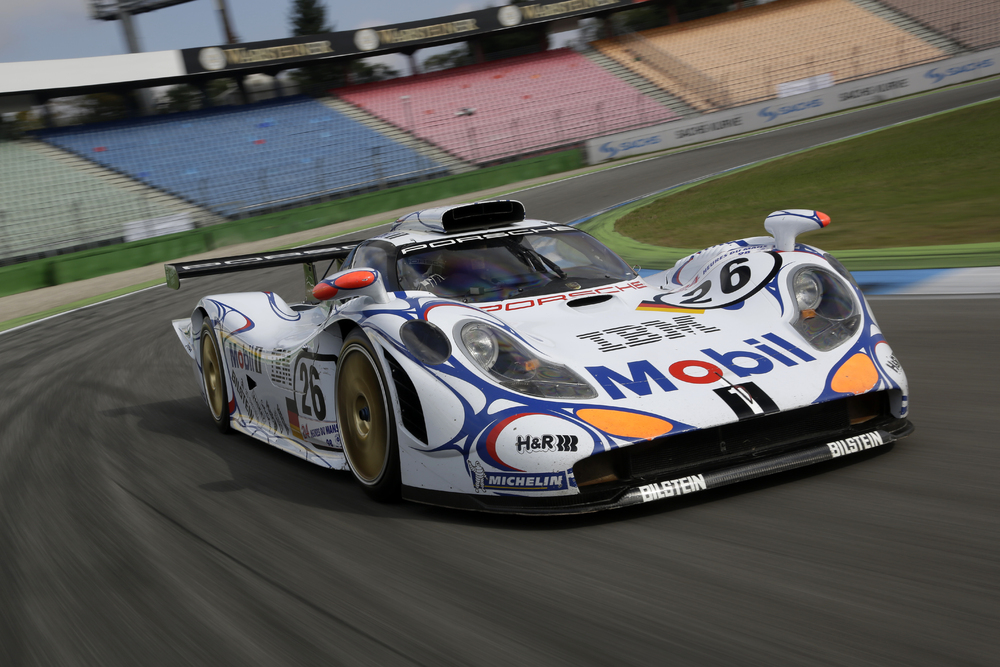
The winning #26 was driven by Laurent Aïello, Allan McNish, and Stéphane Ortelli, with the sister car completing a one-two—Porsche’s 17th Le Mans win, right on the company’s 50th anniversary celebrations.
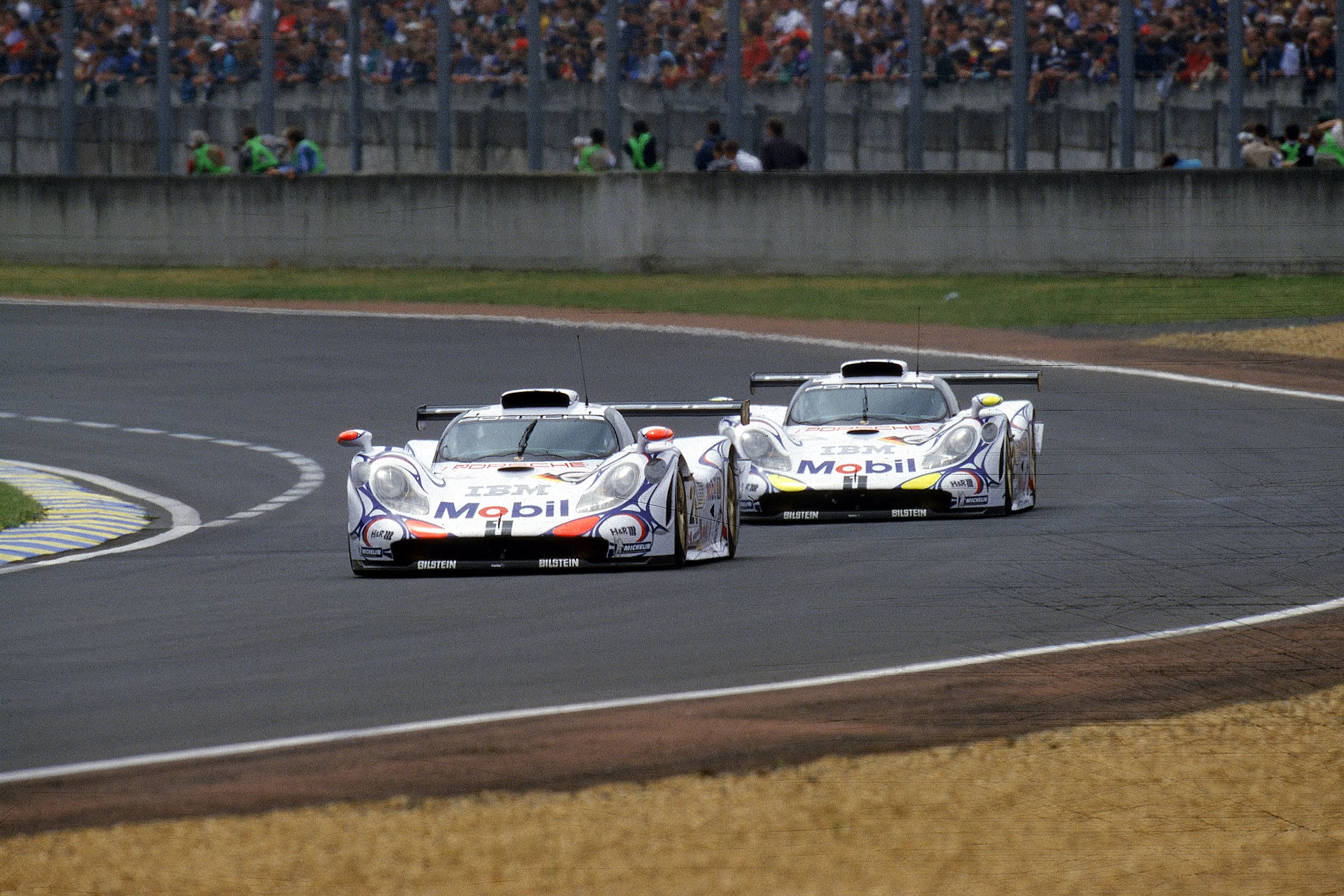
So what is the Porsche GT1, really? It’s Porsche weaponising paperwork, then accidentally creating one of the most charismatic machines of the 1990s. It’s a road car that behaves like it’s late for scrutineering. And today, it sits in that rare club of cars that aren’t merely fast—they’re historically loud. Not in decibels. In significance.

And it gets even more wonderfully German in the details: Porsche built two fully road-legal prototypes first—one went through official compliance testing with the German transport authorities—then produced the main run (mostly in 1997), and even made a single 1998 Straßen car purely to keep the updated race version eligible. If you ever wanted proof that bureaucracy can create beauty, this is it.
-
Soichiro Honda
-
Japanese engineer and industrialist


