A low-slung turbo-boxer underdog that began with failures, trusted two proven champions, and slowly turned Subaru’s new rear-drive coupé into a genuine GT300 weapon.
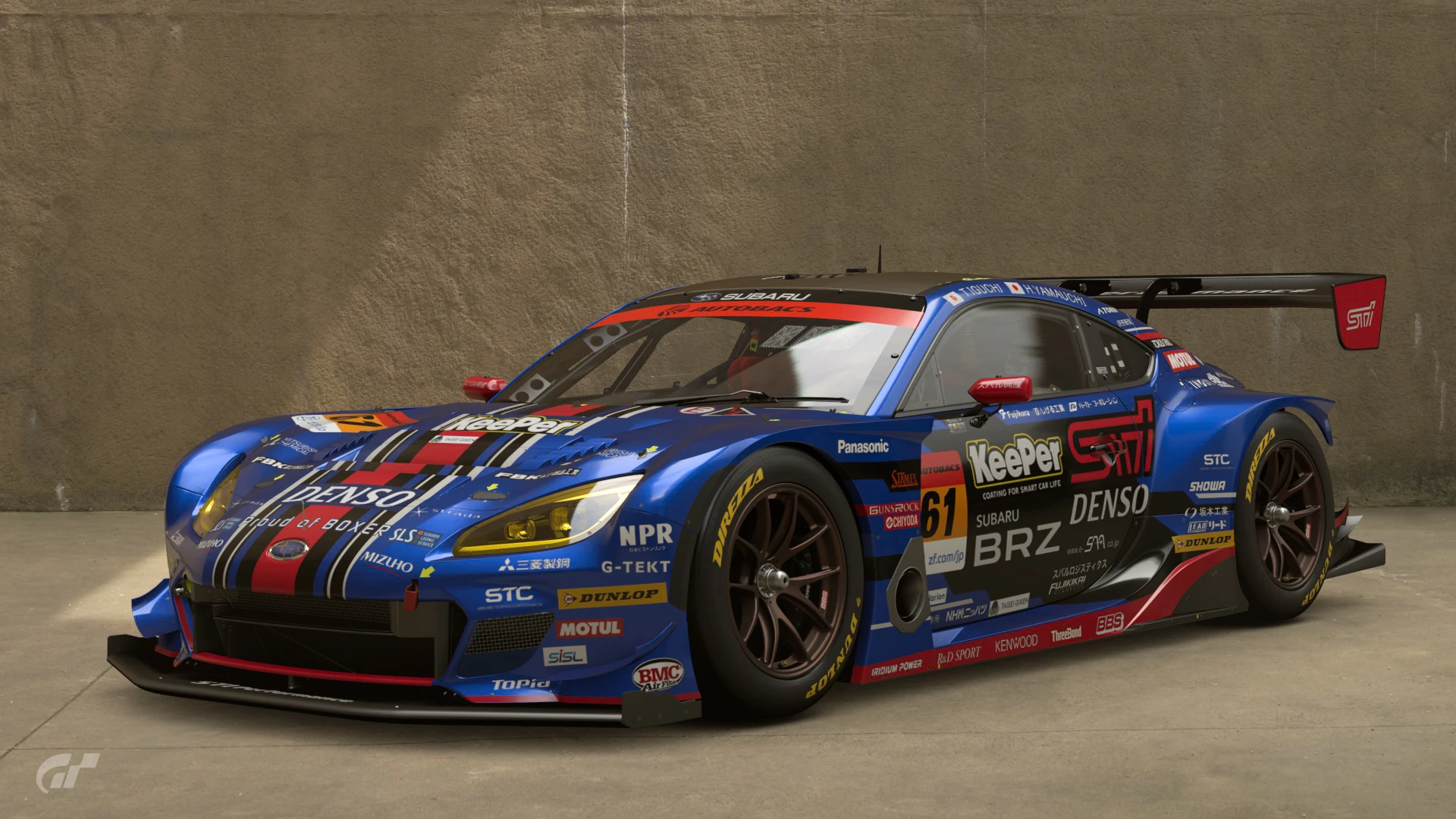
Okayama, April 2012. Subaru arrived with a brand-new BRZ, painted in WR Blue, wearing number 61 and enough aerodynamic furniture to make the road car look as though it had forgotten to get dressed. It was low, wide, rear-wheel drive and powered by an EJ20 turbo boxer. In other words, Subaru had taken its new lightweight coupé and immediately ruined its warranty in the best possible way.
The BRZ GT300 was developed by STI and run by R&D SPORT, replacing the Legacy B4 GT300. Hideharu Tatsumi oversaw the project, with technical director Minoru Sawada and the R&D SPORT crew turning Subaru’s new front-engine, rear-drive sports car into a purpose-built JAF GT300 weapon.
And the drivers were hardly apprentices.
Tetsuya Yamano had already won GT300 titles in 2004, 2005 and 2006, doing so in three different cars — Honda NSX, Toyota MR-S and Mazda RX-7. His 2005 title partner was Kouta Sasaki, who now found himself sharing the BRZ with him again. Subaru had essentially hired two men who already knew how to win this championship, then handed them a completely new racing car and said, with admirable optimism, “sort it out.”
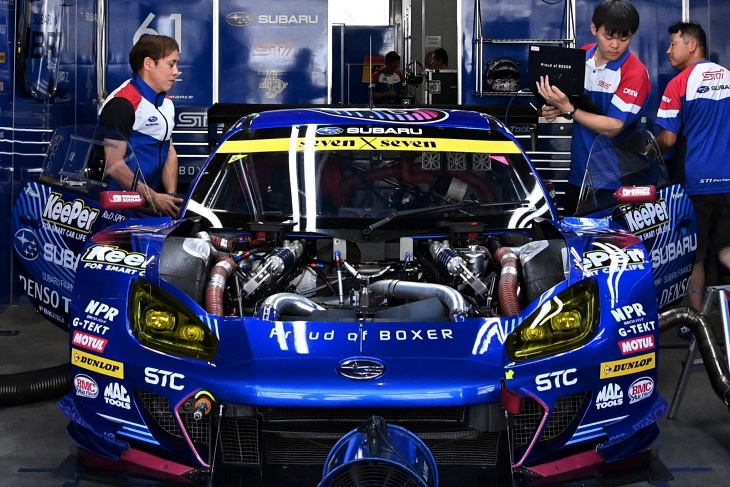
Under the bonnet sat the familiar 1,994 cc EJ20 turbocharged flat-four, heavily reworked for competition. Period technical documentation put output at more than 350 PS and torque above 45 kgf·m, breathing through a 39.9 mm restrictor. A Hewland transmission sent power to the rear wheels. At around 1,150 kg, the BRZ was substantially lighter than the road car and sat only 1,110 mm tall.
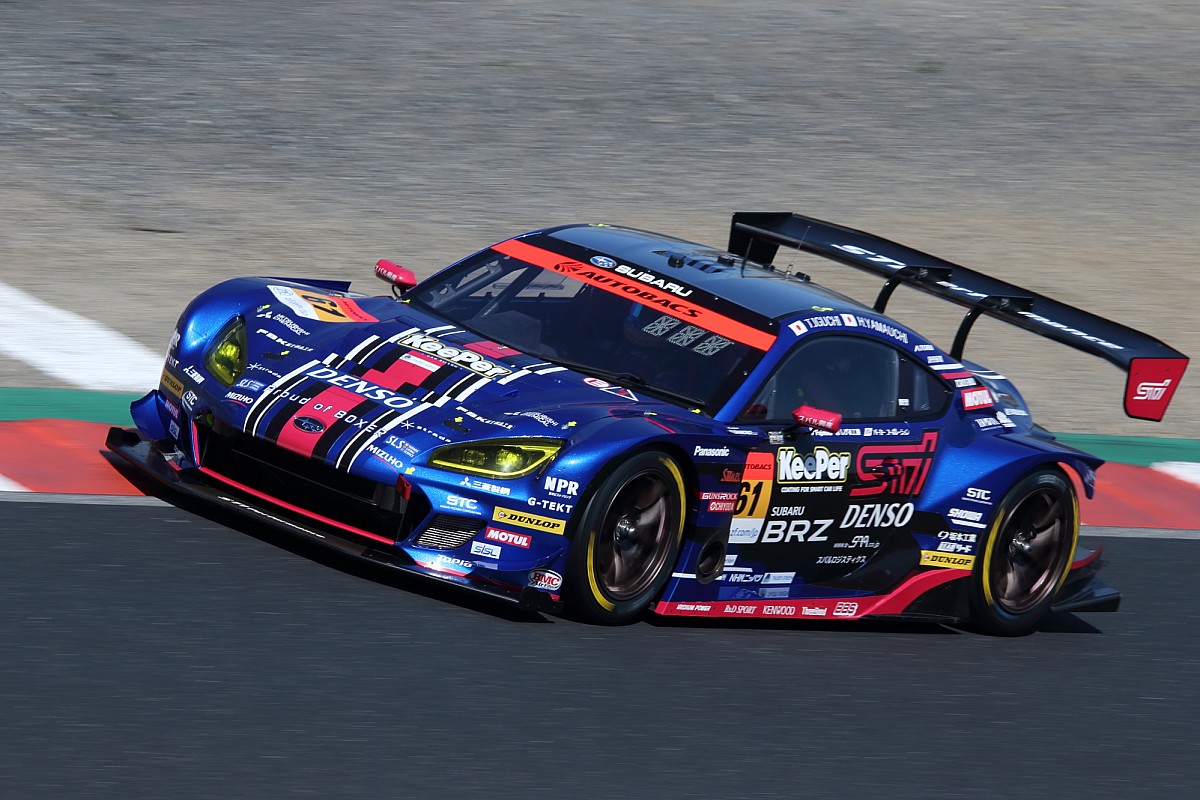
The cleverness was packaging. Subaru deliberately exploited the boxer engine’s low centre of gravity, while the race car used inboard dampers, enormous slicks and a radically widened body. Motojima admitted that the two-litre engine would struggle against larger-capacity rivals on the straights, but he believed the BRZ could make the time back under braking and through corners. In GT racing, this is the engineering equivalent of turning up to a sword fight with an extremely sharp spoon.
The debut season was not glamorous. At Okayama the BRZ failed to finish with drivetrain trouble. Fuji, Sepang, Sugo and Suzuka brought more frustration than trophies. Yet the car was clearly becoming faster. At the 2012 Suzuka round, Yamano and Sasaki were already showing competitive pace among Aston Martins, BMWs, GT-Rs and the wonderfully improbable Prius GT.
Kouta Sasaki had said before the season that their mission was to “match speed with appearance.” It was an unusually honest target because the car looked magnificent from day one. The difficult part was persuading the stopwatch to agree.
That happened properly in 2013. The same Yamano-Sasaki pairing took the BRZ’s first GT300 victory at the Suzuka 1000 km, after a season in which it repeatedly qualified near the front. The awkward debut year had not been wasted; it had been development conducted publicly, loudly and occasionally beside a recovery truck.
That makes the 2012 car historically important. It was not the championship-winning BRZ — that glory would come much later, in 2021 — but it established the lineage that Subaru would continue in GT300 for well over a decade.
Signature Line: the 2012 BRZ GT300 was not born successful; it was born stubborn enough to become successful.
.jpeg)
And that is perhaps the most Subaru thing about it. The company took a delicate rear-wheel-drive coupé, installed an old turbo boxer racing engine, wrapped it in outrageous aero and spent a season finding every weak point the hard way.
It did not arrive as a legend.
It arrived as homework.


