Born for a race that vanished, it became immortal by surviving the dream that created it.
In 1984, Ferrari unveiled a car that looked vaguely like a 308 GTB after somebody had fed it raw meat. The shape was familiar, certainly, but everything had become wider, angrier and considerably less interested in behaving at traffic lights. Three letters sat on the tail: GTO. Maranello had not used them on a road car since the 250 GTO, which was roughly equivalent to naming your new son Caesar and hoping he turned out reasonably competent.
The reason was Group B. Ferrari intended the new GTO for the FIA category, where homologation required 200 road cars. Nicola Materazzi and Ferrari's engineers therefore began with the broad visual language of the 308 but changed almost everything underneath. The wheelbase grew, composite materials replaced much of the conventional bodywork, and the engine turned ninety degrees to sit longitudinally behind the cabin. It looked related to the 308 in much the same way a tiger is related to the family cat.
That engine was the masterpiece: a 2,855 cc 90-degree V8 with four valves per cylinder, dry-sump lubrication, Weber-Marelli injection and a pair of Japanese IHI turbochargers. It produced 400 hp at 7,000 rpm and 496 Nm at 3,800 rpm. The curious 2.8-litre capacity was deliberate; turbocharged engines were multiplied by the FIA's equivalency factor, placing the GTO neatly within Group B's four-litre class.
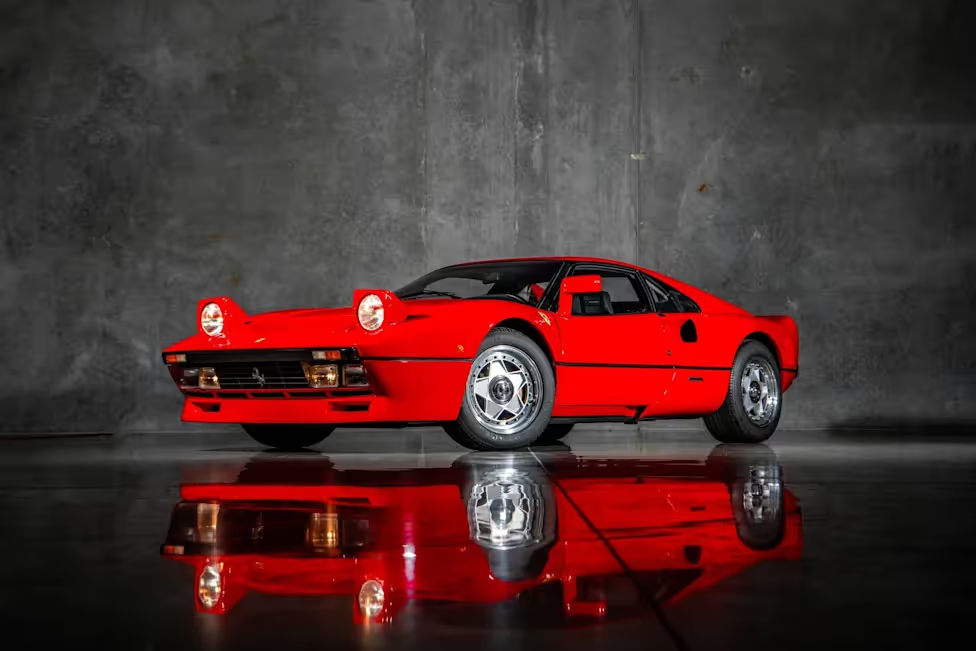
Power went through a five-speed manual gearbox to the rear wheels. There was no four-wheel drive, adaptive suspension or computer calculating whether the driver had made an unfortunate life choice. At just 1,160 kg dry, the Ferrari relied instead upon power, lightness and the owner's ability to pay attention.
Zero to 100 km/h took 4.9 seconds and top speed was 305 km/h, making it the first Ferrari road car officially capable of more than 300 km/h. In 1984 that was absurd. Most family cars were still taking a deep breath before overtaking a lorry.
Pininfarina's Leonardo Fioravanti gave it astonishing restraint considering what was underneath. The swollen rear arches, four driving lamps, deep front spoiler and three cooling slots behind each rear wheel turned the elegant 308 silhouette into something muscular without ruining it. Modern supercars sometimes appear to have been designed by several aerodynamic departments fighting over the same photocopier. The GTO needs only a few vents to explain itself.
And then, having built the thing for racing, Ferrari never raced it.
Group B became synonymous with increasingly violent rally machinery and was cancelled in 1986 before Ferrari's intended circuit-racing programme could properly happen. Development had already produced the ferocious GTO Evoluzione, but the competition destination disappeared. The road car was left as a homologation special without anything left to homologate.
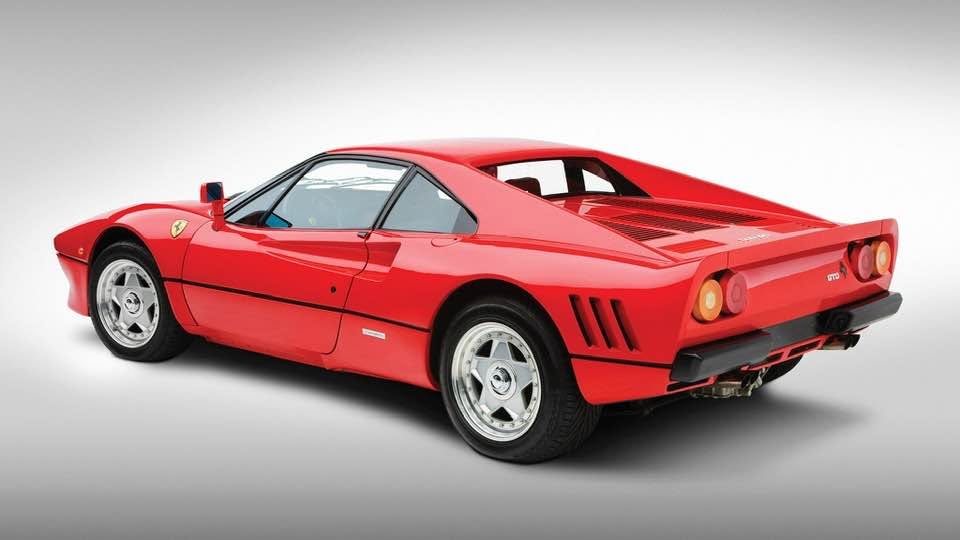
This accident of history may actually be why the GTO became so important. Instead of spending its youth being bent against barriers, it became the blueprint for Ferrari's modern limited-production supercars. Its longitudinal twin-turbo V8 and Evoluzione programme flowed directly toward the F40. The lineage through F50, Enzo and later halo Ferraris began here.
Demand also rather exceeded the planned 200 cars. Ferrari ultimately built 272 between 1984 and 1987, all naturally highly desirable today. Yet rarity alone misses the point. The GTO came from a strange moment when a manufacturer could create an extraordinarily serious road car purely because a racing regulation required it, then discover that customers desperately wanted the inconvenient side effect.
Signature Line: the 288 GTO was built to qualify for a race, then became immortal because the race disappeared.
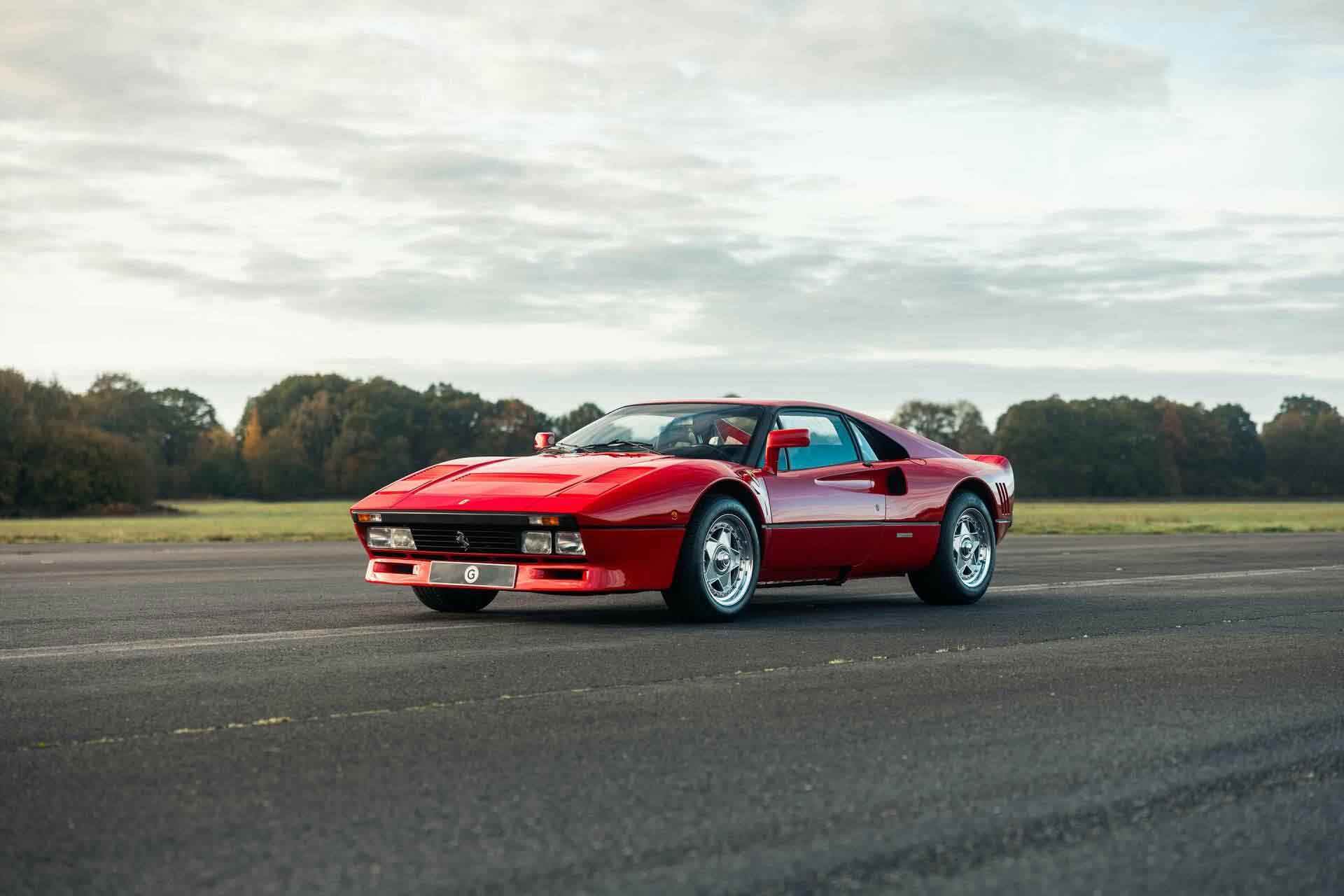
That contradiction defines it. The GTO is beautiful without being delicate, brutally fast without looking theatrical and technologically advanced without insulating its driver from the consequences. It arrived before the word “hypercar”, before driving modes and before enormous touchscreens began asking whether you really wanted to change the temperature.
Ferrari intended to make a racing car legal for the road. History removed the racing and accidentally left us something better: one of the purest road-going expressions of Maranello at its most gloriously unreasonable.


