Ferrari's transverse gearbox, flat-12 power and Lauda-forged discipline made the high-airbox 312T a champion that opened 1976 with three wonderfully immodest victories.
Long Beach, March 1976: palm trees, concrete walls and a Ferrari wearing an intake chimney tall enough to receive post. Clay Regazzoni put this improbable shape on the streets and won. Britain had the Cosworth DFV and several ingenious sheds; Italy brought its own twelve-cylinder engine, gearbox and opera company. One tries not to sound envious.
Its name is engineering shorthand. Three means three litres, twelve counts the cylinders, and T stands for trasversale: Mauro Forghieri turned the five-speed gearbox sideways ahead of the rear axle. This pulled mass towards the centre, reduced polar inertia and made the car more eager to change direction. Not witchcraft, merely packaging, though the opposition may have preferred the former.
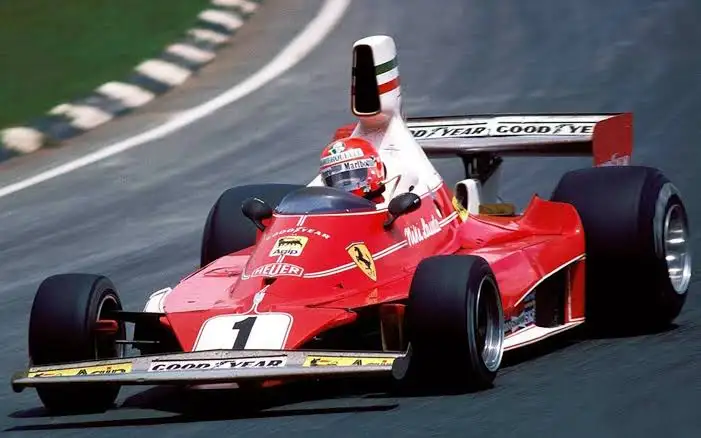
Below sat a 2,991.8 cc flat-12 producing about 495 hp at 12,200 rpm. It was wider and thirstier than the Cosworth V8, but lower and more powerful. The wedge-shaped chassis and inboard rear brakes gathered the machinery around the driver; broad wings supplied the load its static weight distribution lacked. The towering airbox fed twelve cylinders with the delicacy of a cathedral organ.
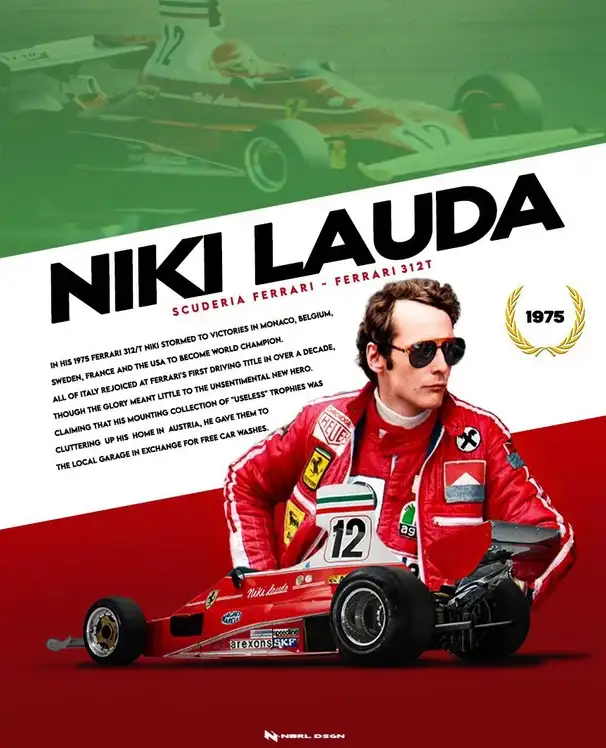
The 312T restored Ferrari in 1975, giving Niki Lauda his first world title and Maranello its first Constructors' Championship since 1964. Yet its final act came in 1976. Lauda won in Brazil and South Africa, then Regazzoni conquered Long Beach: three opening rounds, three victories. New rules then banned tall airboxes. From Spain, the 312T2 arrived with low NACA-style intakes. The dynasty changed its haircut, not its philosophy.
The T2 carried Lauda into the season remembered by Ron Howard's Rush: the Nürburgring fire, his return six weeks later, and the Fuji finale where survival overruled arithmetic. Daniel Brühl gave Lauda another life on screen; the production borrowed original cars for close-ups and built replicas for the violence. Cinema enlarged the rivalry, but the machinery needed little assistance.
Across 15 championship starts, the original 312T scored nine wins and ten poles. It also began a family whose descendants won four Constructors' and three Drivers' titles between 1975 and 1979. Its achievement was coherence: engine height, gearbox position and aerodynamics served one centralised-mass idea. Ferrari turned the gearbox sideways and the championship upright.
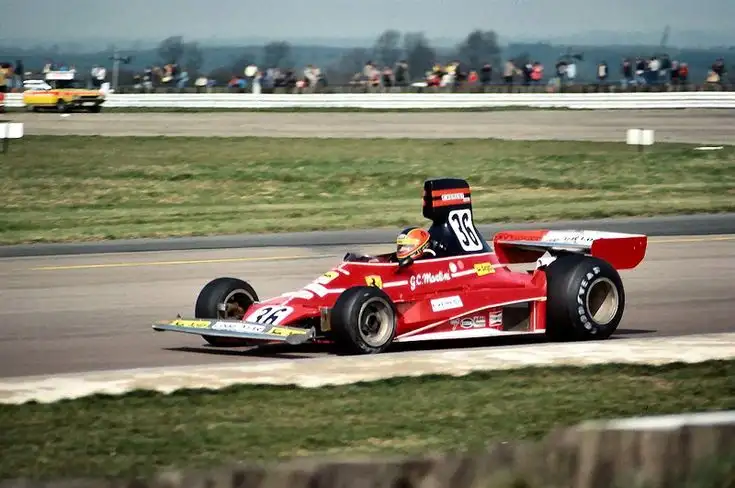
Today the survivors occupy the thin air reserved for grand prix royalty. Chassis 022, raced by Lauda and Regazzoni, sold for $6 million at Pebble Beach in 2019. Extravagant, perhaps, but most collectibles have never won the French Grand Prix. Enzo Ferrari had little sentimental interest in obsolete racers, so survival was never guaranteed merely by being magnificent.
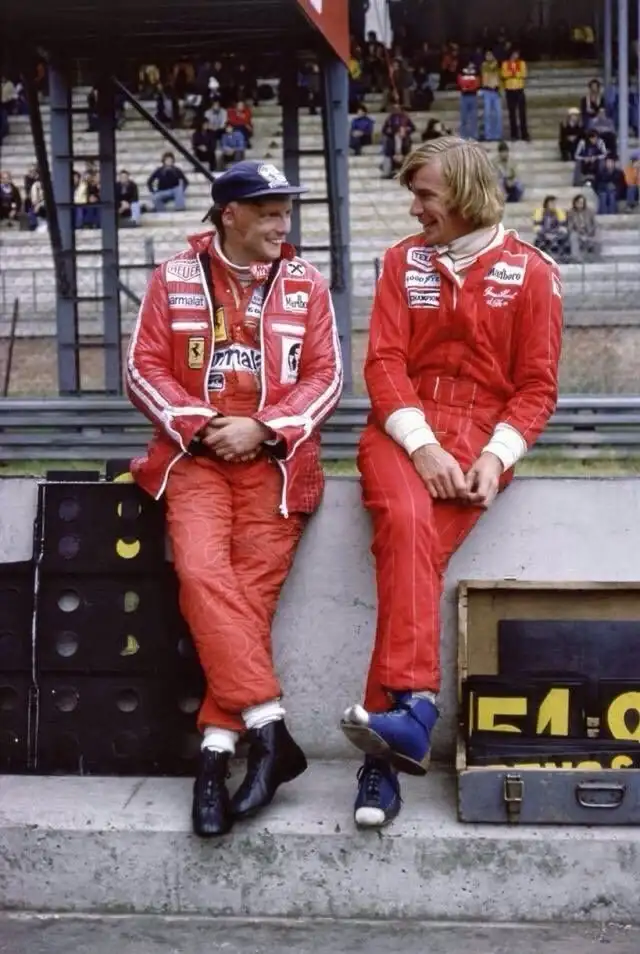
The high-airbox 1976 car marks a perfect handover: a champion returning for one last undefeated flourish, an extravagance regulation was about to erase, and the foundation beneath the T2's human drama. It represents the moment Ferrari made every major component argue the same technical case. Even the British admired that, after checking whether the gearbox orientation was strictly sporting.
-
-


