It was the machine that opened the next chapter of his racing life.
On 27 September 2025, the Nürburgring’s forests woke to a deeply confusing sight: a Ferrari wearing Red Bull colours, carrying Max Verstappen’s name and preparing to attack the Nordschleife in a four-hour club race. Formula One’s reigning benchmark had apparently spent his weekend off choosing twenty-odd kilometres of blind crests, compression zones and damp German woodland. Some people relax with golf. Verstappen prefers corners that may contain weather.
The car was the number 31 Ferrari 296 GT3, entered by Emil Frey Racing under the Verstappen.com Racing banner and shared with Chris Lulham. It was not merely a promotional demonstration or an elaborately expensive track day. This was NLS9, Verstappen’s first GT3 race, held only after he had completed the necessary Nordschleife permit process in a less powerful Porsche Cayman GT4. Even world champions must occasionally queue at motorsport’s administrative counter.
Ferrari introduced the 296 GT3 in 2022 as the successor to the hugely successful 488 GT3, with competition beginning at Daytona in 2023. Developed alongside French racing specialist ORECA, it used the road-going 296 GTB as its visual and architectural starting point, then removed the hybrid system entirely. Racing regulations, weight and serviceability demanded something simpler. Thus Ferrari’s most advanced electrified road car became, in competition form, a pure twin-turbo V6 machine. Progress is rarely a straight line; sometimes it stops in the pits and unplugs the battery.
Behind the cockpit sits a 2,992 cc, 120-degree twin-turbocharged V6 producing Approx. 600 hp, depending on Balance of Performance regulations. Power reaches the rear wheels through a six-speed sequential gearbox mounted transversely for compactness. The engine itself is rotated compared with the road car’s installation, improving packaging and allowing cleaner access for mechanics. In endurance racing, beauty matters, but being able to replace important components without first dismantling Emilia-Romagna is generally considered useful.
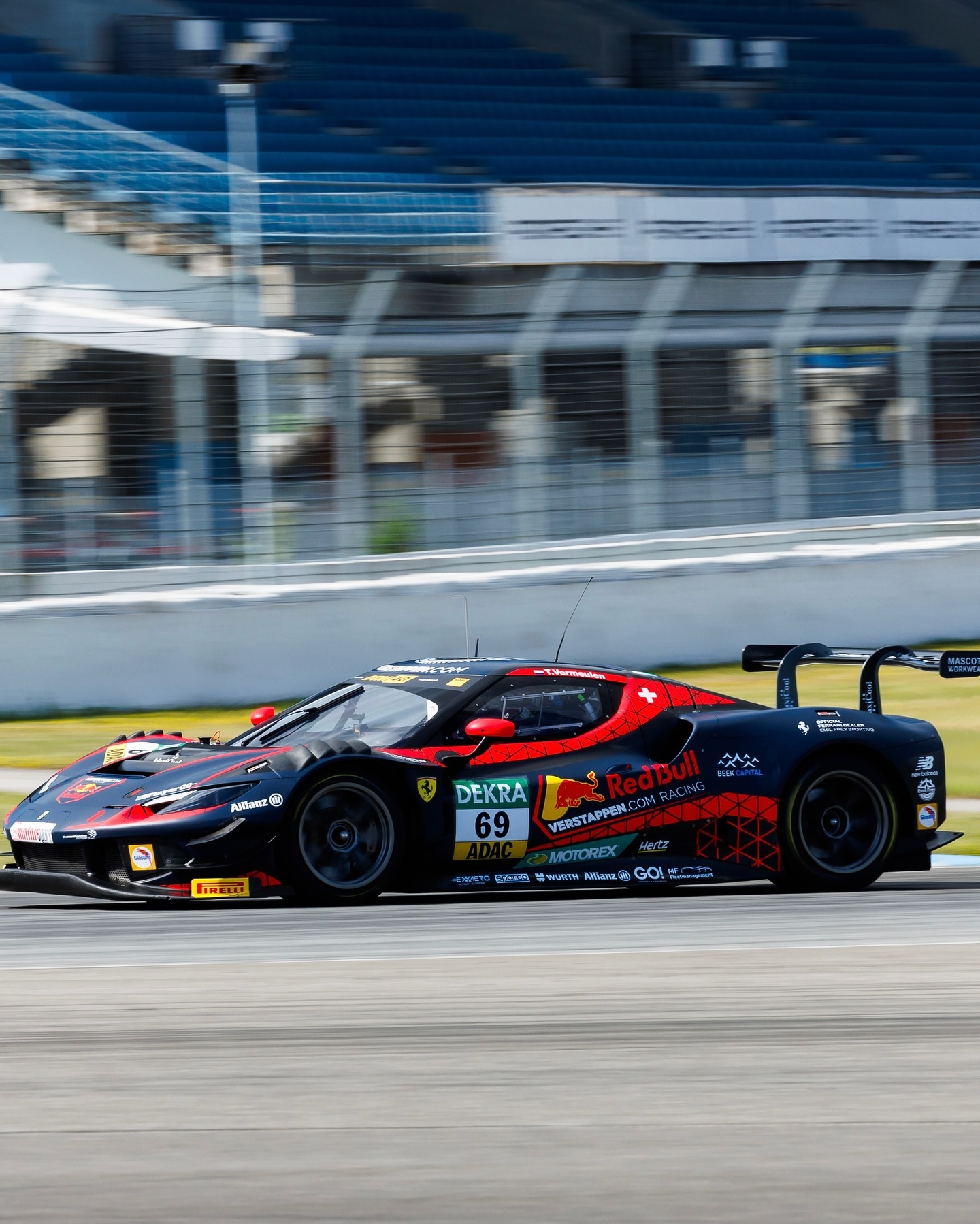
The chassis is aluminium, clothed in removable composite bodywork and surrounded by aerodynamics designed to create stable, usable downforce rather than one spectacular qualifying number. A broad splitter, carefully managed underfloor and enormous rear wing pin the car down, while the suspension and braking systems are built for rapid adjustment and replacement. Ferrari designed major front and rear assemblies to be changed quickly during long races. The 296 GT3 is therefore not simply a fast car; it is a fast car arranged around the possibility that something expensive will soon require a spanner.
At the Nordschleife, that engineering met Verstappen’s unusual appetite for instant adaptation. Qualifying third, he launched into the opening stint and seized the lead before stretching the advantage dramatically through traffic. GT3 racing presented obstacles absent from Formula One: more than a hundred cars, enormous speed differences between classes and corners whose exits disappear behind barriers, trees or both. Verstappen treated the traffic not as interference but as moving geometry.
This was the car’s revealing quality in his hands. The 296 GT3 did not look nervous or theatrical. It changed direction cleanly, rode the circuit’s compressions with composure and deployed its turbocharged torque without turning every exit into an argument between driver and rear tyre. Where the Ferrari 488 GT3 had been admired for familiarity and broad usability, the 296 added sharper aerodynamics, improved accessibility and a more compact sense of purpose.
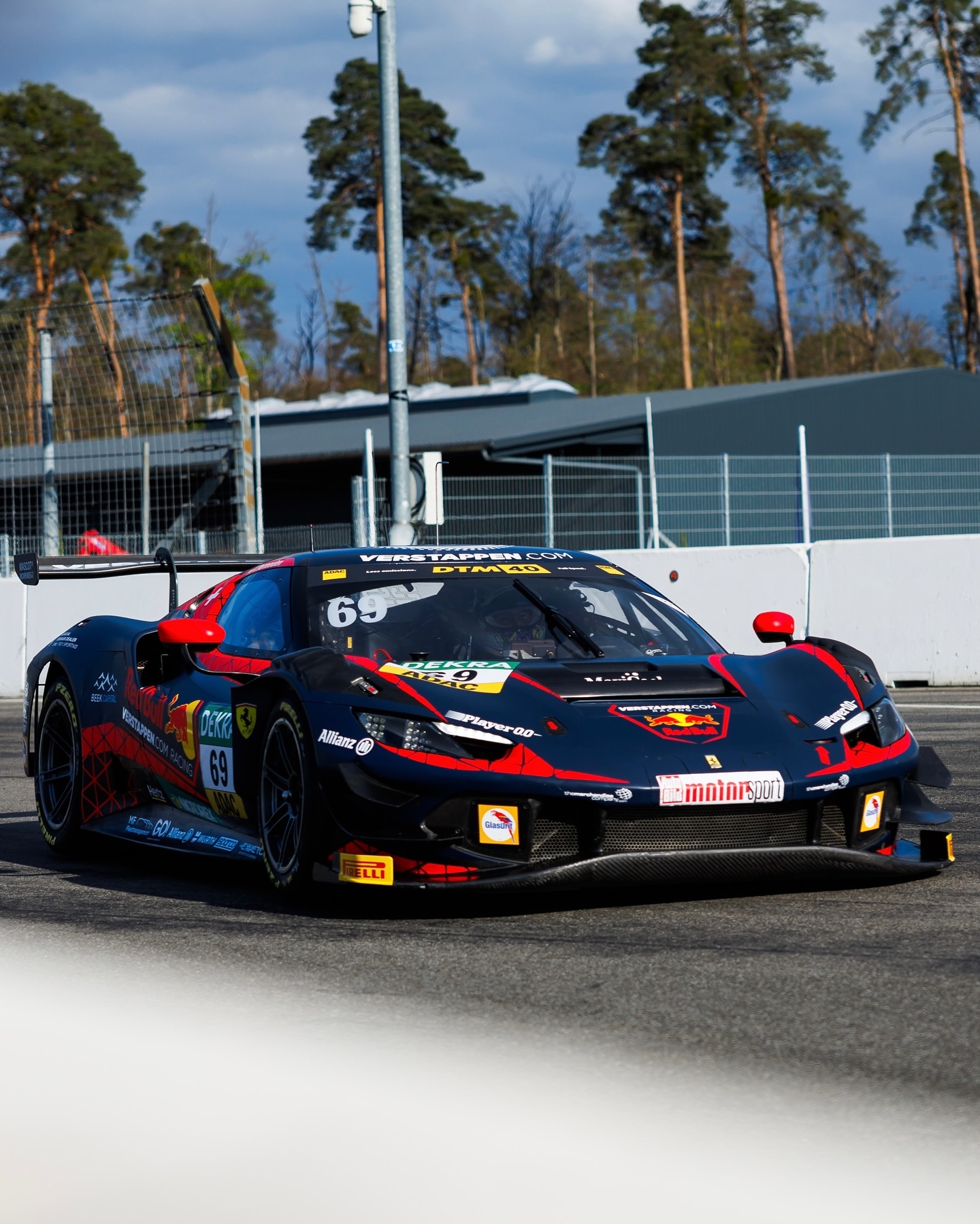
After Verstappen built the lead, Lulham inherited the car and completed the job with impressive calm, winning by roughly 24 seconds. The partnership mattered. Lulham had risen from elite simulation racing through Verstappen’s development programme into real-world GT competition, making the victory more than a famous driver borrowing a Ferrari. It joined Verstappen’s virtual-racing obsession, driver-development project and endurance ambitions in one extraordinarily loud afternoon.
The result also produced one of motorsport’s more peculiar brand images: Red Bull’s Formula One champion winning in a Ferrari. Maranello provided the machinery, Emil Frey operated it, Verstappen.com supplied the identity and the Nordschleife ignored everyone’s marketing boundaries. Racing has always been at its healthiest when corporate diagrams become slightly untidy.
Collectors cannot buy “the Verstappen 296 GT3” as casually as a numbered road-car special. Its importance lies in provenance rather than upholstery. The number 31 machine represents Verstappen’s successful move beyond Formula One, his first GT3 start and his first GT3 victory. Should his endurance career expand towards the Nürburgring 24 Hours, this Ferrari will remain the opening chapter—the moment an idea tested under the pseudonym “Franz Hermann” became a public result nobody could disguise.
The Signature Line is this: it was the Ferrari that let Verstappen race without needing Formula One’s permission.
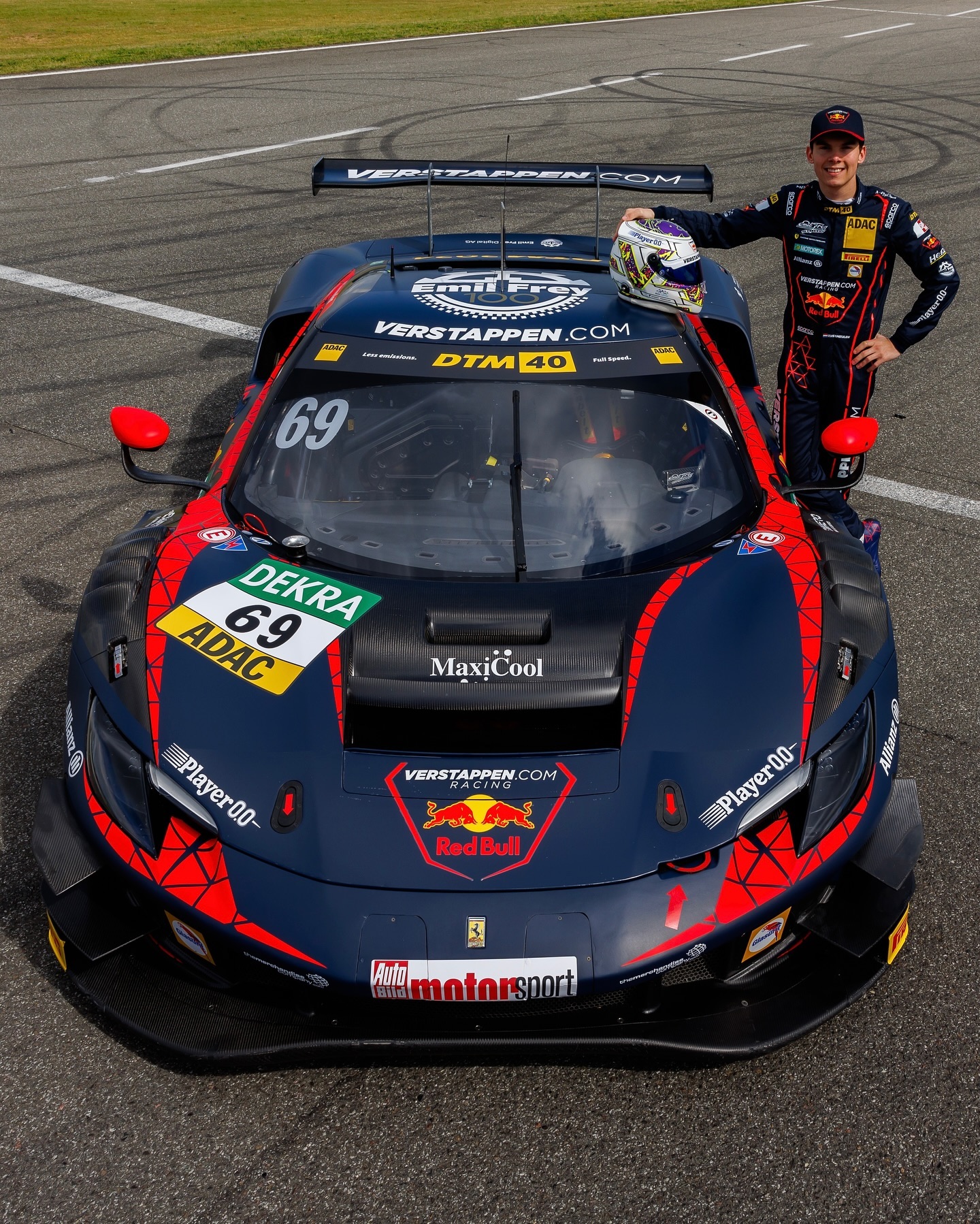
Ultimately, the car represents a collision of modern motorsport worlds. It is a customer racing Ferrari engineered for endurance, a platform for a sim racer turned professional and the machine through which one of Formula One’s defining drivers proved that curiosity still mattered more than category. The 296 GT3 was already successful machinery. At the Nordschleife, wearing number 31, it became part of Verstappen’s unfinished argument that the finest drivers should never belong to only one kind of racing.


