A one-off Ferrari track prototype inspired by legendary endurance racers, built on the 488 GT3 chassis and designed as a futuristic design experiment.
Every once in a while, Ferrari builds a car that feels less like a production vehicle and more like a sculpture that somehow escaped the design studio and learned how to breathe fire. The 2019 Ferrari P80/C is exactly that kind of machine. It is not homologated for the road. It does not follow the usual rules of racing categories. And, crucially, there is only one.
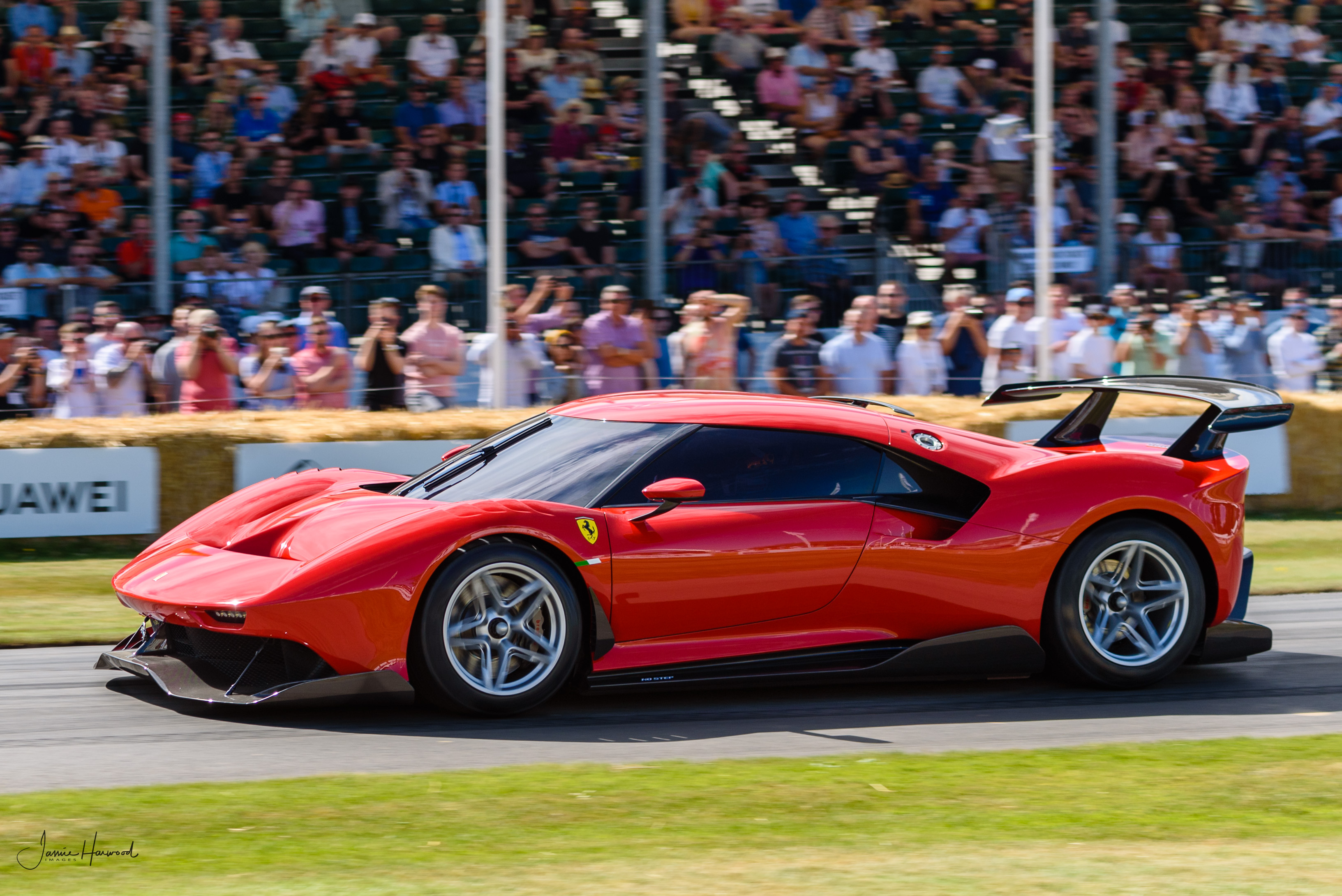
The story begins with a very wealthy client who approached Ferrari with a simple request: build something utterly unique. Not merely a special edition, not another limited-run hypercar, but a true one-off prototype that would channel Ferrari’s racing history while pushing design into the future. The project landed in the hands of Ferrari Design under Flavio Manzoni, the man responsible for shaping Ferrari’s modern visual language.

What followed was four years of obsessive development.

Rather than starting from scratch, Ferrari used the carbon-fiber chassis of the 488 GT3 race car as the foundation. That decision instantly gave the P80/C the bones of a proper racing machine: mid-engine layout, track-honed suspension, and aerodynamic architecture designed for serious speed. Under its dramatic bodywork sits Ferrari’s 3.9-liter twin-turbocharged V8, delivering around 720 horsepower.

But numbers barely scratch the surface of the P80/C’s significance.

This car was conceived as a design exploration of Ferrari’s most legendary experimental racers. The inspiration came from machines like the Dino 206 S and the radical 330 P3/P4 prototypes that dominated endurance racing in the 1960s. If you stare at the P80/C long enough, those ghosts start appearing. The long nose. The aggressive rear haunches. The canopy-like cockpit. It’s history refracted through a futuristic lens.
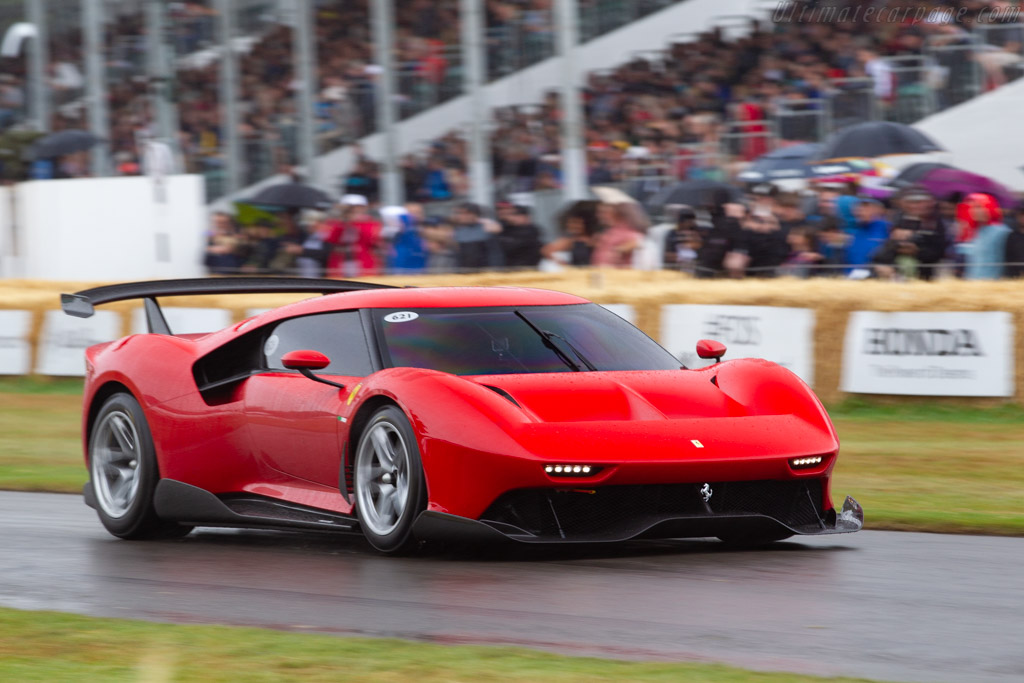
The bodywork itself is a masterclass in aerodynamic sculpture. Huge rear buttresses flow into an enormous diffuser. The front end is pierced with complex airflow channels. Everything exists for downforce, cooling, and stability. Yet despite the technical brutality, the car still carries unmistakable Ferrari elegance.
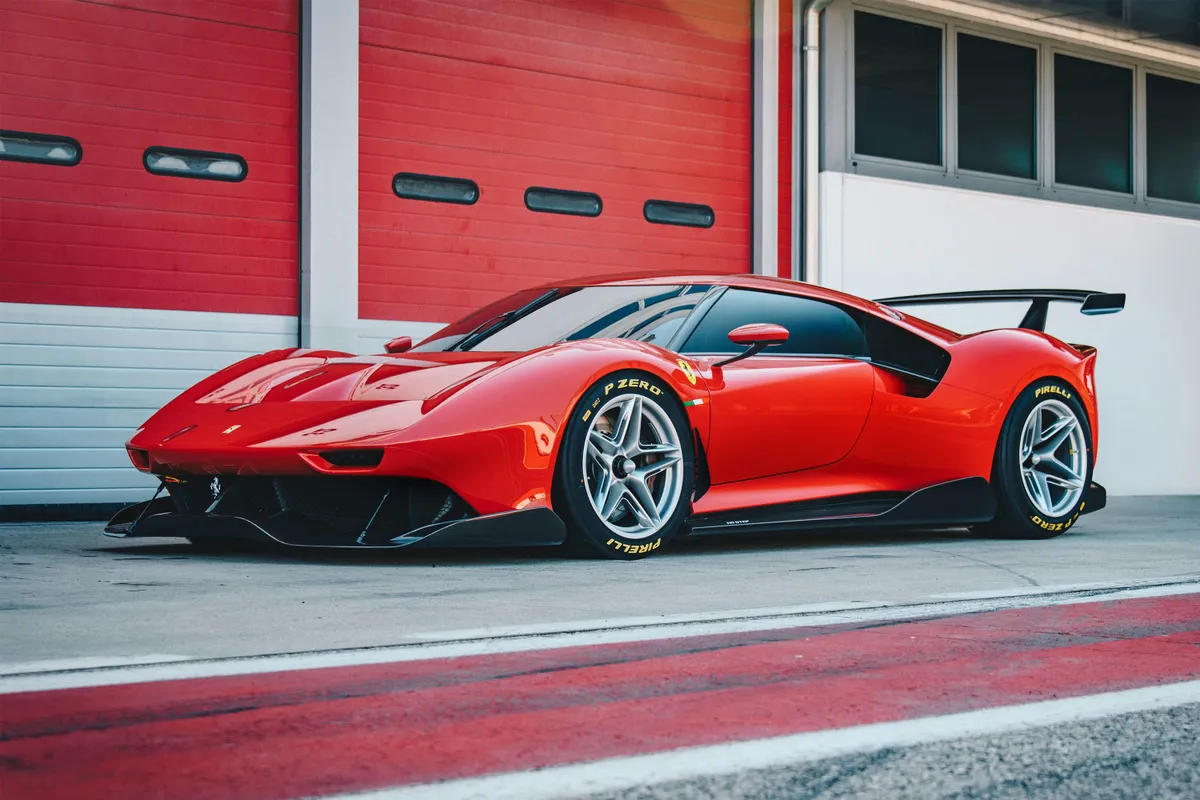
Because the P80/C is track-only, Ferrari allowed itself to chase pure performance without worrying about road regulations. Even the body panels can be swapped depending on whether the owner wants a more aggressive track configuration or a display-oriented version.

The result is something fascinating: a car that feels like both a historical tribute and a science fiction concept.

Unlike Ferrari’s halo cars such as the LaFerrari, the P80/C was never meant for collectors to park in climate-controlled garages. It was designed to be driven—hard—on private circuits.
That philosophy makes the P80/C one of the most intriguing Ferraris ever created. It is not a product. It is not a model line. It is a singular experiment in what happens when Ferrari removes the rulebook, hands the keys to its designers and engineers, and says: Show us what the future could look like.


