A radical wedge-shaped concept designed by Marcello Gandini at Bertone that previewed the design language of the 1970s and inspired the legendary Lancia Stratos rally car.
In 1970 the automotive world witnessed one of the most radical concept cars ever created: the Lancia Stratos Zero.

Designed by Marcello Gandini at Bertone, the car pushed the wedge design philosophy to extraordinary extremes. Standing only 840 mm tall, the Stratos Zero looked more like a spacecraft than a road car.
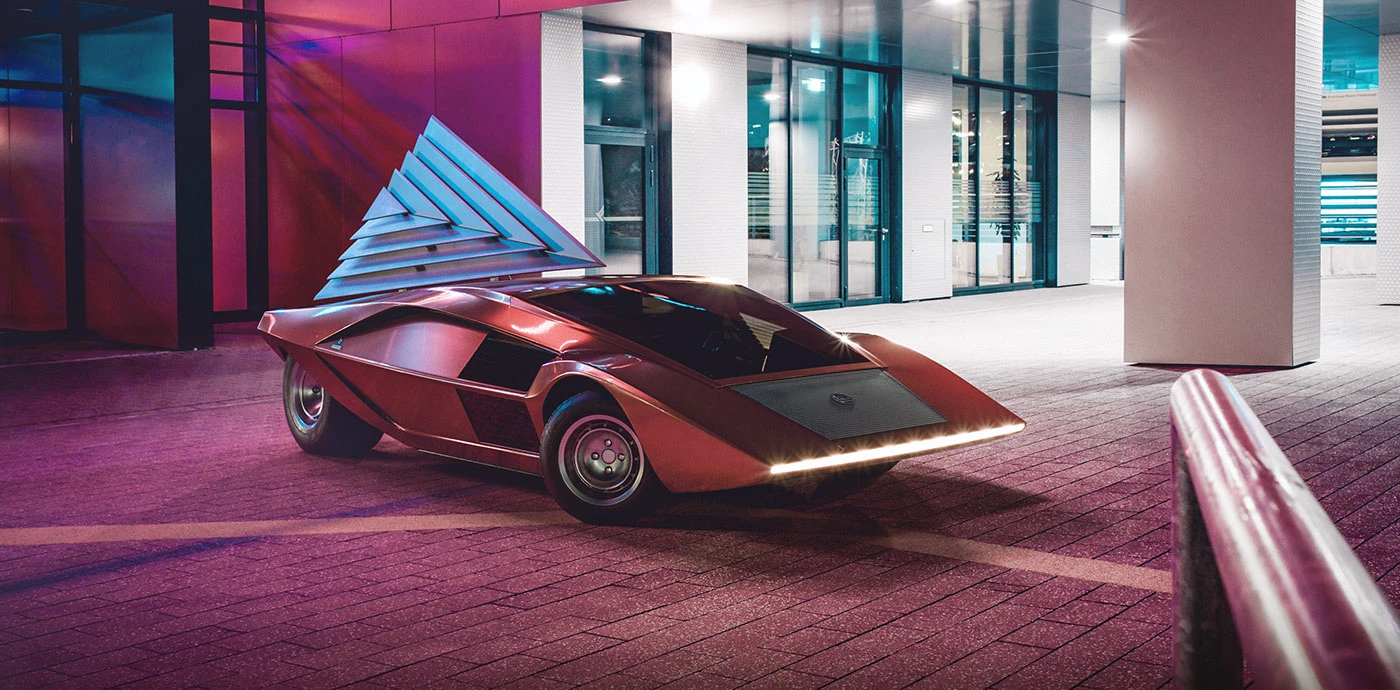
Its sharply triangular body, dramatic orange paint and glass canopy created a futuristic aesthetic that immediately captured global attention when it debuted at the Turin Motor Show.

The car featured an unusual entry method in which the entire windshield hinged upward, allowing the driver to climb into the cockpit from the front like a fighter pilot. Mechanically the Stratos Zero used components from the Lancia Fulvia including a 1.6-litre V4 engine producing around 115 horsepower paired with a 5-speed manual transmission.
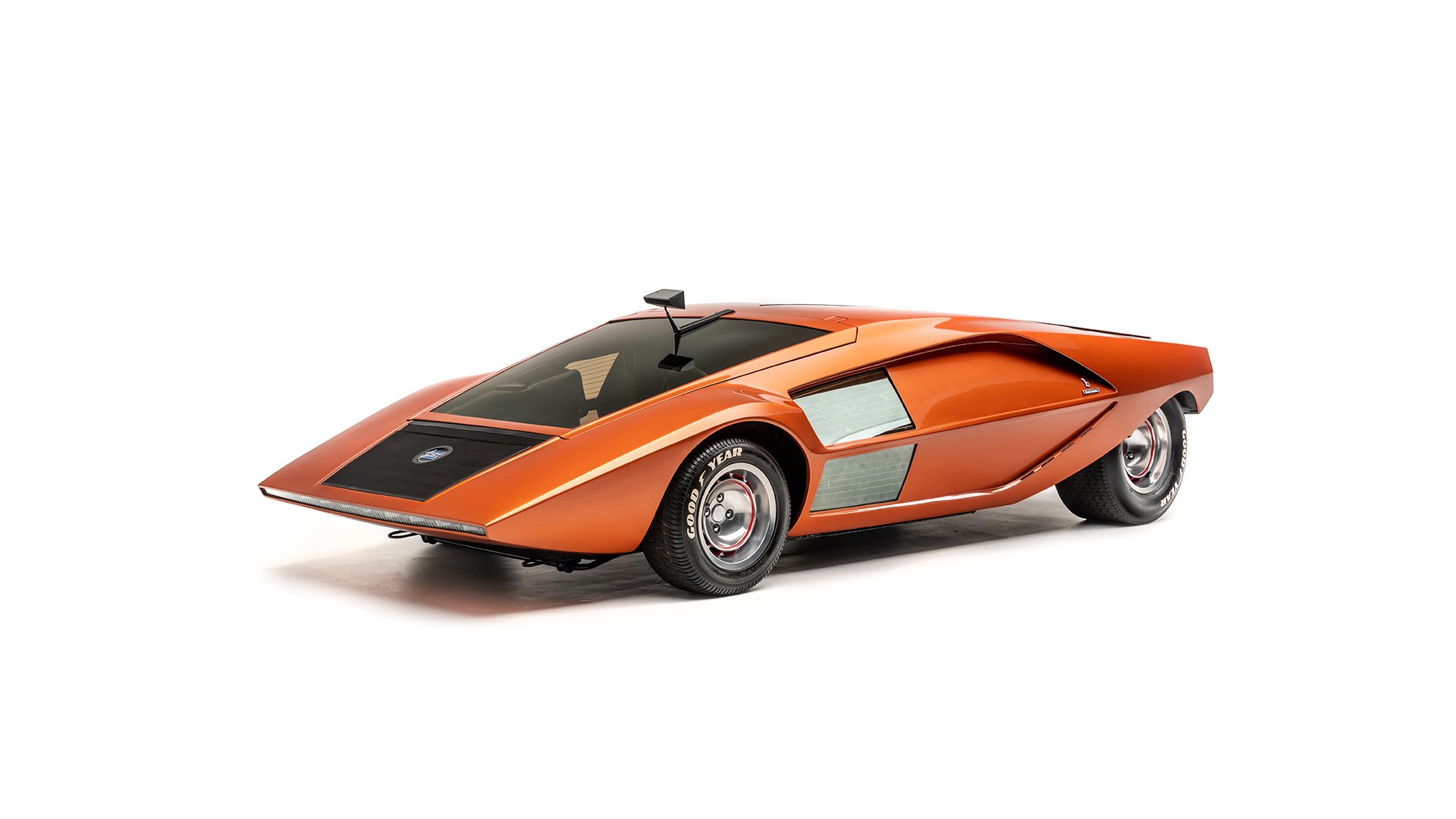
While performance was not the main focus, the lightweight construction and compact dimensions gave the car respectable agility.

The real significance of the Stratos Zero lies in its design influence. The wedge styling introduced here became one of the defining shapes of the 1970s and directly influenced later supercars such as the Lamborghini Countach.

Even more importantly, the concept inspired Lancia to develop the Stratos HF rally car, which would go on to dominate the World Rally Championship in the mid-1970s.

Today the Stratos Zero remains one of the most striking concept vehicles ever produced, representing a moment when automotive design boldly imagined the future.


