With genuine racing bones and a three-rotor voice, Mazda's singular Furai carried Le Mans memories towards an imagined future before fire ended its brief life.
Look at the number 55 before you look at the flames. That is where this story ought to begin. Mazda's Furai deserves better than being remembered as the concept car a magazine brought home in pieces. Beneath those extraordinary curves sat something increasingly unusual: a manufacturer's wild idea that could actually leave the exhibition hall under its own power.
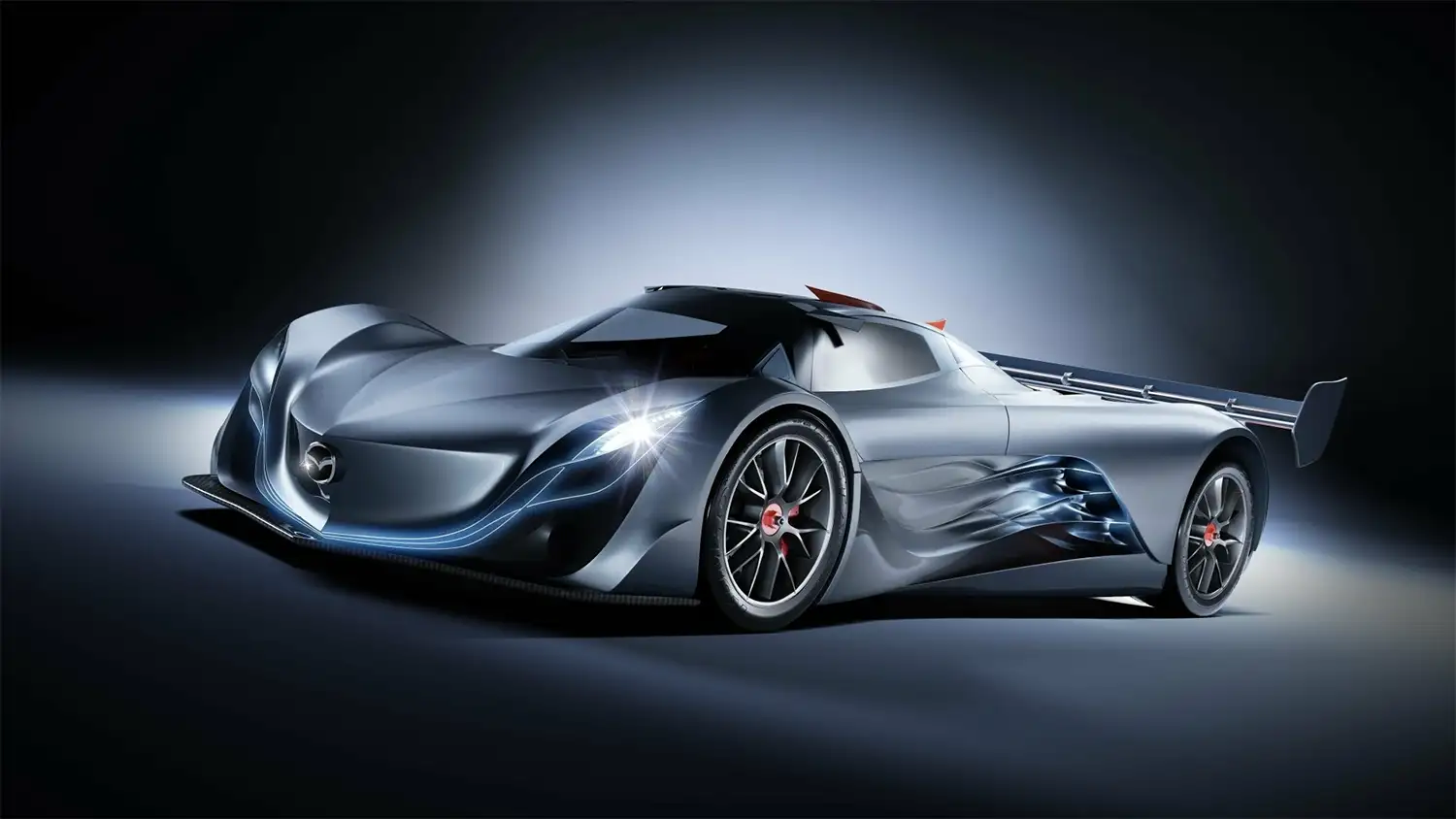
The family resemblance was audible. In 1991, Mazda's four-rotor 787B won Le Mans outright, making it the first Japanese manufacturer to do so. Furai wore its victorious number, but inherited the conviction rather than the engine. Its own three-rotor unit produced a Mazda-quoted 450 hp and ran on E100 ethanol. Apparently, celebrating a racing ancestor required neither a commemorative badge pack nor matching luggage.
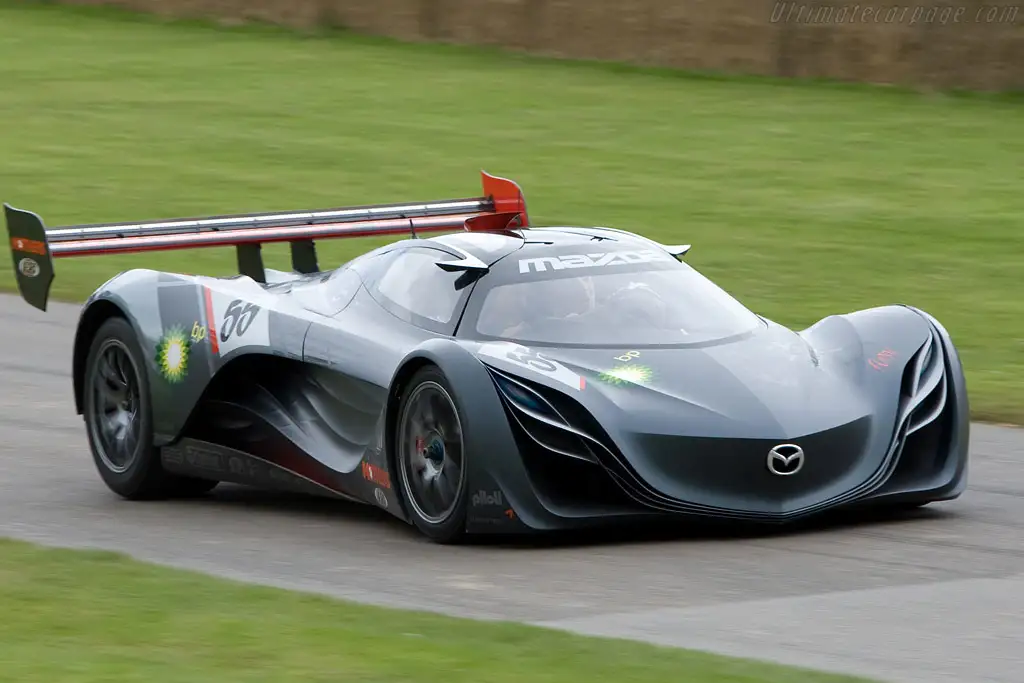
Revealed at Detroit in 2008, Furai clothed a Courage C65 chassis previously raced by B-K Motorsports in the American Le Mans Series. This was not a road car dressed for a track day; it was a racing car persuaded to attend an art exhibition. Mazda's North American design team, led by Franz von Holzhausen, developed the shape with aerodynamic input from Swift Engineering. Nagare meant flow. Here, the flowing surfaces had to earn their keep by managing real air, not merely attracting flattering adjectives.
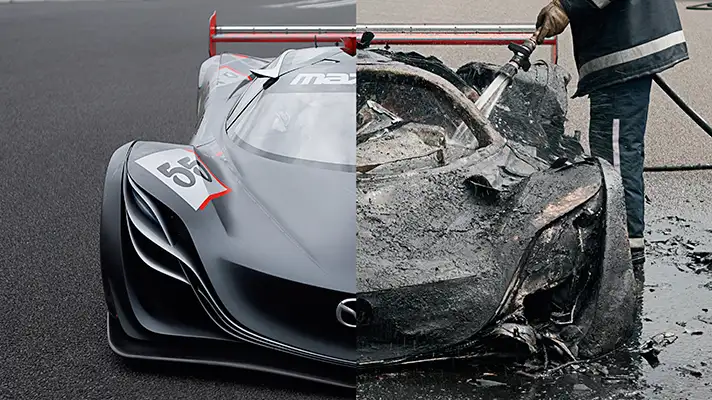
Furai means sound of the wind. A rather modest name for something with a rotary racing engine immediately behind the occupants. The enclosed cockpit and butterfly doors suggested a supercar, but Mazda explicitly described a study between road and racing worlds, not an imminent production model. That distinction matters. We did not lose a promised showroom car; we lost a working argument that Mazda's racing past could shape something genuinely unfamiliar.
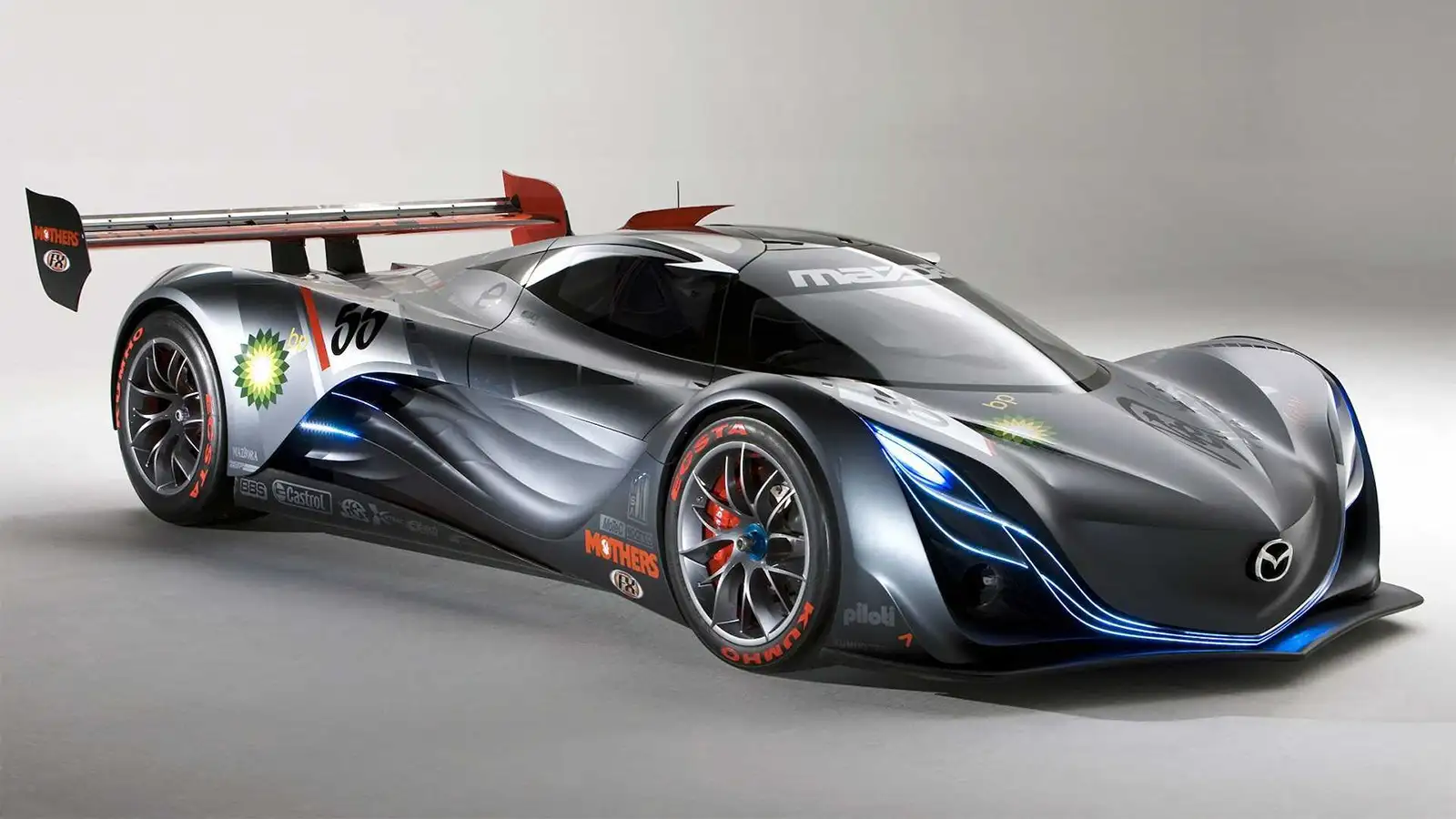
Then came Bentwaters, England, on 19 August 2008. During photography for Top Gear magazine, fire developed around the engine bay. Mazda driver Mark Ticehurst escaped, but the sole Furai was destroyed. The account became public in 2013. Those dates are often muddled; the loss needs no invented detail to make it hurt.
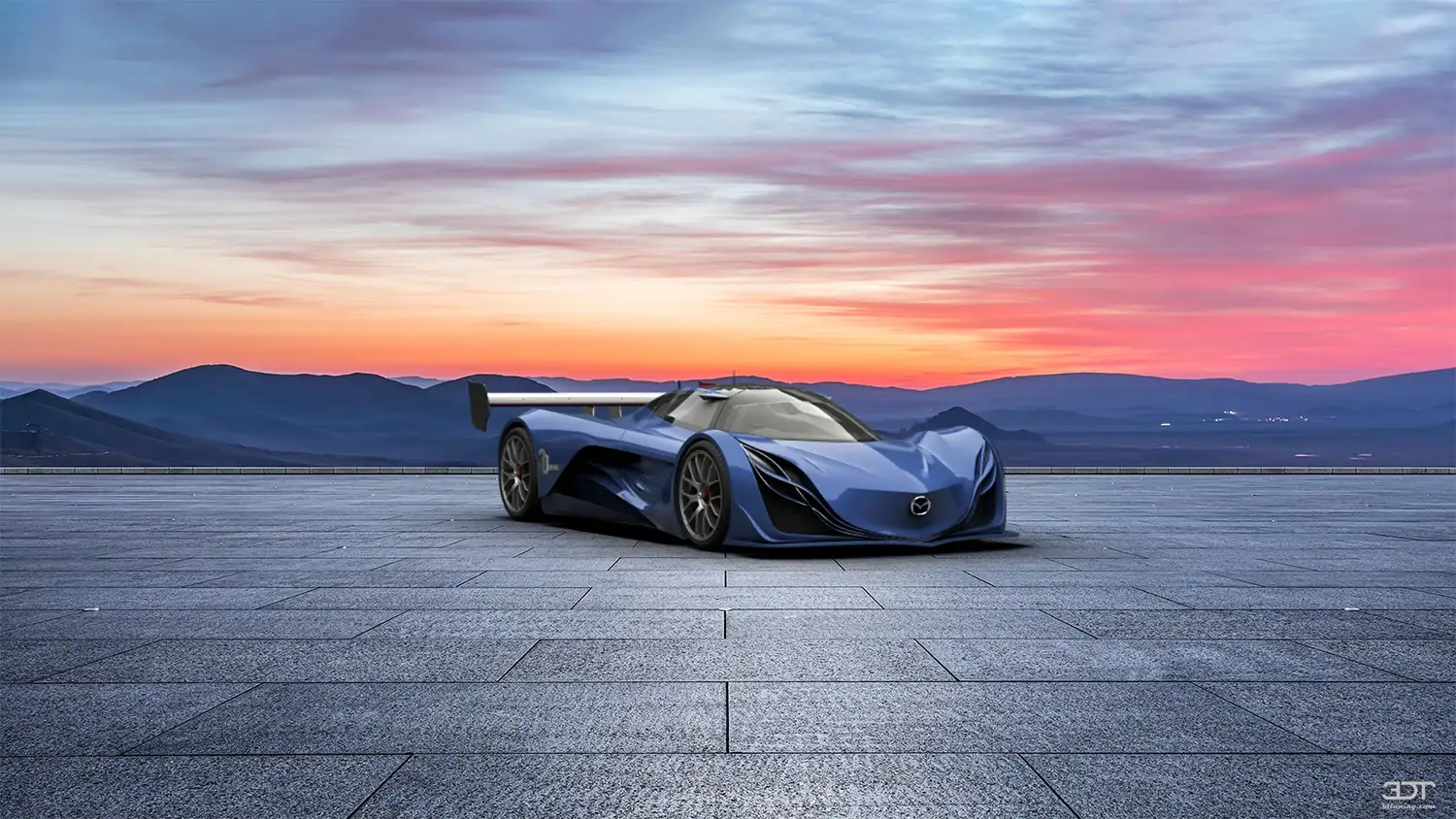
There is a particular sadness in looking at its surviving photographs. The 787B could return to a circuit and make another generation understand. Furai cannot answer in the same way. Yet treating it only as a fire victim gives its final minutes ownership of everything that came before. Its significance lies in the meeting of genuine competition hardware and an almost impertinent belief in what a Mazda could look like. Furai was a racing memory given a future tense. That future lasted terribly little time, but the ambition remains worth preserving: not because the car died, and certainly not because rarity makes everything important, but because, for one brief moment, this impossible-looking thing worked.
-
-


