A tiny twin-rotor spacecraft born from six years of engineering stubbornness, proving that Mazda’s greatest technology began not with certainty, but with refusal to quit.
Hiroshima, 1961. Mazda was still a comparatively small manufacturer, better known for practical machinery than exotic sports cars, when president Tsuneji Matsuda decided the company needed something nobody else in Japan possessed. His answer came from Germany: Felix Wankel’s rotary engine. It was compact, smooth, wonderfully clever and, at that particular moment, almost completely unusable.
Mazda licensed the technology from NSU and Wankel, received an experimental engine and discovered that it could seize within an hour. Most companies would have returned it with a strongly worded letter. Mazda built a department around it.
Engineer Kenichi Yamamoto gathered 47 young engineers, average age about 25, into what became known as the “47 Samurai”. He told them the rotary engine should occupy their thoughts whether awake or asleep. Their principal enemy was chatter wear on the rotor housing, sinister marks the engineers nicknamed the “Devil’s nail marks”. Carbon apex seals impregnated with aluminium eventually helped solve it. Six years of testing followed, including roughly 700,000 km of development running. This was less an engineering programme than a prolonged argument with metallurgy.
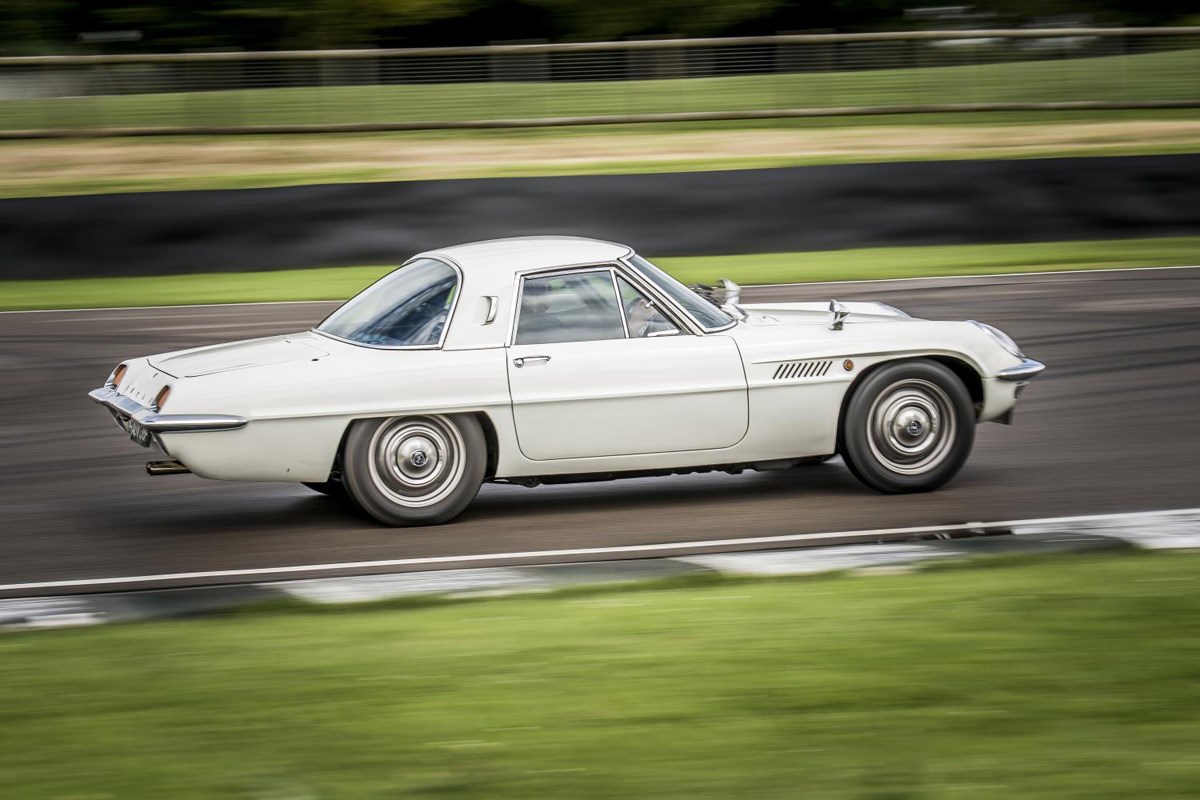
The car created to carry this improbable engine appeared even more futuristic. Matsuda famously drove an early Cosmo prototype into the 1963 Tokyo Motor Show himself. Low, white and almost spacecraft-like, it looked as though Japan had skipped several decades while nobody was watching.
Production finally began on 30 May 1967. Behind that long nose sat the 10A: two 491 cc rotary chambers producing 110 PS at 7,000 rpm. The engine was tiny and astonishingly smooth, sending power rearwards through a four-speed manual gearbox. At only about 940 kg, the L10A could reach 185 km/h and cover the standing 400 metres in 16.3 seconds. It stood just 1,165 mm tall. In Britain, this would have been called inconvenient. In Japan, apparently, it was the future.
But Mazda still had a problem: nobody knew whether this peculiar triangular-piston contraption would survive.
So in 1968 the company took two developed Cosmos to Germany for the Marathon de la Route at the Nürburgring — an 84-hour endurance race around one of the world's most vicious circuits. This was Mazda’s first serious European motorsport assault and a beautifully unreasonable way of proving reliability.
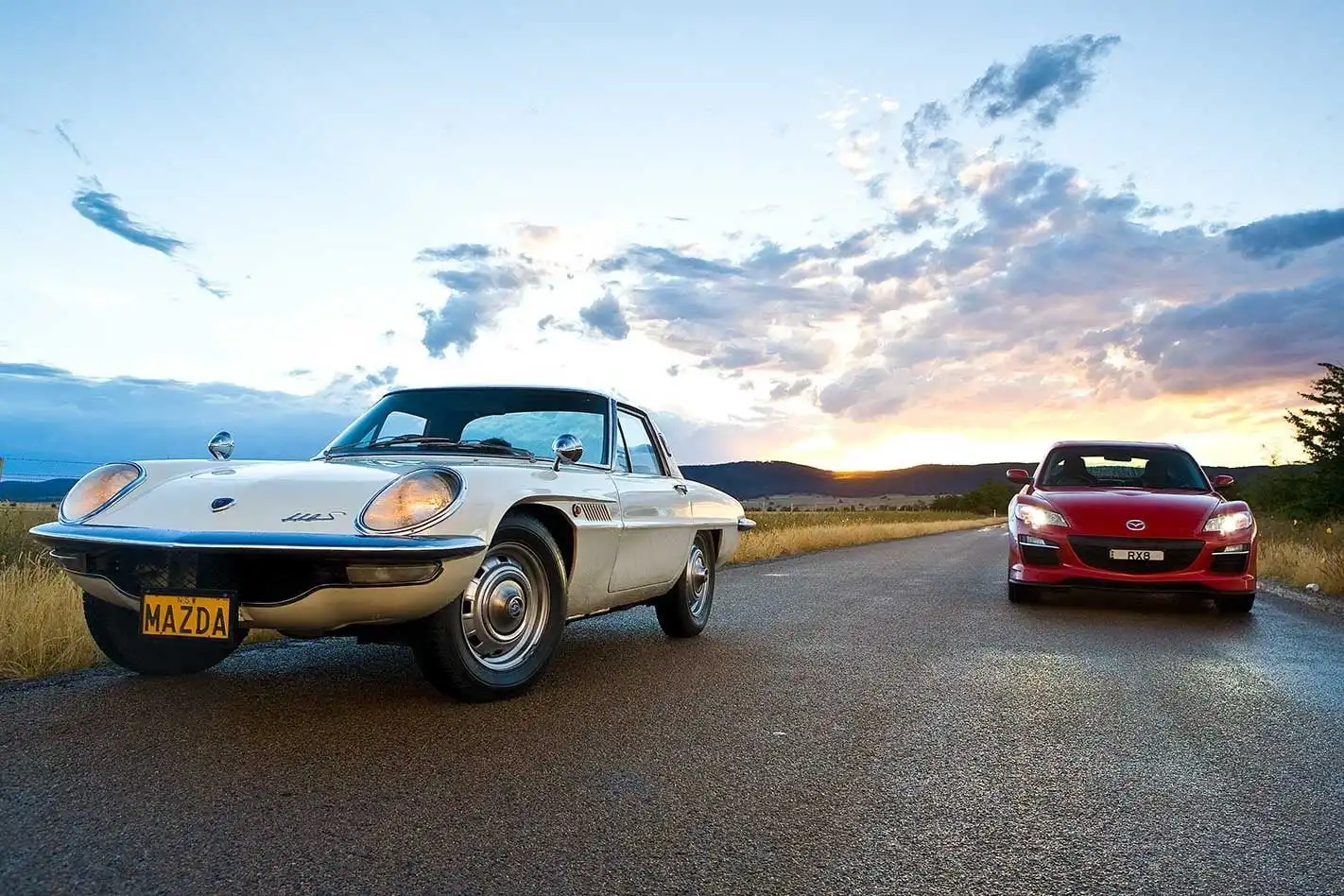
One Cosmo survived until the 82nd hour before trouble ended its run. The other completed more than 9,700 km and finished fourth overall behind established European machinery. A Japanese company few Europeans knew had arrived with an engine many Europeans had already begun doubting, and spent three and a half days refusing to break.
That result became the first chapter of an extraordinary rotary story: Familia racers, RX-3s, RX-7s and eventually the screaming four-rotor 787B that won Le Mans in 1991. Trace that lineage backwards and it ends here, with Yamamoto, Matsuda and 47 engineers being repeatedly told the sensible thing was to stop.
Signature Line: the Cosmo was not Mazda’s first rotary car; it was the moment stubbornness became an engineering philosophy.
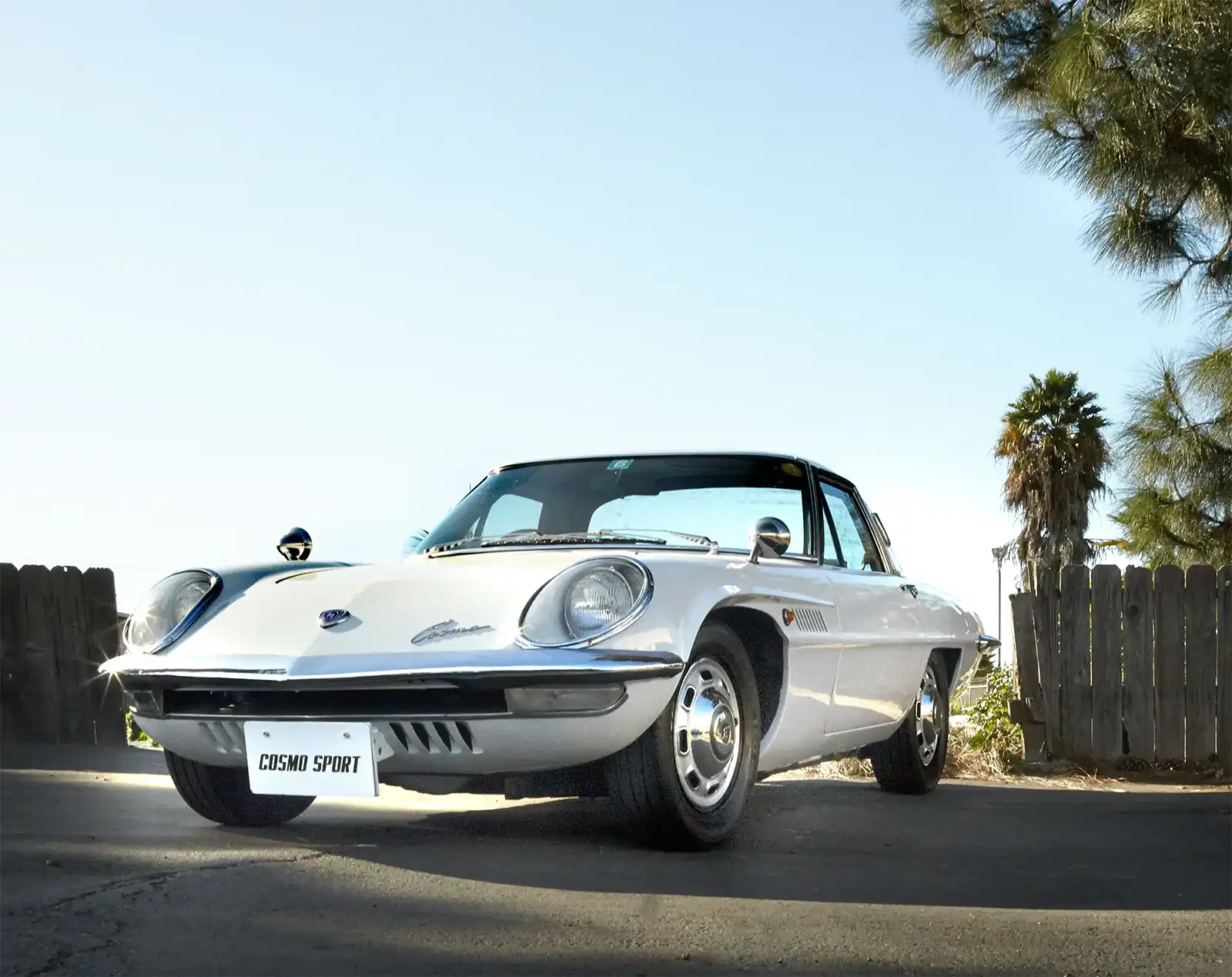
Only 1,176 Cosmo Sports were produced. Yet its importance has little to do with rarity. The Cosmo proved that a small company from Hiroshima could take somebody else's unfinished idea, suffer over it longer than everyone else, and eventually make it its own.
Sometimes technological revolutions begin in laboratories. This one began when an engine seized after an hour and somebody decided that was merely the first test.


