A Smoke Silver sporting saloon that gave a young Ayrton Senna equal machinery, a wet Nürburgring stage, and the perfect opportunity to announce himself to motorsport history.
On 12 May 1984, Mercedes-Benz opened the new Nürburgring Grand Prix circuit with a modest little publicity exercise: twenty identical 190 E 2.3-16 saloons, a grid packed with world champions, and one 24-year-old Brazilian who had not yet become a household name. It was the sort of marketing plan that sounds harmless until James Hunt, Niki Lauda, Alain Prost and Stirling Moss arrive carrying helmets.
Ayrton Senna’s Smoke Silver car wore number 11. It was not a Grand Prix machine, not a carbon-fibre prototype and not even a properly stripped touring car. Mercedes supplied largely production-based 190 E 2.3-16s, distinguished most visibly by roll cages and race preparation. Beneath the bonnet sat the 2,299 cc, 16-valve four-cylinder that gave the Baby Benz 136 kW, or 185 PS. In road trim it reached 100 km/h in 7.5 seconds and 235 km/h flat out: brisk enough to make a banker nervous, but not normally sufficient to embarrass a paddock full of Formula One royalty.
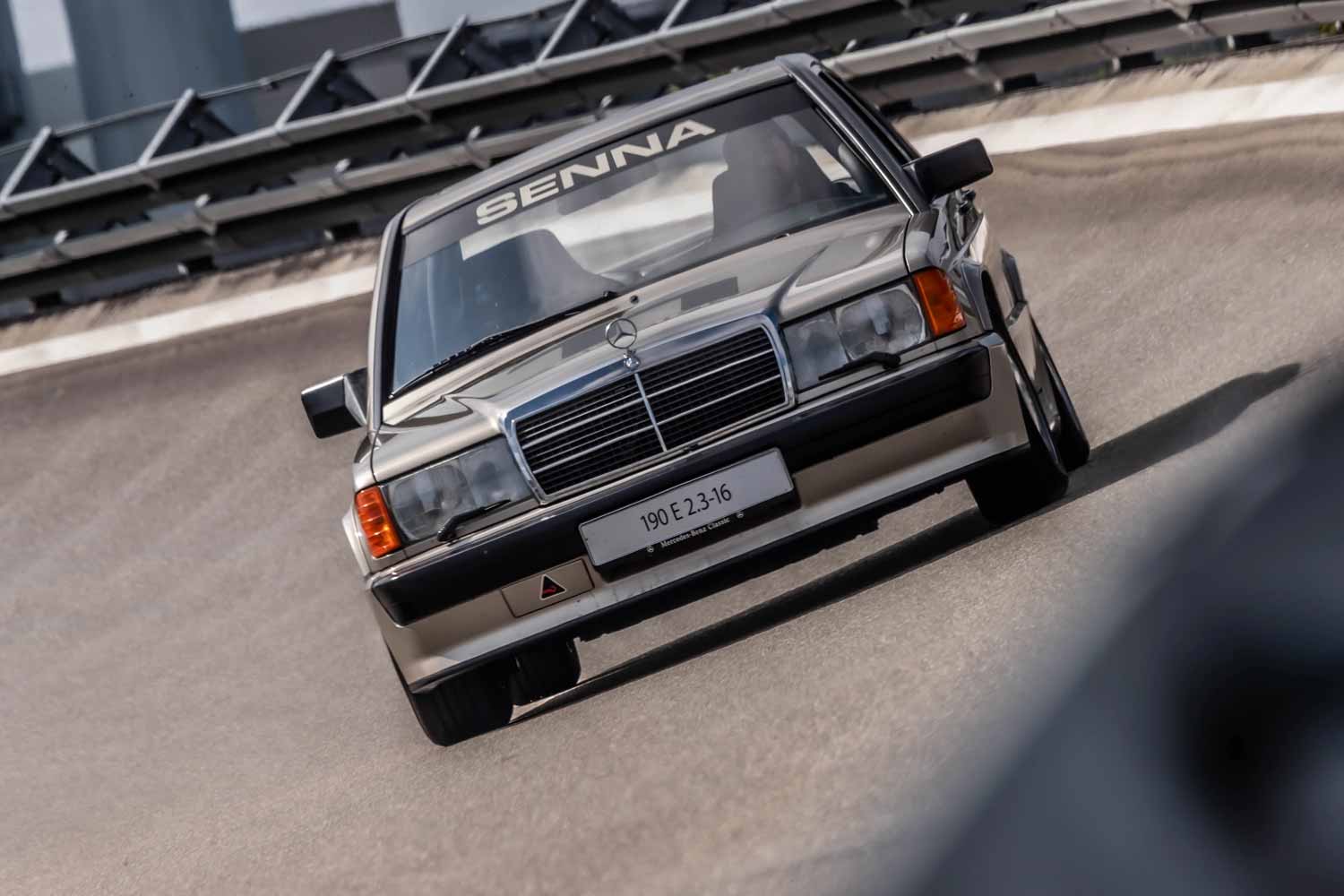
That was exactly the point. Mercedes had removed the usual excuses. No one could blame a weak engine, a misguided designer, a pit wall philosopher or an Italian electrical system deciding that afternoon was a suitable time for industrial action. The cars were near-identical. What remained was judgement, nerve and the irritating truth that some drivers are simply more comfortable operating at the edge of a damp circuit than the rest of humanity.
Senna was already highly regarded after winning the 1983 British Formula Three Championship and beginning his Formula One career with Toleman, but he was still the rookie among giants. Lauda had missed practice and started well down the order; Prost was already a proven force; Hunt had the experience and confidence of a man who had spent years proving that consequences were for other people. Senna qualified on pole, then led the twelve-lap race to win ahead of Lauda and Carlos Reutemann.
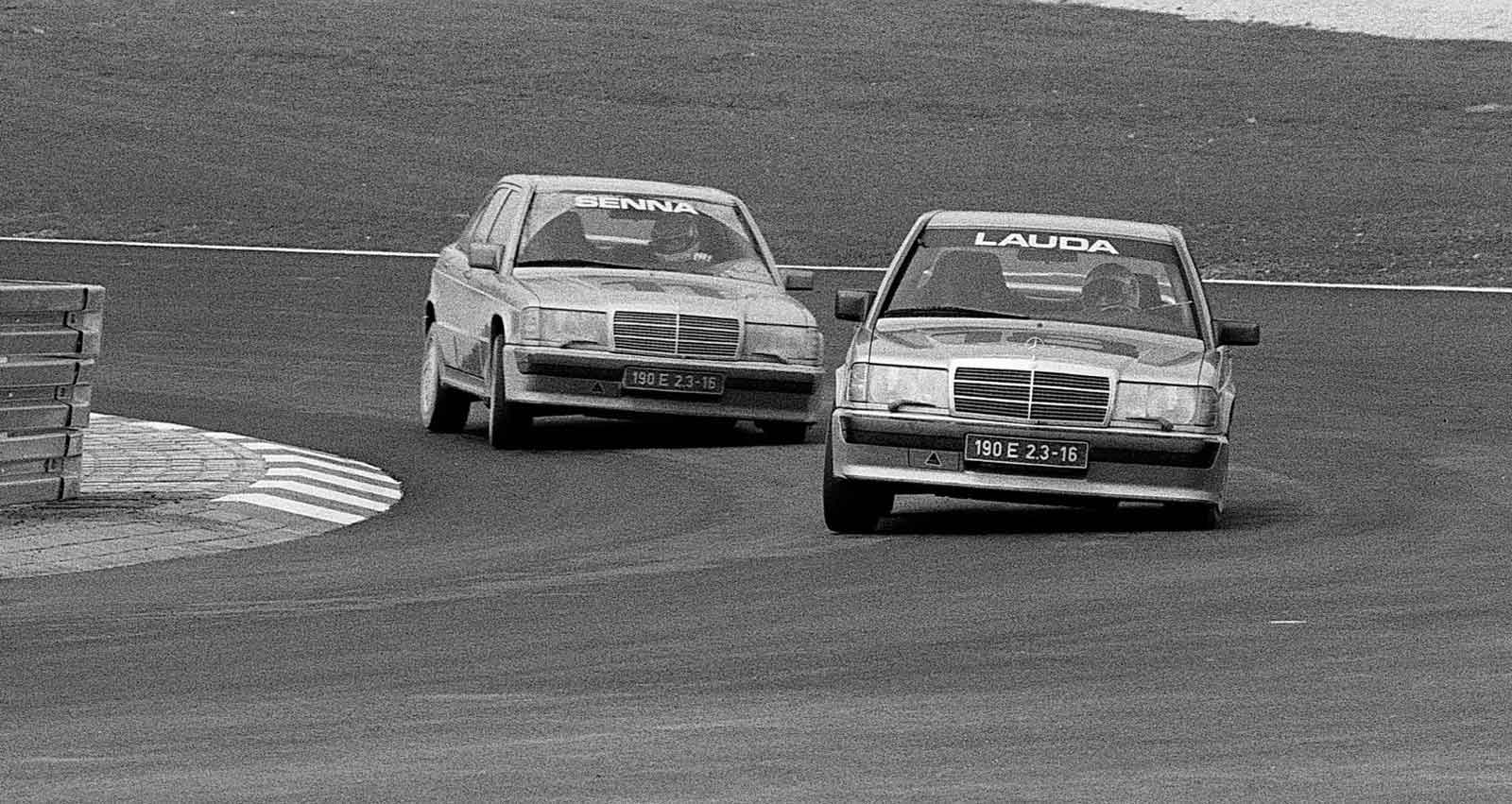
The 190 E 2.3-16 was unusually suited to this stage. Its Cosworth-developed four-valve cylinder head, close-ratio five-speed manual gearbox, disciplined chassis and rear-wheel-drive balance gave it a seriousness missing from most compact executive saloons of the period. It was still a Mercedes, though, which meant the drama arrived wearing sensible shoes. Even its sporty credibility came with four doors, a proper boot and the unmistakable air of a car that might remind you about your dental appointment.
Yet this particular 190 E matters because it made equality visible. The Race of Champions was a promotional event, but not a pretend one. Twenty drivers took the same basic machine onto a newly reopened circuit, and the youngest headline act beat men whose names already belonged to motorsport history. Senna’s victory did not predict every detail of his future career, but it revealed the important part: given a car that allowed precision, he immediately found more of it than anyone else.
Signature Line: Number 11 did not turn the 190E into a racing car; it turned a Mercedes launch into a warning.
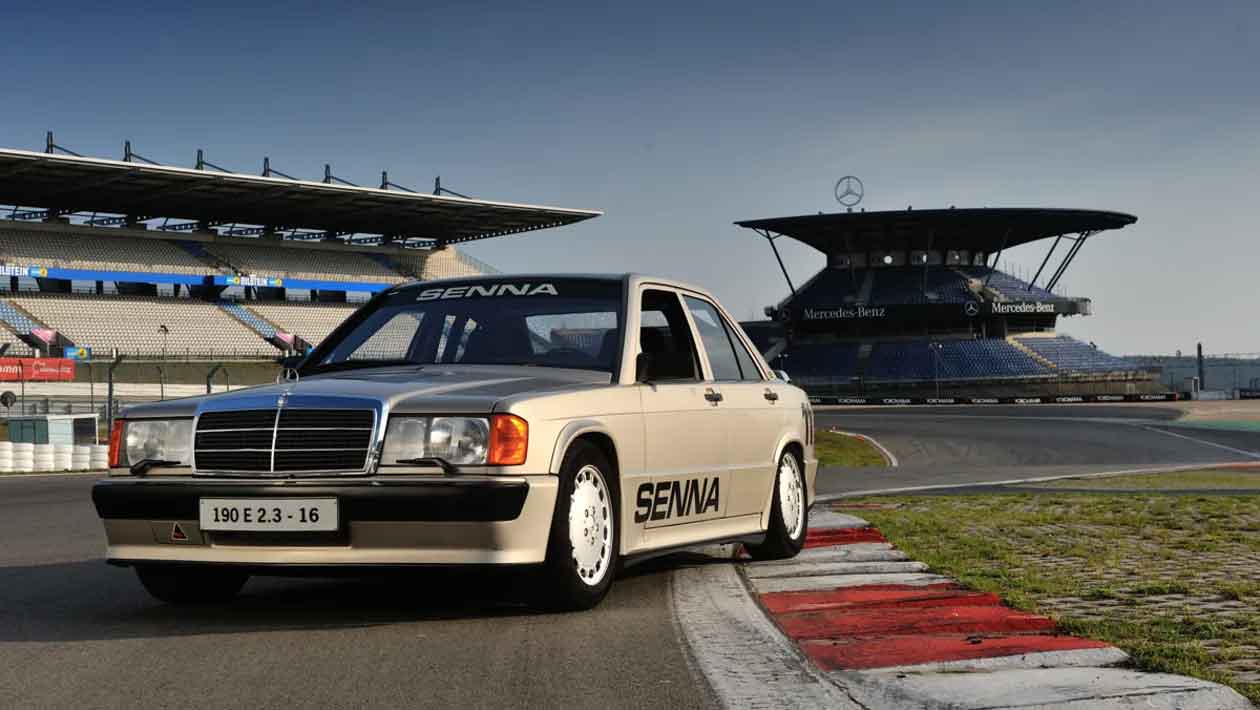
The later DTM legends, the Evolution models and the collector mythology all grew around the 190 E 2.3-16. But before the box arches and wing mirrors became motorsport shorthand, there was a silver saloon sliding through the Eifel rain with Senna at the wheel. It represented Mercedes returning to competition with composure, and a future champion arriving without asking permission.

