A long-bonneted V8 storm built for endurance, where German discipline turns thunder, heat and speed into something brutally precise.
Some racing cars arrive in the paddock looking as though they were born there. Others arrive looking like a road car that has had a very serious conversation with several Germans. The Mercedes-AMG GT4 belongs firmly to the second group. Its long bonnet, tucked cockpit and enormous three-pointed star remain unmistakably AMG GT, but everything soft, decorative or likely to complain after six hours at Spa has been politely removed.
Mercedes-AMG unveiled the GT4 in 2017 and put it into customer competition from 2018, positioning it beneath the GT3 as a more accessible route into serious international racing. “Accessible” is, of course, a wonderfully elastic motorsport term. It still means buying a purpose-built racing car, hiring engineers and spending weekends discussing tyre temperatures with people carrying laptops. But compared with GT3, the philosophy was refreshingly sensible: use proven production hardware wherever possible, control costs and build something private teams could actually understand.
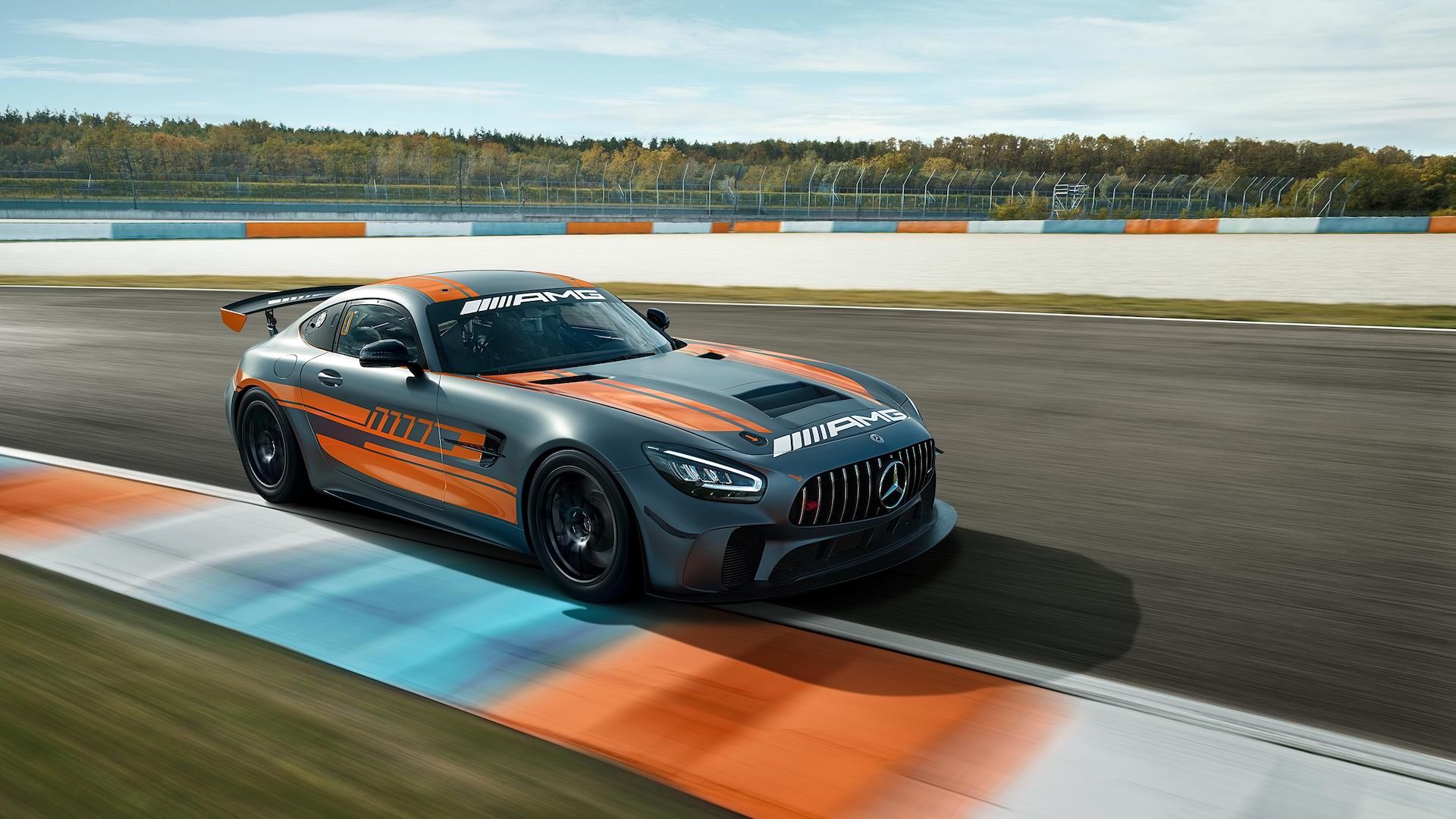
The starting point was the Mercedes-AMG GT R. Its aluminium spaceframe already offered immense stiffness without absurd mass, while the familiar 3,982 cc twin-turbo V8 provided the sort of muscular reliability required for endurance work. Early competition specification was governed heavily by Balance of Performance, while the latest development stage can produce up to 400 kW and 630 Nm. The important thing is not the headline figure, because GT racing officials will eventually arrive with restrictors, ballast and clipboards to ensure nobody enjoys themselves excessively.
Power reaches the rear wheels through a pneumatically operated six-speed sequential racing transmission mounted at the rear in transaxle configuration. That placement helps distribute mass between the axles, while an externally adjustable mechanical limited-slip differential allows teams to alter the car for different circuits. It is an elegant piece of engineering: enormous V8 at the front, gearbox at the back, driver somewhere in between wondering whether Eau Rouge really looked that steep on television.
Double-wishbone suspension sits at both ends, with adjustable compression and rebound damping. The brakes receive dedicated cooling, the steering is immediate without being nervous, and the aerodynamics were developed extensively in the wind tunnel. A broad front splitter, flics and bonnet Gurney help load the front axle, while the adjustable rear wing balances downforce against drag. Nothing is there merely because someone in marketing thought carbon fibre looked expensive.
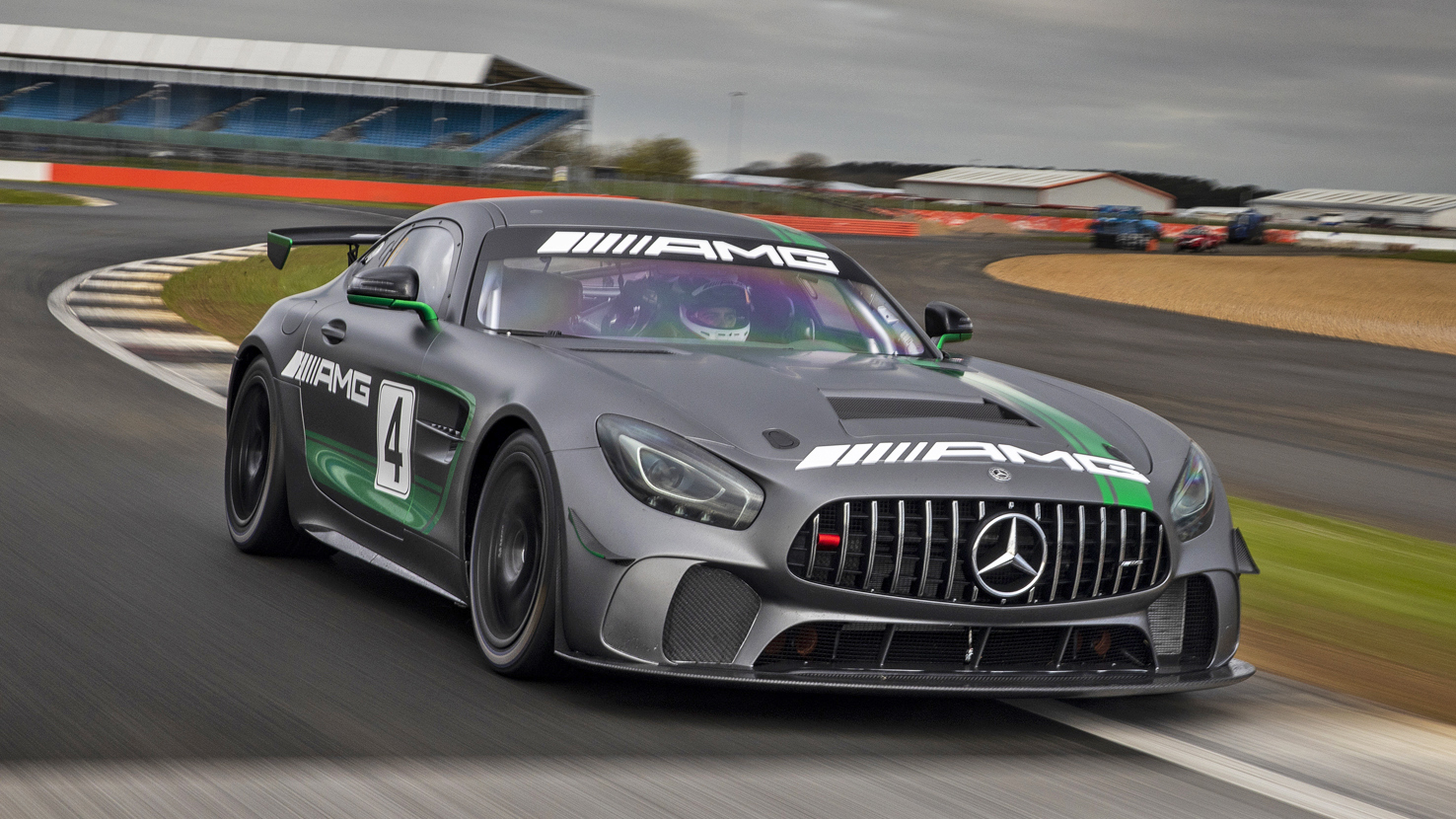
That distinction matters. GT4 regulations were conceived to keep racing closer to road-car origins than GT3, and the AMG exploits that brilliantly. Look closely and you can still recognise the road-going GT’s proportions. Look closer still and virtually everything has acquired a job description. Cooling ducts feed components, the splitter manages pressure, the enormous rear wing controls balance and even the interior has been stripped into a workspace of fluorescent labels, switches and a central digital display.
Mercedes-AMG paid unusual attention to making the cockpit friendly to amateur racers. The pedals adjust quickly, the controls fall naturally to hand and there is space for taller drivers. Optional air conditioning, seat ventilation and helmet ventilation are available, which sounds suspiciously luxurious until you spend an hour strapped inside a fireproof suit in August. At that point air conditioning stops being decadence and becomes civilisation.
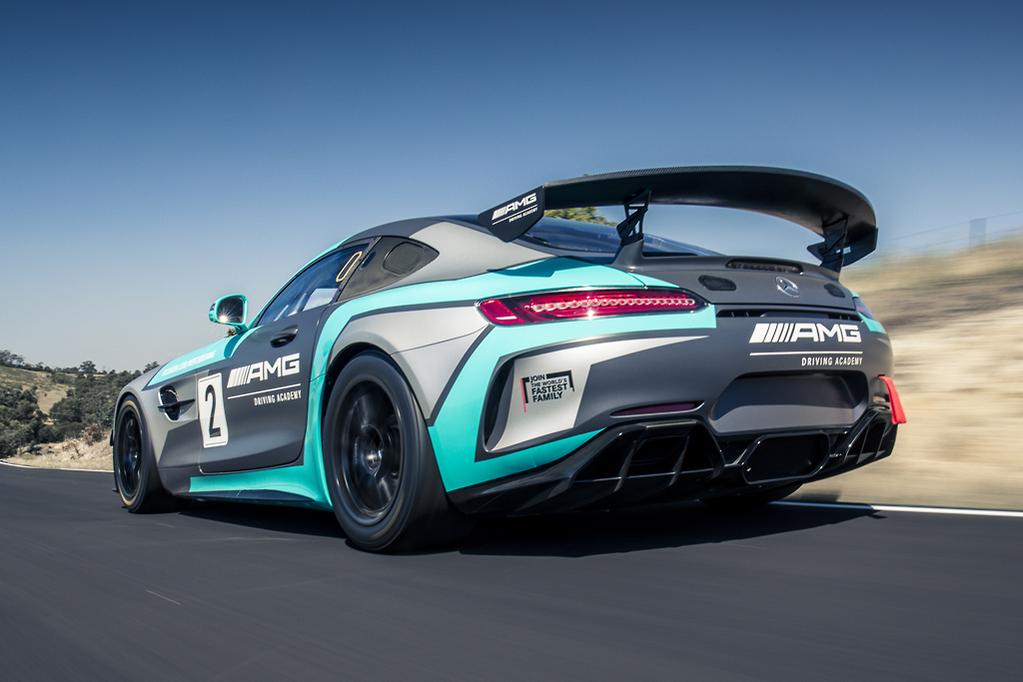
The GT4 quickly spread into championships across Europe, America, Asia and Australia, doing exactly what a customer racer is supposed to do: survive, remain understandable and appear again next weekend. That might sound less romantic than a factory prototype winning Le Mans, but customer racing is where engineering reputations are tested differently. One works team can nurse a temperamental masterpiece. Hundreds of customers will simply telephone Affalterbach and use increasingly imaginative German nouns.
And that reliability became part of the GT4's character. Its real achievement was not creating the fastest possible AMG GT, but creating one that could be driven hard by professionals and ambitious amateurs without requiring the driver to possess the reactions of a fighter pilot. The car communicates. The front axle talks, the rear remains predictable and the turbocharged V8 supplies huge, usable torque rather than demanding a ceremonial visit to 9,000 rpm before anything happens.
.jpg)
The Mercedes-AMG GT4 turns intimidation into confidence without removing the thunder. That is its Signature Line, because it explains the curious genius of this machine better than another lap-time comparison. It looks enormous, sounds deeply antisocial and carries a grille capable of frightening small hatchbacks, yet underneath it all lies a remarkably approachable racing car.
Over the years Mercedes-AMG has continued developing the platform, improving cooling, durability, lighting, aerodynamics and performance while retaining the underlying architecture. The latest evolution still uses the four-litre V8, rear-mounted sequential gearbox and aluminium structure that made the original so effective. In an industry fascinated by replacing perfectly good things with increasingly complicated things, continuity feels almost rebellious.
The GT4 therefore represents a particularly German interpretation of democracy. It does not make racing cheap, because motorsport has never displayed much interest in that concept. It makes serious GT racing attainable, predictable and professionally engineered for teams below the absolute top level. It takes the menace of an AMG GT R, removes the road-car distractions and leaves behind something wonderfully focused: a long-bonneted V8 machine designed not merely to set one heroic lap, but to keep doing it until the chequered flag finally appears.

