Nissan’s Lola-built R89C paired 800-plus horsepower with full telemetry, then sent its number 25 crew deep into Le Mans before an oil leak ended proceedings.
In 1989, Nissan arrived at Le Mans with the sort of ambition that tends to make accountants blink carefully. The R89C was not a gentle evolution of the previous year's prototype. It was a new Group C weapon aimed squarely at Jaguar, Porsche and Sauber-Mercedes.
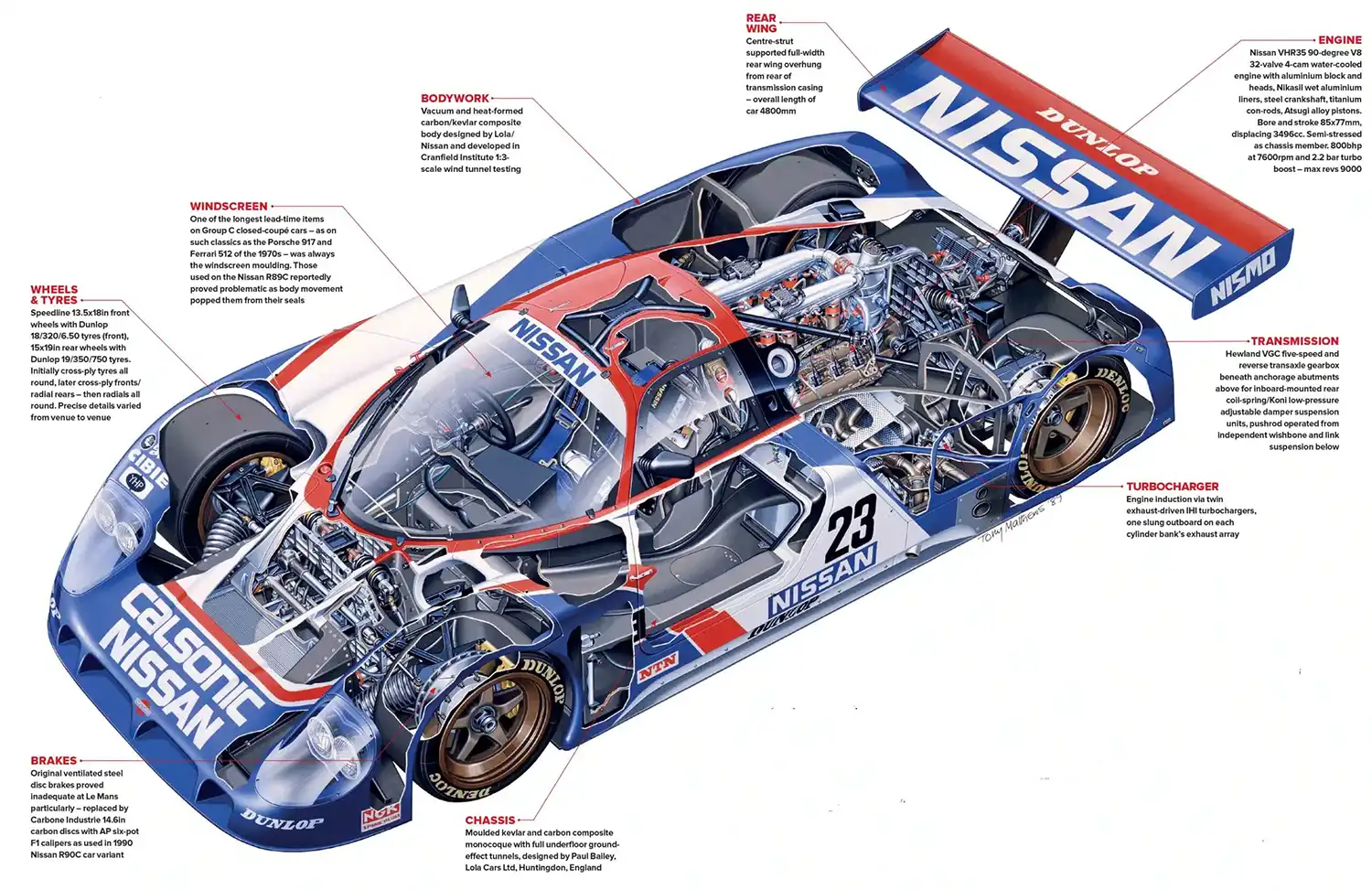
Nissan had moved from March Engineering to Lola Cars International, whose T89/10 architecture gave the R89C its low nose, tightly wrapped cockpit and long, remarkably clean tail. The car also adopted full-scale telemetry, allowing engineers to receive information while it was circulating rather than waiting for a driver to return and describe a vibration with increasingly inventive hand gestures.
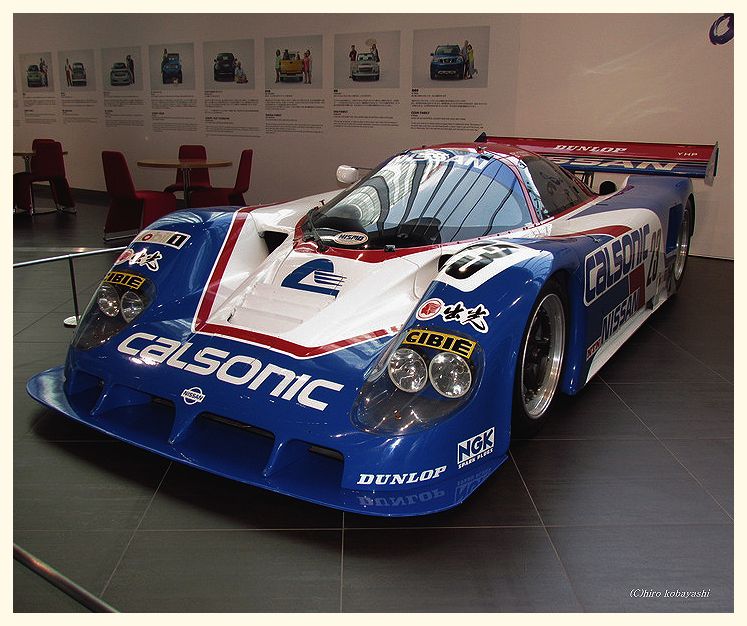
Behind the cockpit sat Nissan's 3,496 cc VRH35 twin-turbocharged DOHC V8. The factory quoted more than 800 PS at 7,600 rpm and over 784 Nm at 5,600 rpm, sent to the rear wheels through a five-speed VGC transmission. Official dimensions were 4,800 mm long, 1,990 mm wide and only 1,100 mm high, while weight remained above 900 kg. In other words, it was roughly the height of a determined coffee table and considerably less welcome in the living room.
The blue, white and red number 25 at Le Mans was chassis 02, driven by Geoff Brabham, Chip Robinson and Arie Luyendyk. Brabham was a leading American sports-car racer; Robinson an endurance specialist; and Luyendyk a future two-time Indianapolis 500 winner. Number 25 qualified sixteenth with a 3:25.380 lap.
Its race lasted 250 laps, long enough for the car to demonstrate speed and long enough for Le Mans to locate the weakest item on the invoice. An oil loss ended the run after roughly sixteen hours. The sister R89Cs also retired, leaving Nissan with no classified finisher despite promising qualifying pace. Group C was generous like that: it allowed engineers to build a machine faster than common sense, then asked it to remain sensible for an entire day.
The R89C nevertheless produced one of those driver memories that explains more than a specification sheet. Julian Bailey, who shared the number 24 sister car, recalled that its aerodynamics gave enough confidence to take the Mulsanne kink flat at a claimed 248 mph. He also remembered pumping a soft brake pedal with his left foot: advanced aero in one corner, traditional courage in the next.
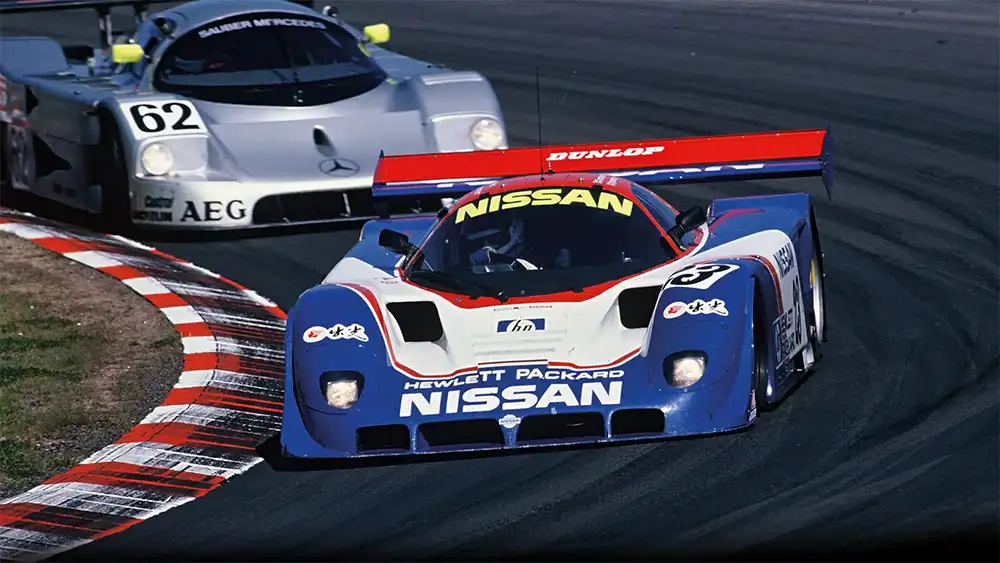
Results improved away from Le Mans. Bailey and Mark Blundell finished third at Donington in the World Sportscar Championship, while Martin Donnelly gave the R89C a sprint victory at Diepholz. The flashes proved that the performance existed; reliability, tyres and race execution simply had to catch up.
The R89C did not win the great race, but it established the technical direction for Nissan's R90CK and R90CP successors. Its telemetry, 3.5-litre twin-turbo V8 and international development structure marked the point where Nissan's Le Mans effort became unmistakably global and genuinely menacing. Number 25's oil leak denied it a finish, yet the car taught Nissan how close speed could bring you to victory, and how much work remained after arriving there.
-
-


