It proved that Pagani wasn’t a one-car wonder. It was a philosophy: engineering as art, speed as sculpture, and excess executed with precision rather than chaos.
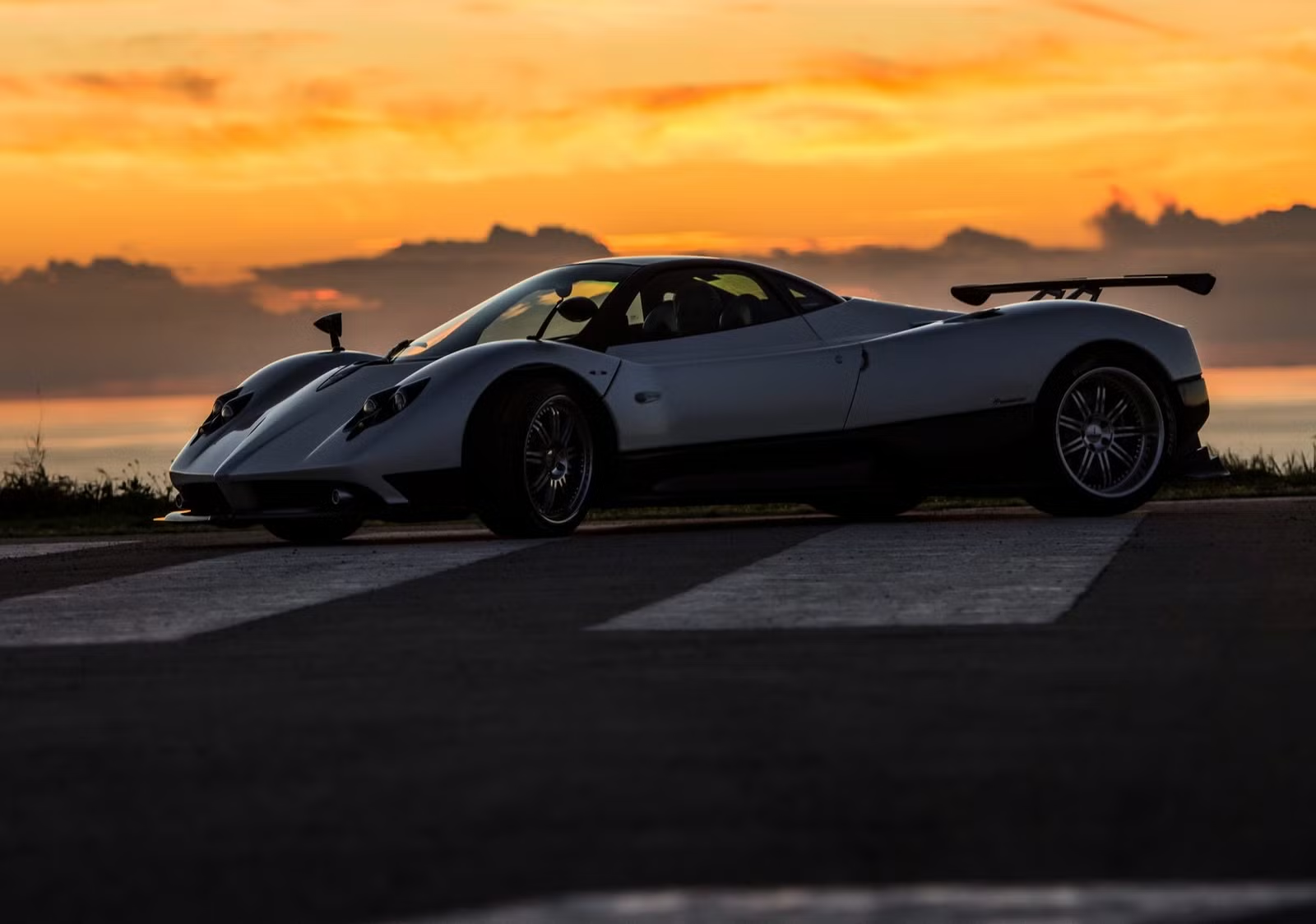
If the original Zonda C12 was a dramatic entrance, the Pagani Zonda F was the moment the orchestra stood up and decided to play louder. Launched in 2005 and named in honour of Formula 1 legend Juan Manuel Fangio, the Zonda F wasn’t just an update. It was Pagani politely saying, “We’ve learned a few things. Stand back.”
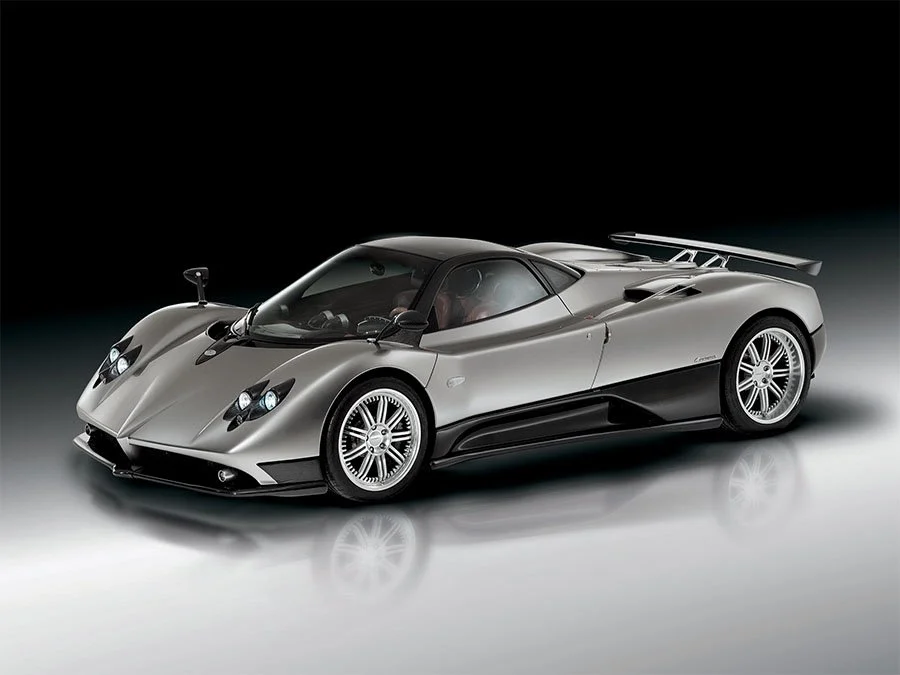
Let’s begin with the engine, because in a Zonda, the engine is not a component — it’s a headline. Sitting mid-mounted is a naturally aspirated 7,291 cc Mercedes-AMG V12. Yes, 7.3 litres. Not turbocharged. Not hybrid. Just twelve cylinders inhaling atmosphere like they own it.
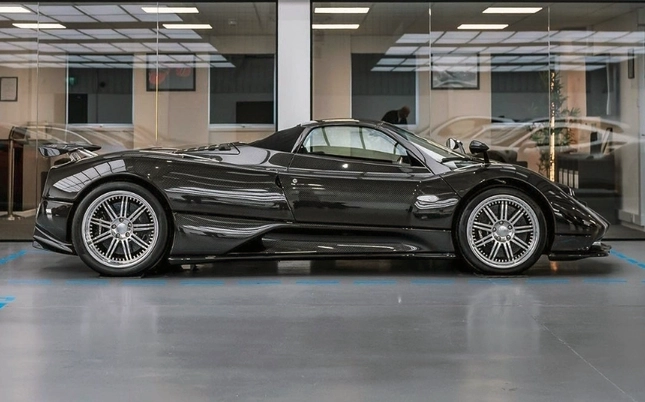
Power output in the standard Zonda F is about 602 PS (443 kW) at around 6,150 rpm, with torque quoted at roughly 760 Nm. Later versions, including the Clubsport variant, pushed that figure up to around 650 PS. But even at 602 PS, the experience is less “acceleration” and more “environmental rearrangement.”

Performance figures? Approximately 0–100 km/h in 3.6 seconds and a top speed around 345 km/h. That’s firmly in hypercar territory even by modern standards — and this was mid-2000s engineering done without turbos or electric assistance. Just displacement, breathing efficiency, and the sort of throttle response that makes you question your reflexes.
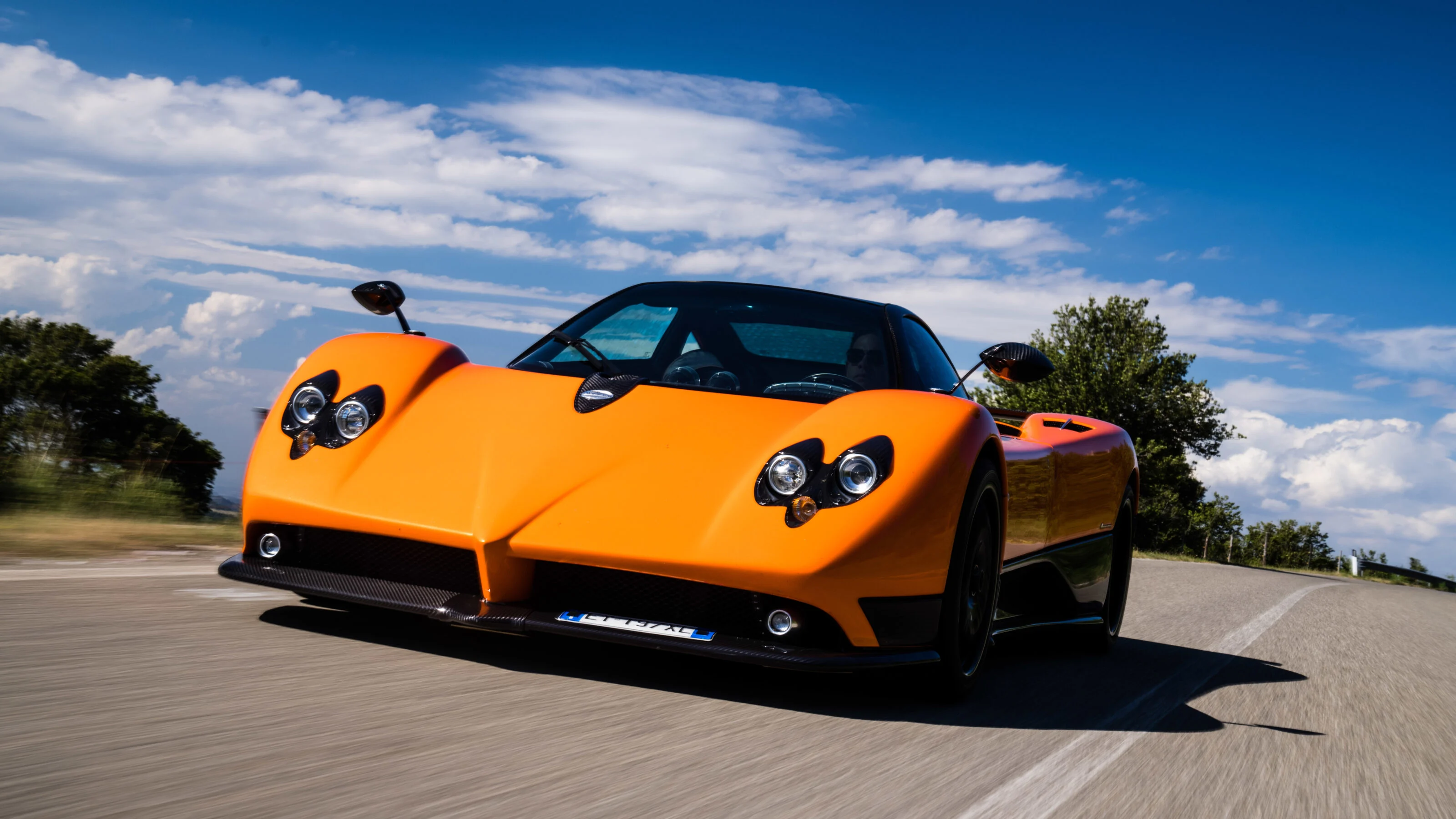
Now the proportions. The Zonda F measures roughly 4395 mm long, 2055 mm wide, and about 1141 mm tall, riding on a 2730 mm wheelbase. It’s wide enough to make country lanes feel personal, and low enough that speed bumps become philosophical debates.
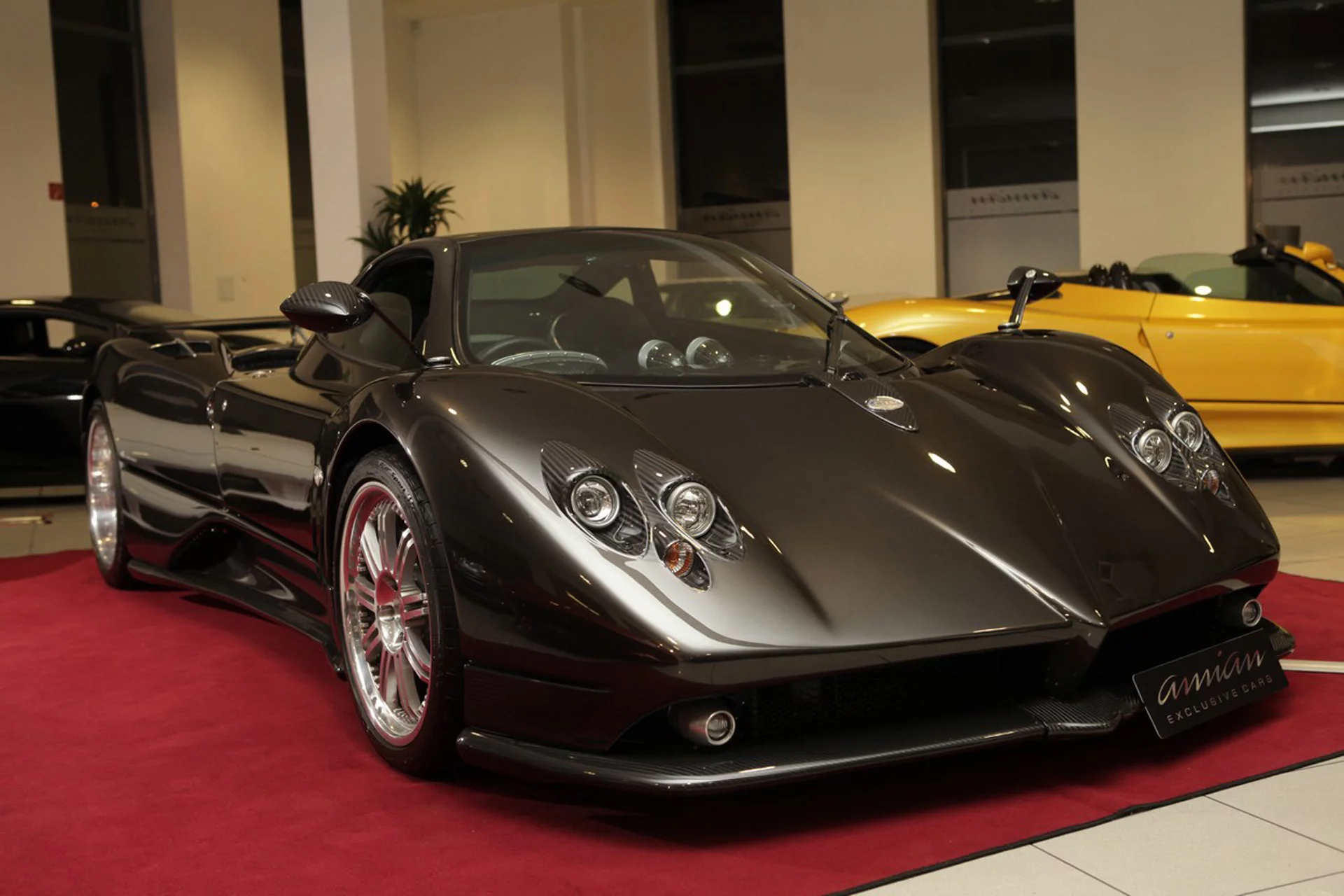
Weight? Around 1230 kg dry. For a car with a 7.3-litre V12 and the aerodynamic presence of a stealth aircraft, that is borderline unreasonable. Pagani achieved this through obsessive use of carbon fibre, including a revised carbon-titanium composite structure that improved stiffness over earlier Zondas.
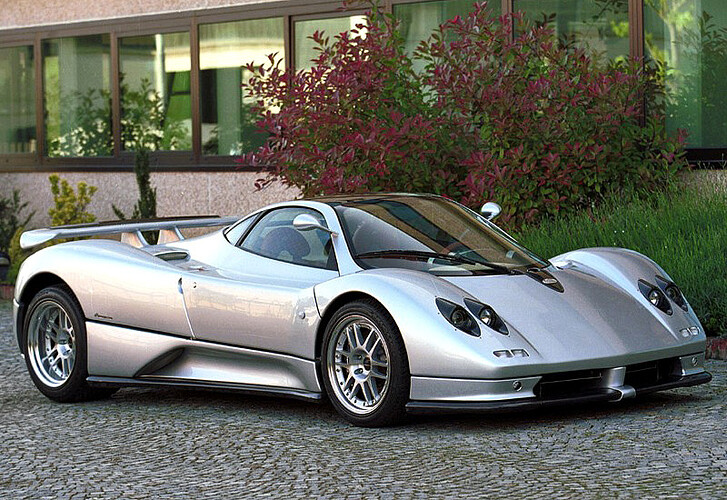
Aerodynamics were significantly reworked compared to the C12 and C12 S. The Zonda F featured a new front splitter, redesigned side intakes, and a larger rear wing. Downforce figures were substantially improved, making high-speed stability less “hopeful” and more “deliberate.” This wasn’t decoration. This was airflow negotiation at 300 km/h.
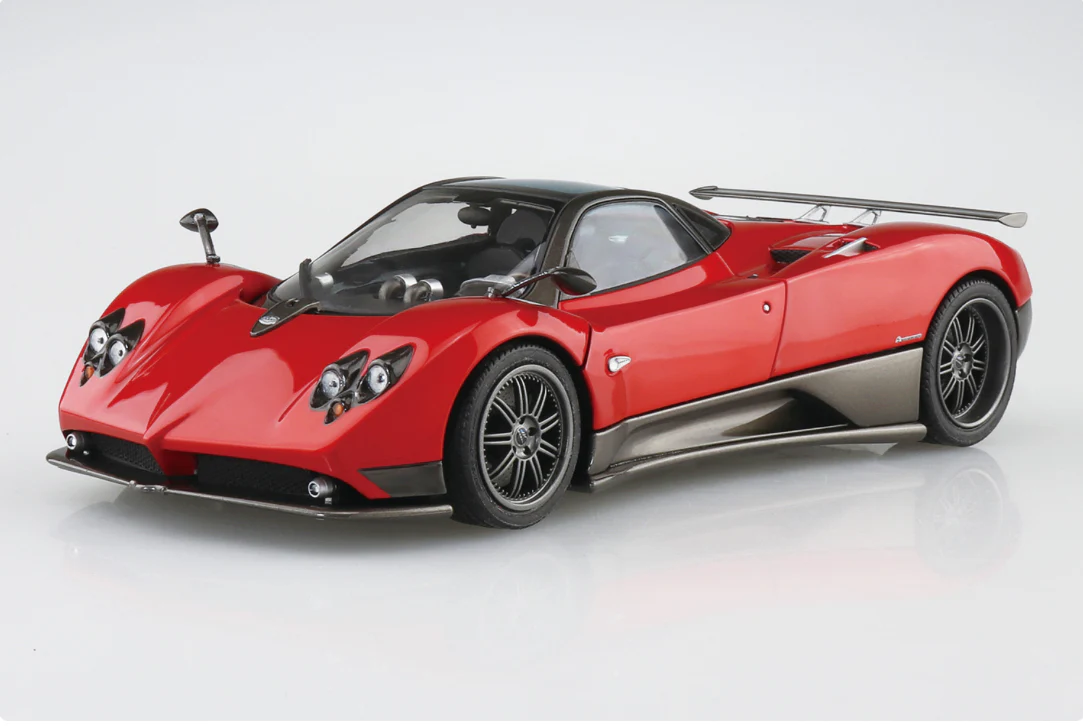
The gearbox remained delightfully analogue in spirit. Early Zonda F models came with a 6-speed manual, because real engagement requires movement. Later variants adopted automated manual systems, but the gated manual remains the purist’s choice — because if you are commanding a 7.3-litre V12, you should have to mean it.

Braking was handled by large Brembo carbon-ceramic discs — 380 mm front and rear — with multi-piston calipers, because when you can reach 345 km/h, stopping is not optional. It’s mandatory.

Production numbers were tiny, roughly 25 examples of the standard Zonda F coupé, with additional roadster and Clubsport variants bringing total F-series production to just over 40 units. Scarcity, of course, only increased desirability.

But here’s the most important bit: the Zonda F feels handcrafted. The cabin is a jewellery display of machined aluminium, exposed carbon fibre, and leather stitched like it was prepared for a fashion house rather than a racetrack. Switchgear feels mechanical, intentional. Nothing is hidden behind screens. You don’t configure it — you operate it.
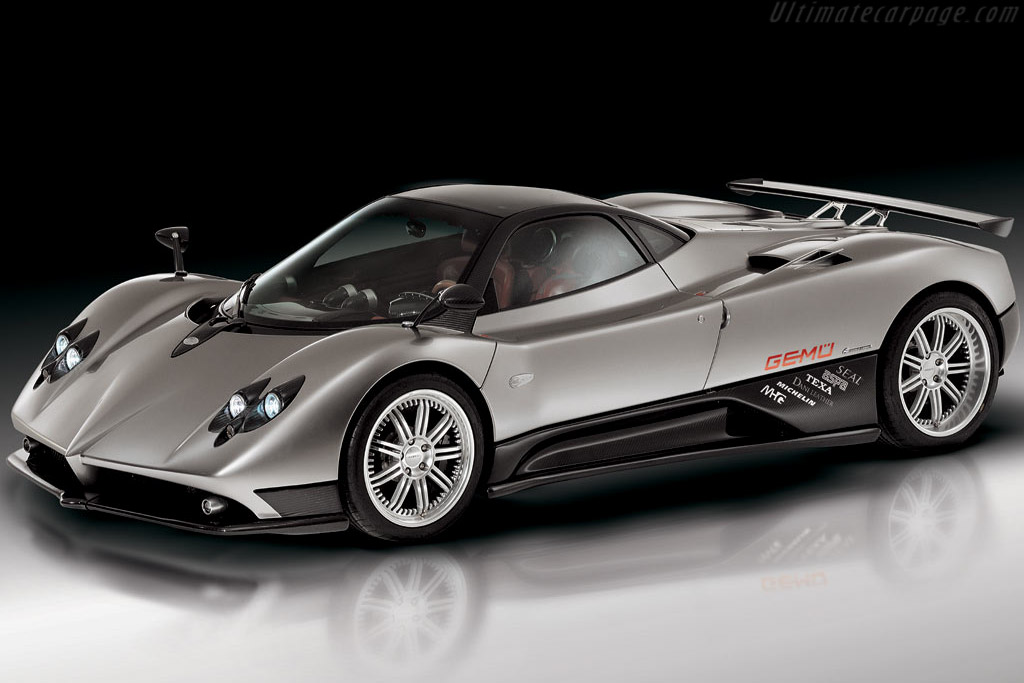
And the sound. The 7.3-litre AMG V12 doesn’t scream like a small displacement engine. It roars with operatic authority. At low rpm it’s thunderous. At high rpm it becomes mechanical symphony. It is one of the last great naturally aspirated V12s before the industry began adding batteries to calm things down.
.jpg)
The Zonda F wasn’t the most powerful Zonda ever built. Later versions like the Cinque and 760 variants pushed boundaries further. But the F represents balance — power, lightness, aerodynamic maturity, and pure mechanical theatre.

It proved that Pagani wasn’t a one-car wonder. It was a philosophy: engineering as art, speed as sculpture, and excess executed with precision rather than chaos.
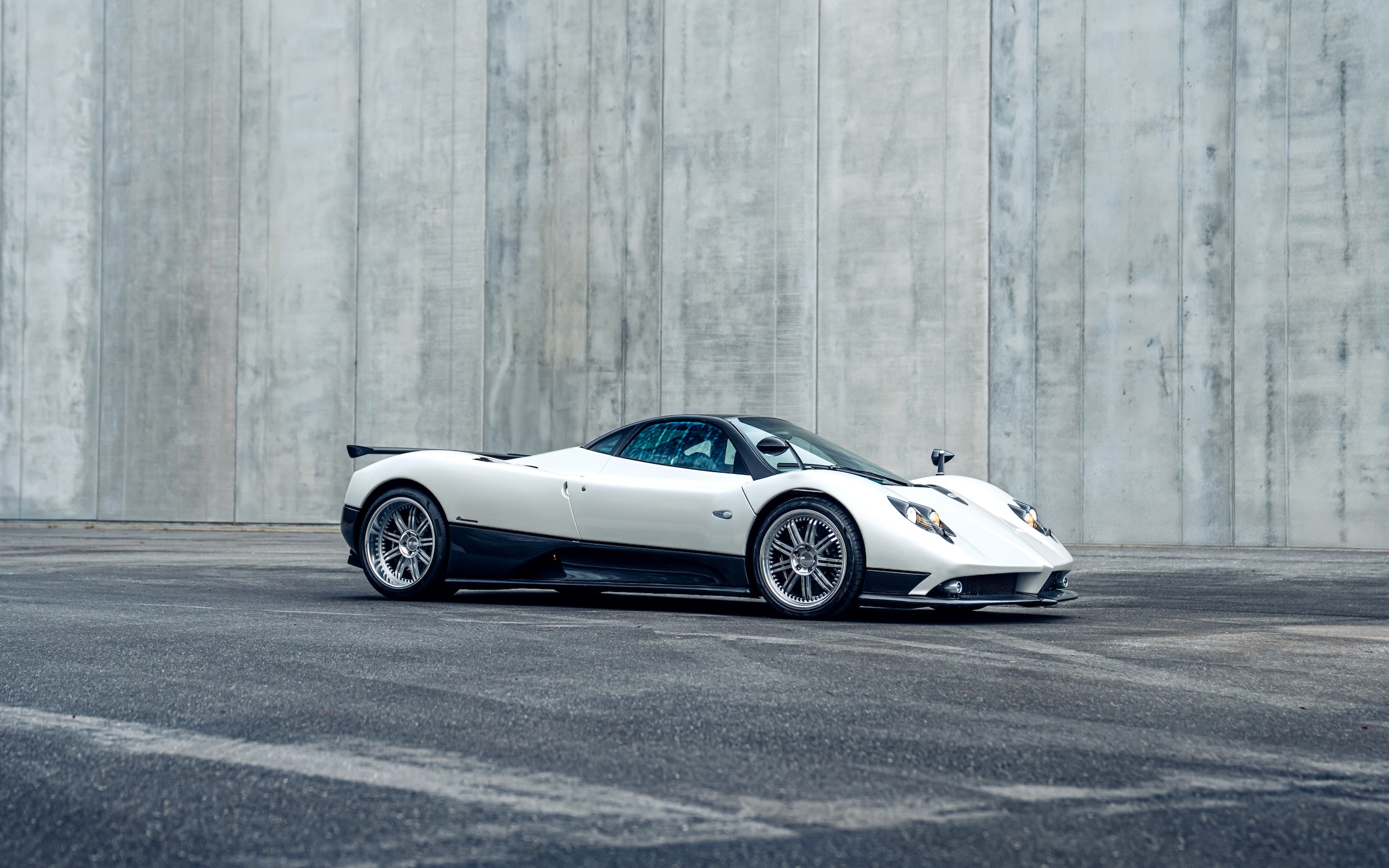
Drive one, and you don’t feel like you’re piloting a machine. You feel like you’ve been entrusted with a masterpiece that just happens to do 345 km/h.
-
Leonardo da Vinci


