Volkswagen’s radical electric prototype that shattered the Pikes Peak record and proved the terrifying speed of silent racing machines.
There are racing cars, and then there are machines that feel like they arrived from twenty years in the future after taking a wrong turn through a wormhole. The 2019 Volkswagen ID R is firmly in the second category. It doesn’t roar, it doesn’t shake the ground like a traditional monster, and yet when it launches it does something even more unsettling: it vanishes. Silence, traction, and a physics-defying surge that feels less like acceleration and more like teleportation.
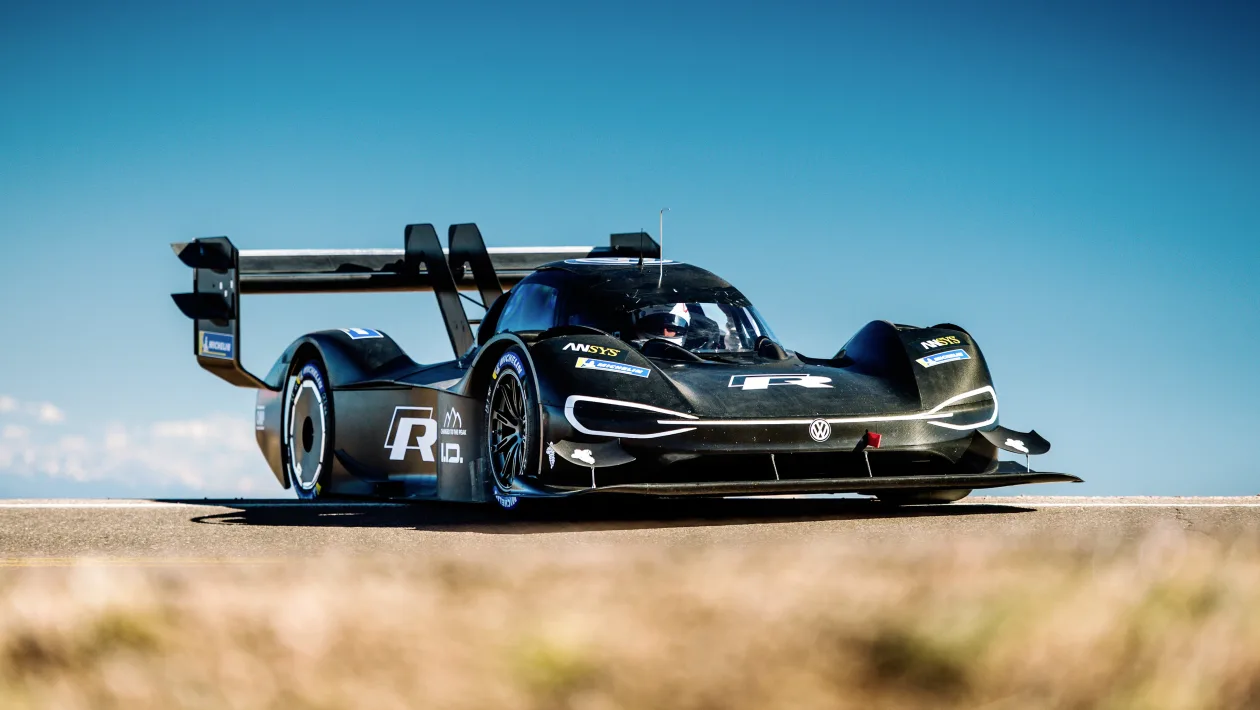
The project began as a statement. Volkswagen had spent decades conquering rally stages and endurance races, but in the late 2010s the company wanted something different—a technological manifesto for its new electric era. Enter François-Xavier Demaison,

the brilliant engineer who had helped guide Volkswagen’s WRC domination. His task was simple in theory and terrifying in execution: build an all-electric machine capable of conquering the most brutal hill climb on Earth, the Pikes Peak International Hill Climb.

And so the ID R was born.
Two electric motors—one for each axle—combined to produce around 500 kW, roughly 670 horsepower. But numbers alone barely explain the experience. Because electric torque arrives instantly, the ID R launches with a violence that makes most internal combustion race cars feel like they’re still tying their shoelaces. From 0 to 100 km/h in roughly 2.25 seconds, it rivals Formula One levels of acceleration.
.avif)
The chassis was pure prototype racing technology. Carbon fiber monocoque. Extreme aerodynamics. Giant rear wing. Massive diffuser. Every square millimeter designed for downforce because at Pikes Peak the air grows thin and grip becomes precious.

Behind the wheel sat Romain Dumas, a man who seems genetically engineered to drive very fast things up mountains. In June 2018 he hurled the ID R up the 19.99-kilometre Pikes Peak course in 7 minutes and 57 seconds—shattering the overall record and becoming the first driver ever to break the eight-minute barrier.
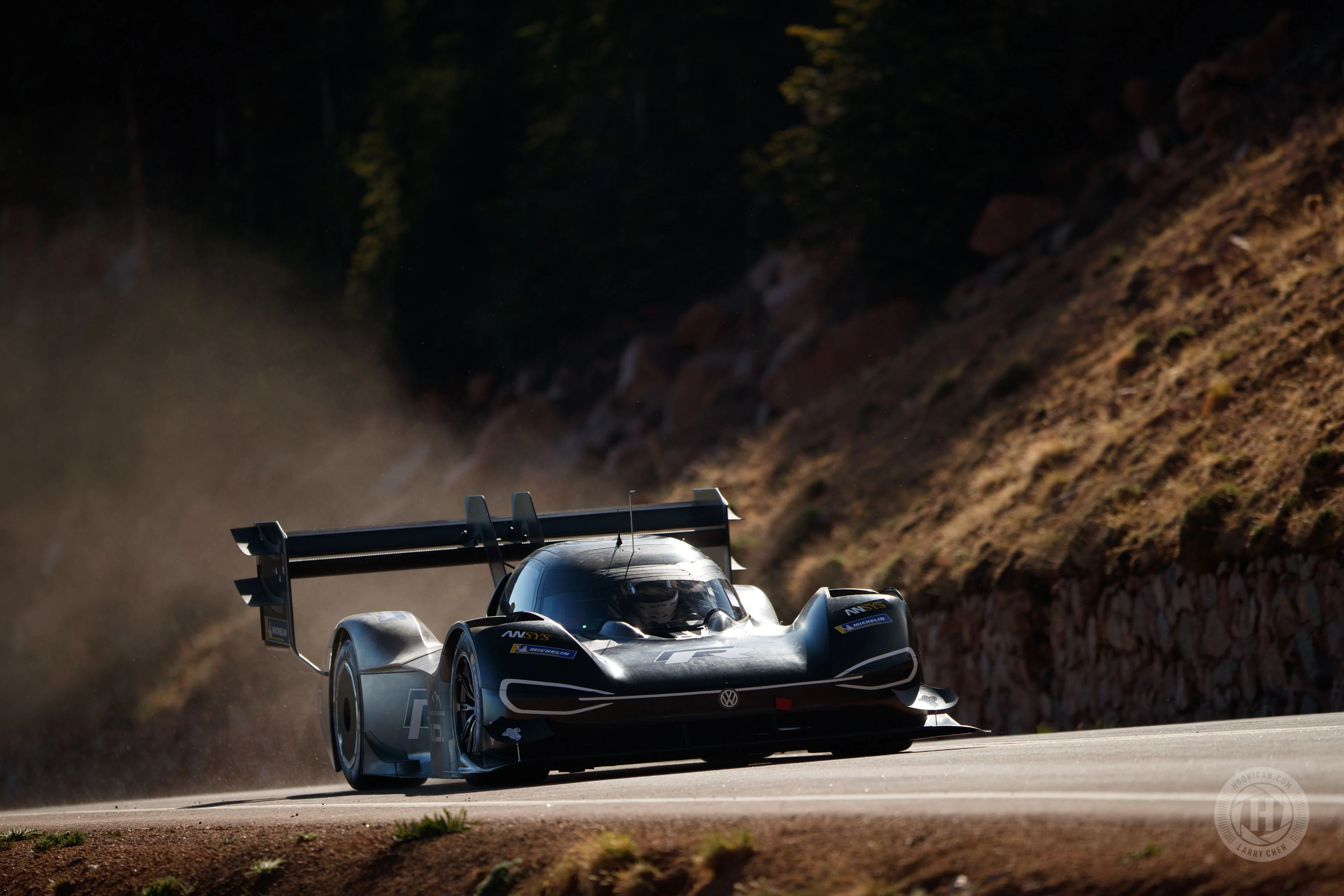
But Volkswagen wasn’t finished. The ID R later attacked the Nürburgring Nordschleife, setting an electric lap record of 6:05.336. It then traveled to China’s Tianmen Mountain, conquering its 99 brutal corners and once again demonstrating the surreal speed of electric motorsport.
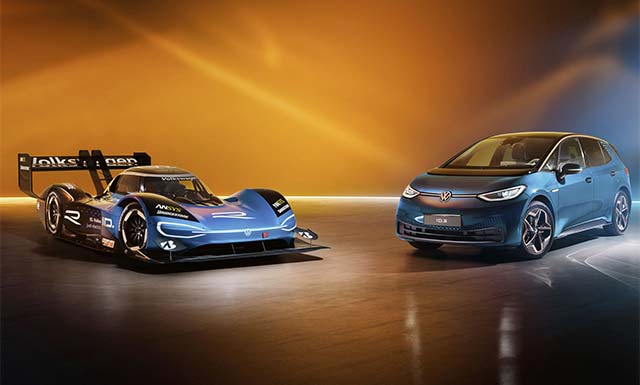
The ID R represents a turning point in racing history. For more than a century motorsport had worshipped fuel and fire. The ID R arrived silently and proved that the future of speed might come without either.


