The GR Supra Racing Concept arrived like a promise in armour — a legend reborn before the road was ready for it.
Geneva, March 2018. Beneath the motor-show lights sat something Toyota fans had spent sixteen years pretending they were perfectly calm about. It wore a vast rear wing, swollen arches and the number 90 on its doors. The Supra was coming back, and Toyota chose to announce the fact with all the restraint of a fireworks display in a library.
The GR Supra Racing Concept was created by TOYOTA GAZOO Racing as the first clear preview of the fifth-generation A90 Supra. It was not a homologated GT3 car, nor a production racer with a secret season awaiting it. It was a declaration of intent: front engine, rear-wheel drive, two doors and enough competition hardware to make the average concept-car turntable feel inadequate.
That “90” mattered. Toyota used it as a deliberate clue to the A90 codename, linking the concept directly to the road car that would arrive the following year. A short 2,470 mm wheelbase sat beneath a body 4,574 mm long, 2,048 mm wide and only 1,230 mm high. Wide, low and compact, it looked as though somebody had taken a normal sports car and sat on it very carefully.
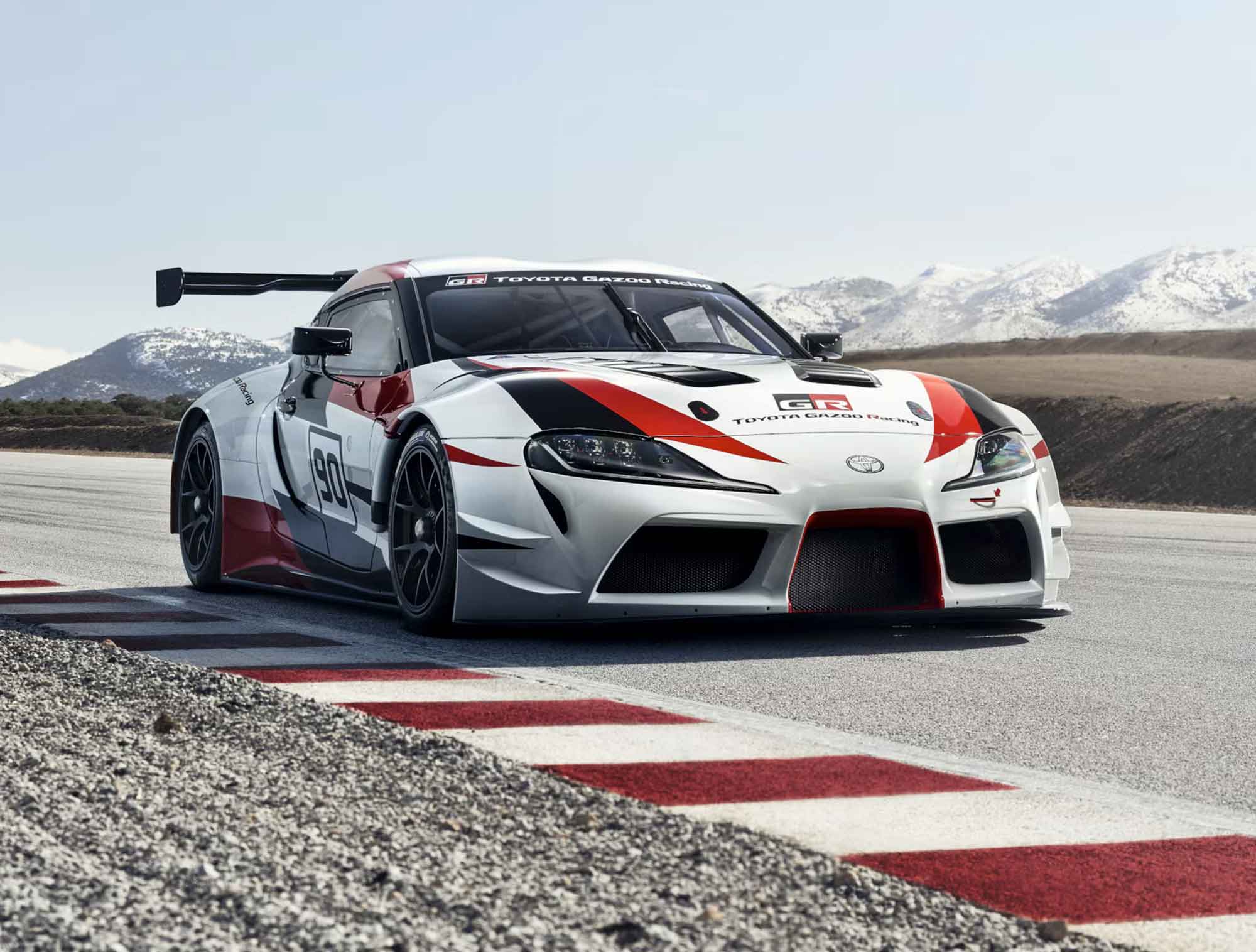
The bodywork was serious racing theatre. Composite material formed the bumpers, splitter, diffuser, side skirts, mirrors, bonnet and enormous rear wing; even the windows were made from plastic. Centre-lock BBS racing wheels wore Michelin tyres, while Brembo supplied racing brakes. The suspension was lowered and a proper racing exhaust ensured nobody would mistake the exercise for environmentally sensitive sculpture.
Inside, subtlety packed its bags entirely. There was a full roll cage, OMP racing seat and harness, quick-release steering wheel, paddle shift, racing display and fire extinguishers. Toyota never published engine output, kerb weight, top speed or acceleration figures for the physical concept. Quite sensibly, it allowed the enormous wing to do most of the talking.
Yet this car's importance was never its stopwatch. Supra production had ended in 2002, leaving behind an extraordinary afterlife built from Japanese GT racing, tuning culture, games and films. The fourth-generation Supra had won Japan's top-level GT500 class four times. By 2018, reviving the badge incorrectly would probably have required the internet to receive medical attention.
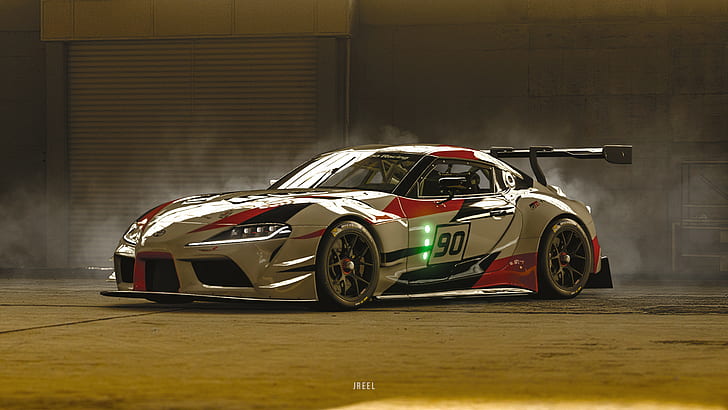
Toyota therefore did something rather clever. Instead of introducing the new Supra as a polite road car with cupholders and a warranty, it showed it wearing racing armour. The concept reminded everyone that Supra had always seemed more convincing with tyre smoke nearby. It even entered Gran Turismo Sport in April 2018, allowing enthusiasts to drive Toyota's future before Toyota would actually sell it to them.
Its cleverest trick becomes obvious in hindsight. The production A90 was cleaner and considerably more interested in number plates, yet the essential proportions were already here: compact cabin, long bonnet, muscular rear haunches and classic front-engine, rear-drive stance. The concept wasn't really predicting a future racing Supra; it was disguising the next road Supra as one.
Signature Line: before the A90 Supra entered the showroom, it arrived wearing its racing dreams on the outside.
That is why the GR Supra Racing Concept matters. It never needed trophies or a heroic Nürburgring time. Its job was stranger and perhaps harder: convincing a generation raised on the old Supra that Toyota still understood the name. For a company famous for sensible transport, arriving in Geneva with a two-seat racing fantasy and a rear wing visible from Belgium was a reassuringly unreasonable way to do it.


